


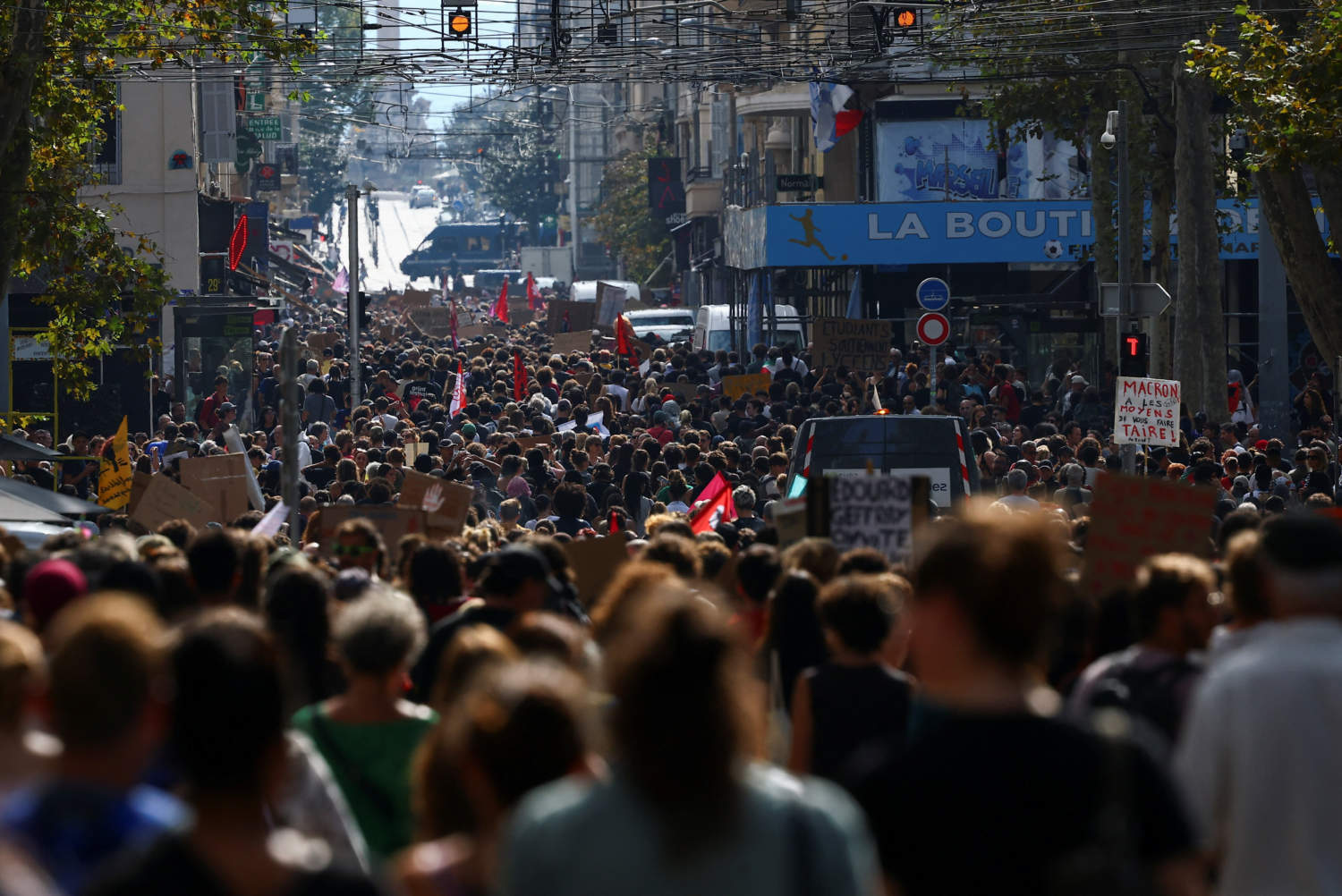
Student anger, rising living costs and frustration with public services are converging in the streets, that being said, Europe’s latest unrest is not one revolution, but one that exposes a major, pan-European, political problem.
In growing numbers, people believe that the basic promises of economic security, affordable education and decent public services are out of reach.
France has become the epicentre while Belgium has seen student demonstrations and clashes with police.
In Milan too, according to Reuters, a protest against the cost of living and war descended into looting and street violence. Portugal, Spain and Albania have also witnessed mobilisations driven by related but distinct grievances.
The common thread is a growing sense that governments are asking citizens to accept higher costs, fewer opportunities and deteriorating services while offering little confidence that things will improve.
Why France is at the centre
France’s unrest began with students protesting against teacher shortages, overcrowded classrooms and deteriorating school facilities. It subsequently broadened into a wider revolt against inequality, public spending cuts and the rising cost of living.
On October 17, more than half a million people took part in demonstrations across the country, according to figures reported by Reuters. Students were joined by trade unions, public-sector workers and activists associated with the Yellow Vests, a movement that shook France in 2018.
Most demonstrators did not take part in violence. But clashes in Paris and other cities, including arson, looting and attacks on public buildings, turned the protests into a major security and political crisis. A demonstrator died after suffering a cardiac arrest during the Paris protests, while authorities reported mass arrests and hundreds of injured police officers.
The government faces a difficult balancing act as it must respond to legitimate complaints about education and living standards while restoring order and avoiding a response that further inflames public anger.
President Emmanuel Macron has called for calm, while Prime Minister Sébastien Lecornu has vowed not to be intimidated by violence. The government has also faced pressure over how much additional spending it can afford amid France’s strained public finances.
Belgium: A local crisis meets a French example
Belgium’s protests have followed a similar trajectory, although their immediate causes are more specifically tied to education policy and government budget decisions.
In Brussels, several hundred predominantly young demonstrators gathered on October 17. Some clashed with police, who used tear gas and water cannon. Protests have also taken place outside Brussels in the nearby city of Liège.
Student groups have objected to rising education costs and reforms they fear will make higher education less accessible. Their grievances have been reinforced by wider opposition to spending cuts and pressure on public services. Earlier demonstrations in Belgium also coincided with a national strike that disrupted transport and other sectors.
Milan: When economic anger turns violent
On October 17, masked demonstrators threw stones and other objects at riot police, set fires and looted shops in the city centre. Police deployed tear gas and water cannon. Clashes continued on Sunday, with further detentions reported.
The protests also spread to other northern Italian cities, including Bologna, Brescia, Bergamo and Turin. Prime Minister Giorgia Meloni condemned the violence and announced a government meeting to address the situation.
Beyond the original hotspots
The unrest extends beyond France, Belgium and Italy, although the motivations vary considerably.
In Portugal, protesters have taken to the streets over low wages, rising living costs and a housing market that is increasingly unaffordable. Demonstrators in Lisbon have pitched tents to draw attention to the shortage of accessible housing.
In Spain, protests over rents and housing insecurity have intensified following the eviction of an elderly woman in Madrid and her subsequent death.
The case has become a rallying point for activists demanding greater protection for tenants.
Albania presents a different picture as student-led demonstrations have broadened into anti-government protests fuelled by allegations of corruption, poor education standards and a lack of employment opportunities. Prime Minister Edi Rama has rejected calls to resign.
Cyprus: A protest over electricity, not a proven European spillover
Cyprus saw its own protest on October 17, when Direct Democracy Cyprus leader Fidias Panayiotou led a march from Eleftheria Square in Nicosia to the Presidential Palace over high electricity prices.
The demonstration was backed by AKEL, the Ecologists Movement Citizens’ Cooperation and the Cyprus Animal Party. Protesters submitted a letter to President Nikos Christodoulides calling for electricity and fuel to be recognised as basic necessities and demanding measures to reduce energy costs.
The organisers proposed lower VAT on electricity, targeted support for vulnerable households and small businesses, faster investment in energy storage and greater transparency over electricity pricing. These were demands, not government decisions.
The demonstration took place amid a broader debate about affordability and public policy.
The parallel disputes illustrate that energy costs and economic security are live issues in Cyprus, as they are elsewhere in Europe.
What happens next?
Europe’s governments face a familiar dilemma with a potentially more combustible combination of pressures: constrained public finances, demands for better services, housing insecurity and a younger generation increasingly sceptical that conventional politics can improve its prospects.
The immediate priority will be restoring order in the cities affected by violence. The harder task is addressing the grievances that brought people into the streets in the first place.
For governments from Paris to Brussels and Rome, the test is whether they can respond before separate demonstrations turn into a sustained, mutually reinforcing crisis of confidence.
(Sources: Reuters, Associated Press)
Read more:

