


Mothers attending state-run Greek language courses in Cyprus face barriers to continuing their education after being barred from bringing young children into classrooms, exposing a regulatory gap that Gender Equality Commissioner Josie Christodoulou says can be resolved through coordinated childcare solutions.
The issue has emerged following complaints involving mothers attending Greek language lessons for non-Greek speakers at the State Institutes of Further Education (KIE). Information obtained by en.philenews indicates that several women have encountered similar difficulties, raising questions about whether existing arrangements adequately accommodate parents who have no alternative childcare options.
One of the cases concerns a foreign-speaking woman who enrolled in Greek lessons at a KIE centre. The mother, who has a young child and is expecting her second, asked whether she could bring her children to class because she had no one else to look after them.
She was informed that the specific lessons were intended exclusively for adults and that children could not accompany her, even though her circumstances made attending without them difficult.
While the issue has arisen in Greek language classes attended by members of Cyprus’s migrant population, the restrictions apply across KIE courses. They could therefore affect other parents, particularly women from low-income households, single-parent families and those unable to afford or access childcare.
Ministry cites children’s safety and regulations
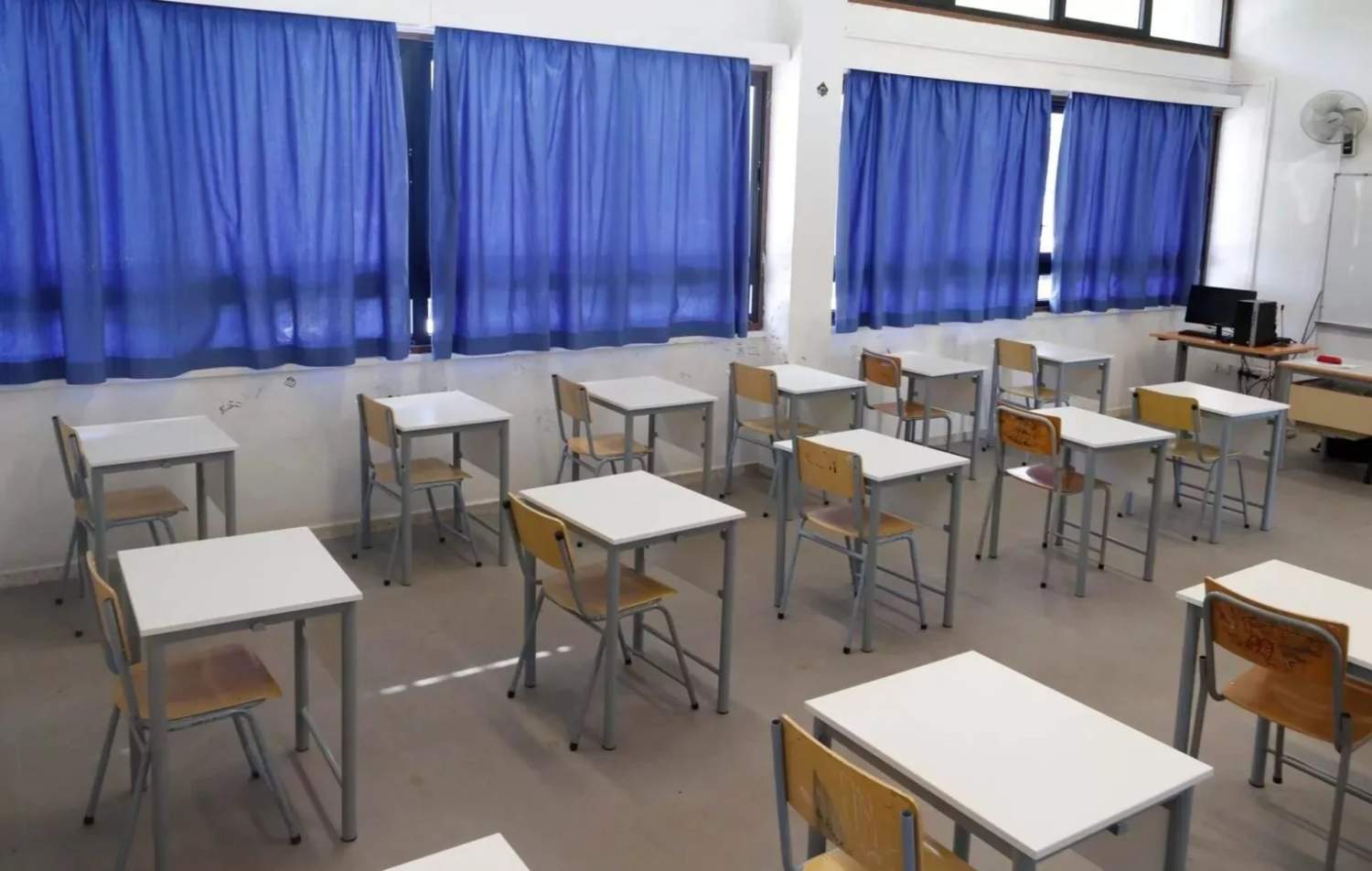
Leonidas Galazis, head of the State Institutes of Further Education at the Ministry of Education, told en.philenews that the woman had not been prohibited from attending lessons. However, she could not attend accompanied by her children.
According to Galazis, regulations governing the institutes dating from 1991 allow only enrolled students in classrooms and prohibit mixed classes of adults and minors.
He said allowing young children into adult classrooms raised safety concerns and questions about the protection of children’s rights, citing Articles 3 and 19 of the UN Convention on the Rights of the Child, which concern children’s best interests and their protection from violence, abuse and neglect.
Galazis also pointed to the possibility of children being exposed to lesson content intended for adults, alongside concerns about legal liability and insurance coverage in the event of an accident. Supervising young children, he explained, falls outside KIE teachers’ official duties and responsibilities.
Childcare available at evening schools
The situation contrasts with arrangements at some of Cyprus’s evening schools, where childcare provision allows adults with children to continue their education.
The Ministry of Education confirmed that, in certain cases, children attending with their parents can be supervised by a carer or kindergarten teacher in a separate classroom while their parents attend lessons.
Asked whether the ministry had considered introducing similar arrangements at the KIE, or intended to examine such a possibility, Galazis said this would require a political decision. As the official responsible for the institutes, he said he was not in a position to comment on whether such a policy would be adopted.
Gender Equality Commissioner calls for solutions
The distinction raises a broader question about access to publicly provided education, particularly for women who depend on childcare arrangements to attend classes.
Greek language lessons can be particularly important for foreign-speaking women seeking to improve their language skills and participate more actively in everyday life in Cyprus. For mothers without access to childcare, however, the requirement to attend classes without their children can become a practical obstacle to participation.
Gender Equality Commissioner Josie Christodoulou, asked by en.philenews whether the existing framework could disadvantage vulnerable groups of women, acknowledged the importance of protecting children while stressing the need to safeguard women’s access to education.
“Children’s safety and the protection of their rights are certainly a priority. At the same time, it is important to seek solutions that ensure women’s equal access to education, particularly for women from vulnerable groups who do not have access to childcare services,” she said.
Christodoulou suggested that existing childcare services could be used through cooperation with local authorities.
She pointed to Municipal Multipurpose Centers, which have specialised facilities supporting parents who lack alternative childcare arrangements.
The commissioner also proposed examining whether similar provisions could be introduced at the State Institutes of Further Education (KIE) through cooperation between the relevant ministries and other responsible bodies.
Such arrangements, she said, would need to take account of the number of women requiring assistance, the number and ages of their children, and the conditions necessary to provide safe supervision.
This would allow parents to attend lessons while their children receive supervised care elsewhere, as already happens at some evening schools.
“Protecting children and empowering women are not conflicting objectives,” Christodoulou said, adding that appropriate planning and cooperation could prevent childcare responsibilities from becoming barriers to women’s education, social integration and independence.

