


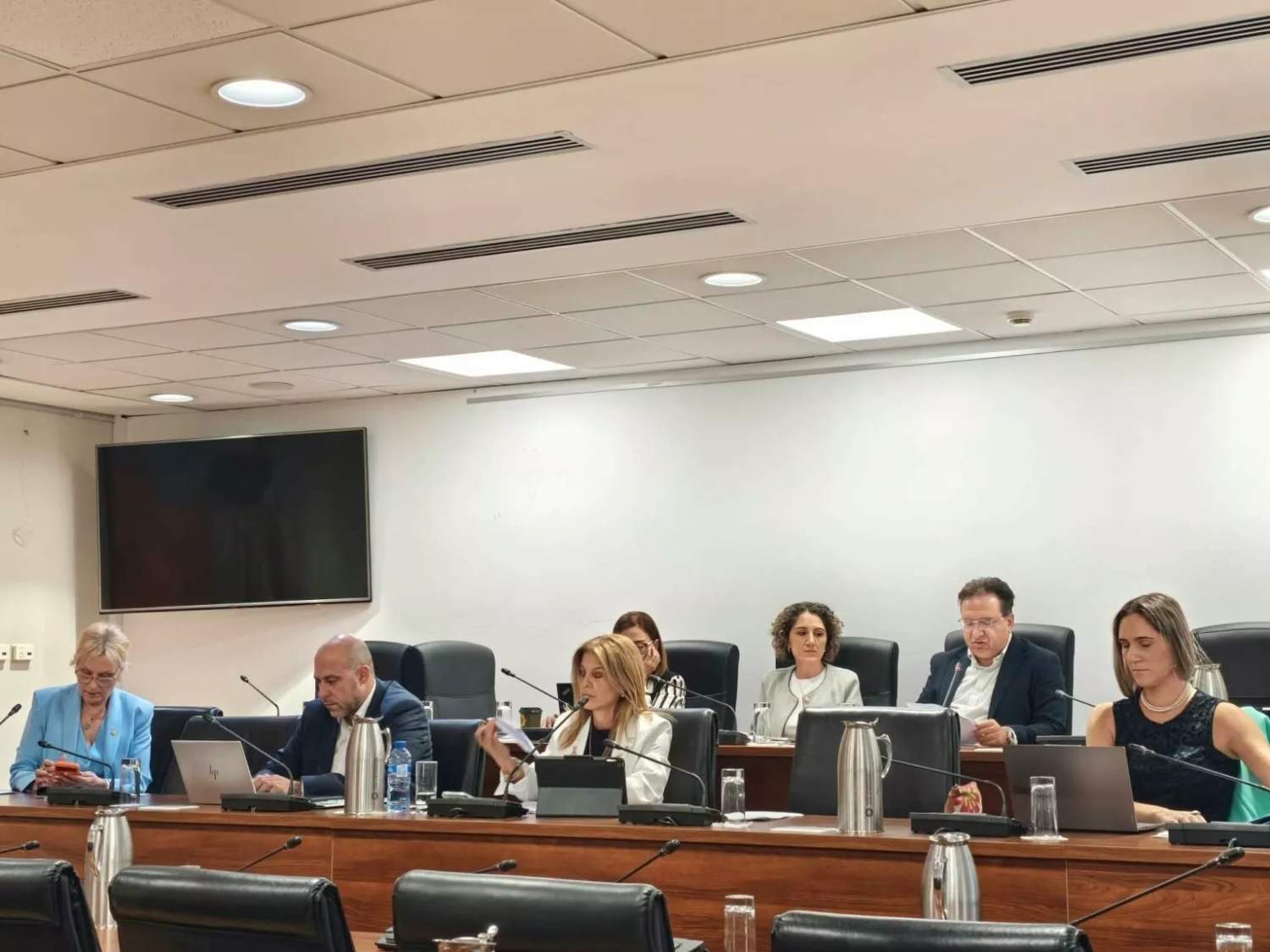
The chairman of the House Human Rights Committee, Christos Christofides, condemned two Direct Democracy Cyprus parliament members over a video in which they said nobody had understood a committee debate on neurotechnology, and called on them to withdraw their remarks.
Other committee members said the video, posted by Yiannis Laouris and Diana Konstantinidou, breached the parliamentary code of conduct and was part of an effort to discredit them so that Direct Democracy would be given an ad hoc committee on artificial intelligence, if one is set up.
Laouris apologised in case anyone had been offended, saying that had not been the video’s purpose. “If our post was read wrongly, as belittling our colleagues’ intelligence, we apologise,” he said.
Konstantinidou said they had the right to do politics as they saw fit. “We categorically deny that we violated any code of conduct,” she said, adding that she had been caught off guard and reserved the right to return to the matter. She said members of the committee cited breaches of the code selectively.
Chairman’s statement
Raising the issue before the committee’s scheduled business, Christofides said the two members’ public remarks after the previous session had sought to portray all the participating members as people who did not understand what was being discussed.
“I consider these specific disparaging and mocking comments completely unacceptable and I condemn them,” he said.
He said meaningful debate required mutual respect, evidence and responsibility for what is said in public, which was also an explicit obligation under parliament’s code of conduct. He cited Part II of the code, which requires respect for all members of the House and their staff in paragraph 3, and that members refrain from offensive behaviour in paragraph 4, both in their duties and in public life generally.
Dismissing colleagues and participants wholesale undermined dialogue and was grossly unfair to the committee’s work, he said, adding that any disagreement should be specific about which position was being challenged, with what evidence and with what counter-proposal.
A responsible public assessment of a session also required adequate knowledge of what had been discussed, he said, noting that Laouris had arrived shortly before the session ended. He said clear limits should be set from the start so that such practices did not become established.
ALMA letter
ALMA parliament member Irene Charalambides submitted a letter from her party, which will also be put to the meeting of party leaders, urging them not to set up a new special committee on artificial intelligence.
The letter says parliament already has the structures to examine the issue through existing committees, cooperation between them, the help of specialist scientists and the involvement of members with relevant knowledge or interest.
It also raises the issue of respect between members. It says the committee met on October 5 to discuss neurotechnology and human rights, focusing on the right to mental privacy, mental integrity and freedom of thought, with representatives of universities, the scientific community, state services and independent authorities invited to take part. Konstantinidou afterwards posted a video saying “nobody understood anything”, the letter says.
It is entirely legitimate for a member to say they personally found a specialist subject hard to follow, the letter says, but not to present that experience as universal and attribute it to all their colleagues. ALMA’s Litsa Drousiotou, a committee member, has said she understood the subject perfectly, it adds. The party says it does not want to make the matter personal.
Exchange in committee
Laouris said he did not like to boast but was the only neurophysiologist in Cyprus, and offered to help his colleagues. He said that when Direct Democracy met the House President, she had told them she would give the party the ad hoc committee. He added that he and Konstantinidou also felt hurt by their colleagues’ comments.
Charalambides then asked to speak, but Konstantinidou intervened, saying she could not take the floor again. Charalambides replied that it was for the committee chairman to give members the floor.
“I have been in parliament for 15 years and this is the first time,” she said, describing it as an unprecedented situation for a colleague to deny her the floor. She added that the House President had promised Direct Democracy the AI committee, calling it an important political issue.

