


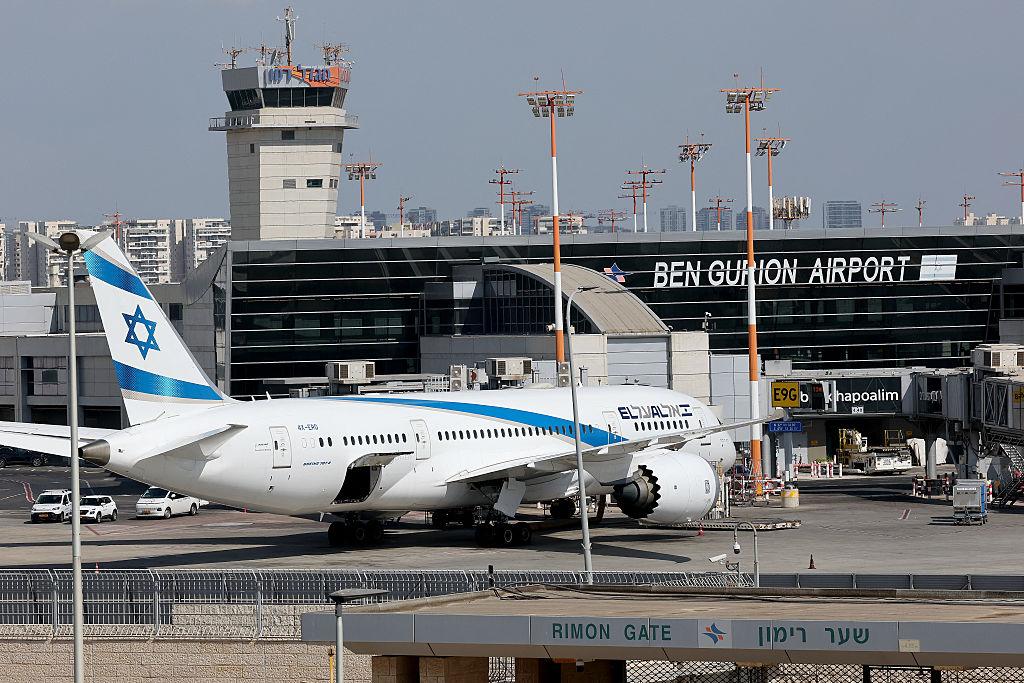
The attempted hijacking of a Flydubai aircraft on a flight from Dubai to Tel Aviv has reignited debate over aviation security at a time when air travel is undergoing unprecedented changes, both in the number of flights and airlines operating them and in how the industry itself is structured.
In the 1960s, airlines operated approximately six million flights annually. That figure rose to 9.7 million in the 1970s and stands at 38.9 million today. Passenger numbers have increased even more dramatically, from 106 million a year in the 1960s and 383 million in the 1970s to 9.5 billion annually today.
Comparing aviation safety then and now is almost absurd. Modern technology lets aircraft land safely in situations that once would have been considered hopeless, correcting human errors that previously caused crashes.
Indeed, comparing the 1970s (1970–1979) with the 2010s (2010–2019), the number of fatal accidents involving passenger aircraft of all types — defined as accidents resulting in at least one death — fell by 70.8%.
Technology is largely responsible for that improvement. Advances in aviation systems can now compensate for most human errors during flight.
But that applies to errors made by the human mind. Hijackings are not errors of that kind.
Nationality as a security criterion
On Flydubai flight FZ1073 on 30 September, the threat was already inside the cockpit.
The events are well known and, in themselves, point to security failures. But they also raise a broader question: are today’s safeguards and security measures sufficient?
That question has been the subject of intense debate in Israel in recent days, amid indications of extraordinary mistakes and omissions in the handling of an Omani pilot who had reportedly been dismissed by Oman Air over social media posts containing Islamist material.
The pilot should not have been permitted to operate flights to Israel in the first place.
Israel applies rules barring pilots and crew members who hold citizenship of countries without diplomatic relations with Israel from working on flights to the country, regardless of the airline involved.
The restriction applies even if they hold dual citizenship with another country.
The question of wet leasing
This is where the current debate in Israel begins.
It has quickly expanded to the practice known in aviation as wet leasing.
Under the ACMI model — aircraft, crew, maintenance and insurance — an airline leases an aircraft together with its crew, maintenance arrangements and insurance coverage from another operator.
Passengers buy tickets from one airline but travel on an aircraft operated by another, under the operating carrier’s certification and procedures.
The European Union Aviation Safety Agency (EASA) makes clear that the airline leasing the aircraft retains overall responsibility for ensuring that the flight is operated safely.
In other words, the airline named on a passenger’s booking does not necessarily tell the whole story about who operates the aircraft or which safety and security procedures apply.
According to Israel’s Channel 12, 70% of Arkia flights and 56% of Israir flights in July 2026 were operated using leased aircraft.
An examination of available historical flight records for services from Cyprus to Israel during the same month found that foreign-registered aircraft accounted for 73.1% of Arkia’s recorded flights and 66.7% of Israir’s.
These figures do not constitute a complete census of flights, nor does foreign registration alone establish the type of leasing arrangement involved.
Channel 12 reported that Israeli security personnel are not required to be present on these leased flights and that departure screening at foreign airports differs from Israel’s additional security screening system.
The report nevertheless noted that crew details are forwarded to the Israeli security services.
The central question is whether these differing procedures provide the necessary level of protection in every case.
Why Cyprus matters
This is where Cyprus enters the picture.
Approximately 190 flights a week connect Larnaca and Paphos airports with Ben Gurion Airport in Tel Aviv and Haifa Airport.
Until recently, two different categories of security screening applied: one for aircraft operated by Israeli airlines and another for all other flights.
Passengers travelling with Israeli carriers were required to undergo an additional security interview.
Some have repeatedly portrayed this procedure, whether through misunderstanding or deliberately, as a violation of the sovereignty of the Republic of Cyprus.
Yet this type of screening is used by Israeli airlines worldwide and is also applied to flights bound for the United States.
The screening of Cypriot and Greek-speaking passengers is now carried out by specially trained Cypriot personnel, while Israeli personnel screen other foreign passengers.
What has changed recently
Until recently, passengers flying with El Al, Air Haifa, Arkia and Israir underwent this additional screening procedure.
Flights operated by Cyprus Airways, Aegean, TUS, Wizz Air and Ryanair — the latter from Paphos — were treated like other international services.
It is worth stressing that airport security requirements in Cyprus are established by the European Union and rigorously enforced.
This should not be interpreted as suggesting that non-Israeli airlines operate to lower security standards.
Quite the opposite. They are not the subject of the present debate.
Wet leasing, misconceptions and risks
The issue concerns Israeli airlines leasing aircraft from smaller operators specialising in such arrangements.
It also concerns a recent change to the previous practice under which additional screening was applied to all Israeli airlines, regardless of whether flights were operated using their own aircraft or leased ones.
That screening requirement has now been removed for flights operated with leased aircraft.
Most of the companies supplying these aircraft are based in Denmark, Bulgaria and Romania, meaning they are subject to the European Union’s strict aviation oversight.
However, the concerns being raised in Israel extend beyond the vetting of these crews.
Such vetting clearly cannot match the level of scrutiny associated with permanent employment by established airlines.
More importantly, the debate focuses on Israel’s own responsibilities and any shortcomings that may exist in its security checks.
Ultimately, responsibility for carrying out those checks rests with the Israeli authorities.
Airlines, whatever their business model, cannot perform the same level of security vetting themselves, regardless of whether their crews are permanent or regularly rotated.
It should also be noted that EU regulations require passengers travelling to and from the European Union to be informed about the identity of the airline operating their flight.
The wider question of aviation safety
Disclosure of the operating airline gives passengers essential information before boarding.
Assessing the safety of a flight, however, remains the responsibility of the relevant authorities and airlines, which must consider the operating carrier, its personnel and the particular route.
The route itself matters.
As of 7 October, EASA’s active recommendations called for aircraft to avoid the airspace of Iran, Iraq and Jordan at all altitudes.
In Lebanon, an exception applies to flights arriving at or departing from Beirut, provided they approach and depart over the sea and remain subject to continuous risk assessment.
These are safety recommendations, not automatic worldwide closures of the airspace concerned.
In Saudi Arabia, the avoidance recommendation applies to a designated section of the Jeddah Flight Information Region (FIR), while caution is advised across the rest of the Middle East.
High-risk maritime areas have also been identified in the Persian Gulf and Gulf of Oman, with a specific exception in the former for essential arrivals and departures.
For Yemen, certain eastern maritime routes are exempt.
In Syria, EASA distinguishes between a western section of airspace that should be avoided at all altitudes and the remainder, where it recommends avoiding flights below 26,000 feet and exercising caution at higher altitudes.
The consequences of an aircraft being mistakenly identified as a threat by air defence systems on high alert have already been demonstrated with devastating results.
On 8 January 2020, Ukrainian flight PS752 was shot down shortly after take-off from Tehran, killing all 176 people on board.
EASA continues to highlight the risk of misidentification in Iran.
In Syria, it also identifies threats at lower altitudes, including man-portable air defence systems, rockets and drones.
Risks on the ground and in the air
The dangers are not confined to aircraft in flight.
On 7 October, AFP reported through L’Orient-Le Jour that, according to Yemen’s state news agency Saba, the Houthis had attacked Aden airport using two ballistic missiles and drones.
At Ben Gurion Airport, a missile launched from Yemen on 4 May 2025 caused a temporary suspension of operations and the diversion of flights.
Aviation security must therefore extend beyond the aircraft itself to cover approaches, departures and airport infrastructure.
For Cyprus, these concerns also extend to satellite navigation.
In EASA’s records dated 7 October, the Nicosia Flight Information Region appears in both its seven-day and 30-day monitoring tables, with spoofing indicators and reported incidents.
Jamming interferes with the reception of satellite signals, while spoofing introduces false position or time data.
The latter can produce misleading instrument readings and false terrain proximity warnings.
Addressing these threats requires properly trained flight crews, incident reporting and alternative navigation systems.
Importantly, the data covers the entire Nicosia FIR. It does not mean that every flight is affected or that an aircraft can be remotely taken over.
Add to this the flights of Turkish military helicopters and other aircraft, and the picture becomes almost dystopian.
Put simply, aviation safety is not just about what you do yourself. Cyprus, at least, is taking the necessary steps. The wider circumstances matter too.
Accountability depends on the answers to three questions: Who carries out the checks? Who makes the decisions? And who corrects the failures uncovered by an investigation?
Technology has made flying safer. But protecting aviation still requires people capable of recognising threats before it is too late.
That is the challenge facing Israel today.
And Israel is not alone.

