


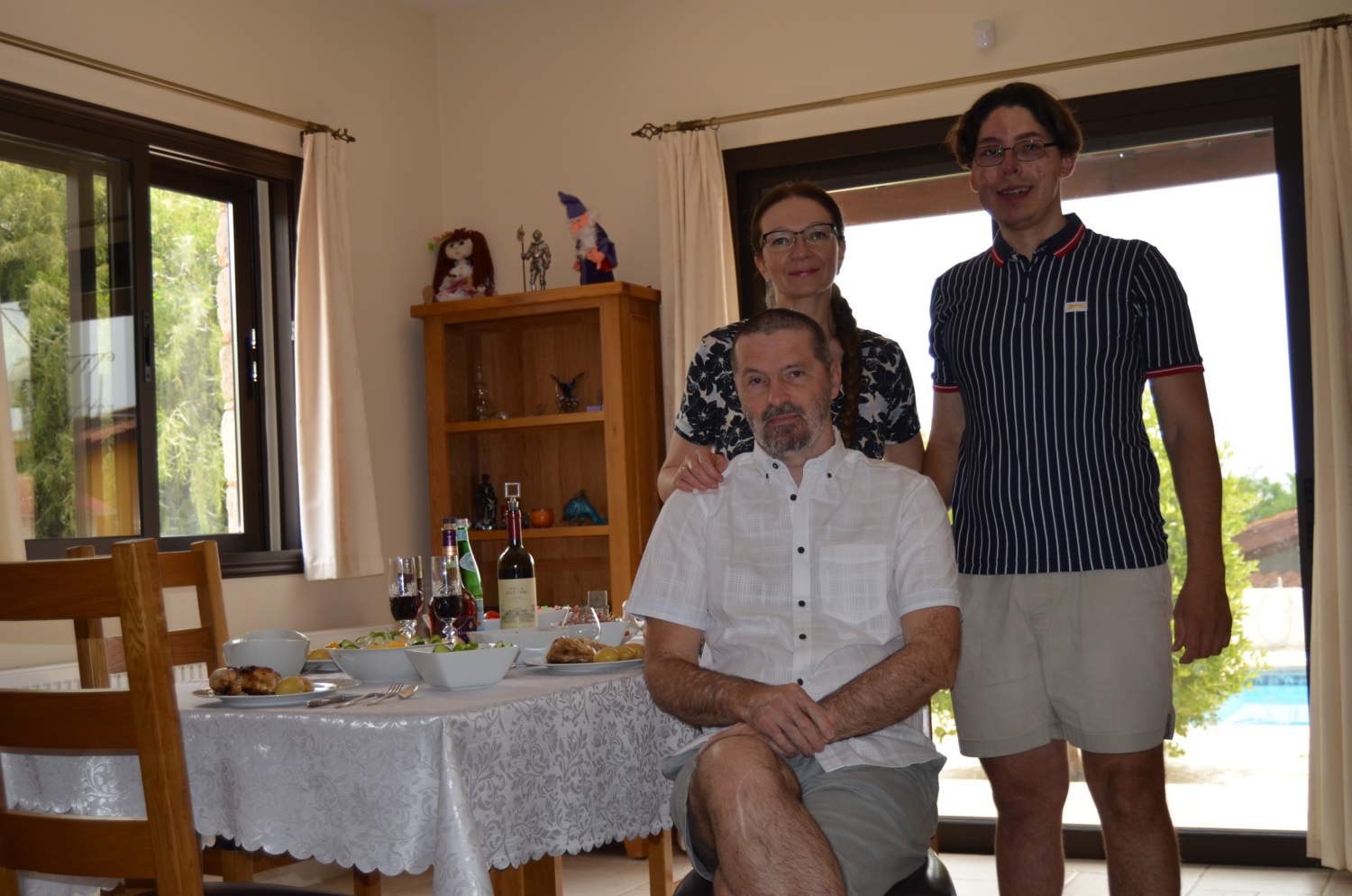
Alexey S. was diagnosed with type 1 diabetes after what his son, Dmitry, described as a massive radiation leak at the Kurchatov Institute in Moscow. He was part of a group of 17 infants with type 1 diabetes, all of whom except Alexey died before the age of ten, Dmitry said.
In 1966, a radiation leak occurred at the Kurchatov Institute in Moscow, Dmitry explained. The endocrinologist treating Alexey and the other infants said that this was classified, and if anyone found out she would “have her head torn off”, Dmitry added. Alexey is now a recipient of the Medal of Courage awarded by the Joslin Diabetes Center in the United States.
Alexey’s resistance to radiation was never investigated, with even the Joslin Diabetes Center declining to look into it, Dmitry continued. Today, Alexey suffers from numerous diabetes-related complications, with the family’s primary concern being the deteriorating condition of his left eye.
At the time, Dmitry told en.philenews, people were afraid to visit Leningradsky Park in Moscow because, he said, the tops of the trees had withered from the radiation leak. Dmitry explained that due to the Cold War, there is no official information about this incident available, with the only official record of radioactive contamination existing in his father’s certificate of assigned pensions.
The family decided to move to Cyprus 11 years ago, on 7 October 2015, after Dmitry visited from Malta with a group of students during university, and took a liking to the island, he said. He added that the weather was also ideal for his father and his autoimmune condition, which manifests as a severe allergy to cold weather. Alexey’s condition, Devergie’s disease, causes his skin to break out in toxic red patches when exposed to freezing temperatures, Dmitry stated. Living in a warm climate means Alexey does not have to take medication for this condition, Dmitry explained.
Dmitry himself has Sturge-Weber syndrome; he stated that he manages his glaucoma and periodic leg cramps, but told en.philenews that the condition makes socialising and making new acquaintances difficult.
Dmitry stated that the media at the time were encouraging people to move to Cyprus during a severe economic crisis, promising affordable real estate and ‘automatic’ naturalisation. In 2015, numerous companies, mainly real estate agencies, were promoting relocation to Cyprus, Dmitry said.
He added that the Cypriot government also encouraged relocation, waiving capital tax on property purchases and cutting property transfer fees in half. Publications in both English and Russian claimed that naturalisation in Cyprus would happen automatically after living in the country for seven years, Dmitry stated.
The family cannot return to Russia because of their anti-war position, which has led to threats against them, Dmitry said. They posted multiple anti-war posts on their blog, which resulted in the threats, including emails and threats from sources linked to the state, Dmitry explained. On top of that, Alexey’s insulin, glucose test strips, and other testing devices are not available in Russia, Dmitry said.
On 7 March 2023, Dmitry and his family submitted their applications for naturalisation. Three years later, they are yet to receive approval from the Interior Ministry, which told en.philenews that their application is still undergoing examination.
On 28 May 2026, the Administrative Court ruled that the Ministry was unaware of Alexey’s disability, which Dmitry says is untrue, as he submitted a formal statement informing the ministry of the issue. The court also declared that the ministry’s three years of inaction was unlawful and entirely unjustified, Dmitry told en.philenews.
The ruling initially gave the family hope that their application would move forward, but that hope was misplaced, he said, because the court set no deadline for a decision. More than 100 days have passed since the court ruling, which Dmitry described as to “practically useless” to their situation.
Dmitry believes the situation would have been different in Malta, he told en.philenews. He added that if a court ruling similar to the one concerning his father had been issued and the Interior Minister failed to act on it, a court martial would have signed the order on his behalf within 14 days. “This illustrates the vast difference between the rule of law and lawlessness,” he stated.
The Ministry told en.philenews that as the Administrative Court stated, it was not informed of the particularities of the applicant’s health, and, on the basis of supporting evidence, establishes that priority is warranted for serious medical or other humanitarian reasons, with priority given to the examination of the relevant application.
Dmitry stated that he and his family personally delivered a document demanding compliance with the court ruling within the statutory 30-day period, in June, along with a copy of the court ruling. In July, they filed a complaint through i-justice after no action was taken, he added.
After filing the complaint, they received an invitation to an interview in Nicosia; the family suggested the interview be held in Paphos, where they reside, as travel affects the disabled members of the family, Dmitry said. Their request was denied, Dmitry continued, and the family made the trip by bus, as they are not able to tolerate long car journeys. He stated that they were told the process and decision would take two months; when the two months were up, the family was told the decision would come by Christmas.
The wait has taken a mental and physical toll on the family, Dmitry said. He stated that multiple members of the family were diagnosed with depression, which led to Alexey struggling to treat his diabetes properly, and Dmitry’s mother experiencing severe mental distress.
The glucose fluctuations, he continued, caused Alexey further complications, mainly affecting his left eye and causing sudden spikes in his blood pressure. Dmitry said the ministry was aware of the toll on the family and had replied that it was making every possible effort to complete pending applications as soon as possible.
Dmitry also stated that the long wait for naturalisation, and the resulting lack of access to the GHS, have made his father’s diabetes treatment a financial strain. He recalled a visit to the emergency department with a hypertensive crisis, where they had to pay out of their own pocket because their insurance did not cover pre-existing conditions.
Alexey also requires treatment abroad, for an ophthalmic surgery, Dmitry said, saying the family is not confident surgeons in Cyprus could perform such a procedure due to the lack of experience. They tried to obtain a visa for Germany for said surgery but were denied because they had no physical residence card and their pink slips were short-term, he explained.
The Ministry told en.philenews that it is not in a position to comment on matters falling within the remit of the GHS and cannot comment further on the case prior to the conclusion of the examination process.
Dmitry told en.philenews that “nothing remains of the life we once knew”, and that it was impossible to spend so much time reviewing the case of a vulnerable group of people. “It is inhumane,” he stated.
The family recently sent a statement regarding their situation to the UN Special Rapporteur on the Rights of Persons with Disabilities, hoping to ensure the safety and health of the people living under chronic uncertainty in Cyprus, Dmitry said.
They also plan to hold a peaceful protest outside the presidential palace in October, to raise awareness about the treatment of disabled persons in Cyprus, though they would prefer not to disturb the public with such activities, Dmitry stated.

