


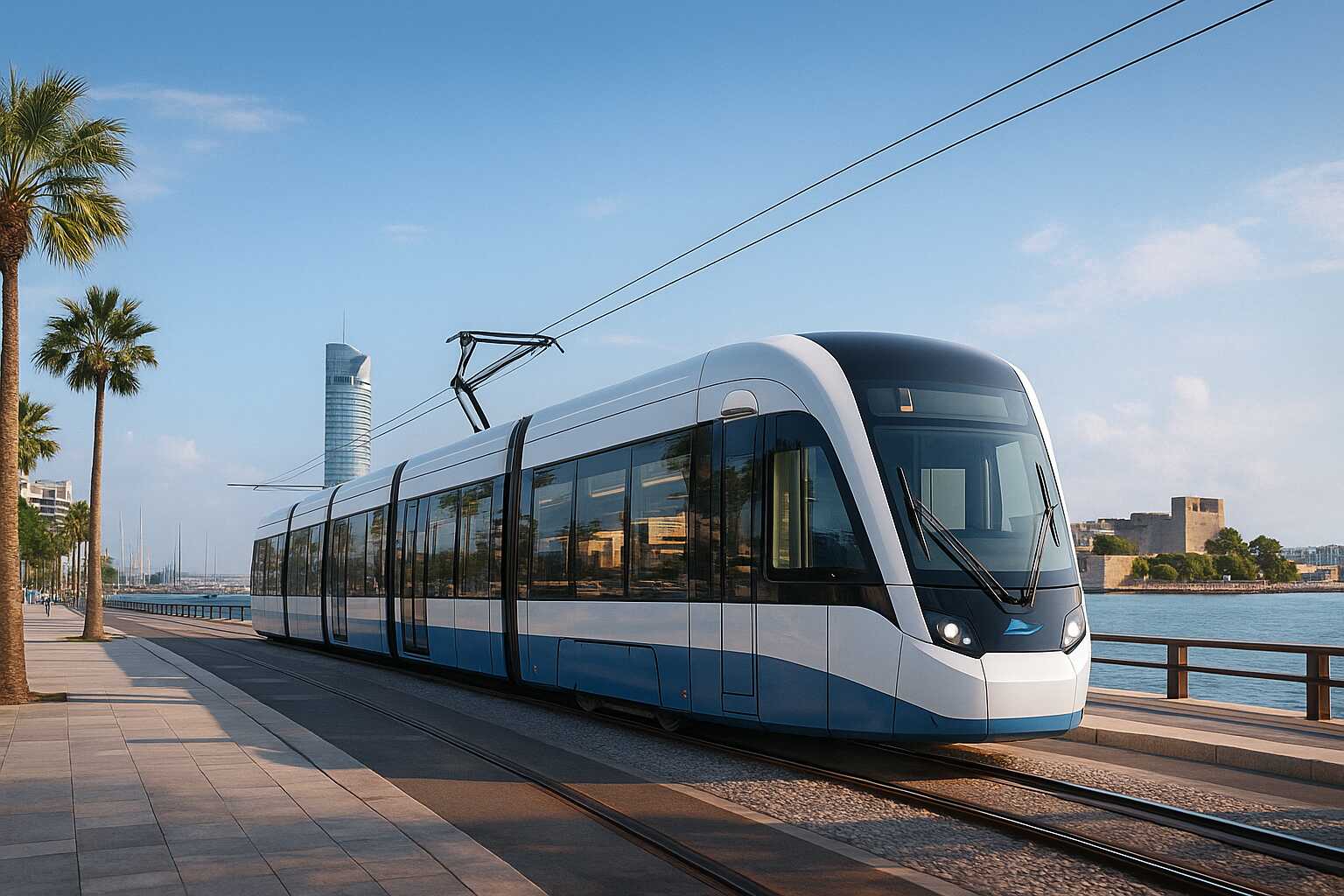
A preliminary study indicates that property values along the proposed Limassol tram route could surge by an estimated €1.5 billion if the infrastructure project moves forward. Limassol Mayor Yiannis Armeftis noted that the projected capital appreciation extends beyond baseline estimates, emphasizing that the immediate priority is completing an ongoing feasibility study in collaboration with the municipalities of Amathounta, Polemidia, and Kourion.
Nicosia has also expressed interest, with joint discussions underway regarding urban transit challenges and the long-term prospect of a train link between the two cities, though that concept remains outside the current planning phase. Mayor Armeftis stressed that neither Limassol nor Nicosia intends to build a tram system at any cost. The initial focus centers on rigorously testing whether the project is viable, capable of serving urban residents, protecting the environment, easing traffic congestion, and creating more human-centric living spaces.
If the preliminary findings remain encouraging, local authorities may deepen their investigation, especially given that current bus ridership models have fallen short of desired outcomes. Officials aim to evaluate connecting the port to the city center via Aktaia Street, linking strategic developments from the port area through the urban center and onward to Amathounta. Despite annual bus subsidies reaching around €25 million in Limassol, public transit usage hovers between 2% and 5%. However, authorities clarify that buses and trams would operate as complementary, rather than competing, transport modes.
Projected costs and route options
Limassol, along with Polemidia and Amathounta, has commissioned traffic and spatial studies to address severe congestion, with the core feasibility study slated for completion within October at a cost ranging from €600,000 to €1 million. Planners have mapped out two alternative routing options shaped in an approximate X-shape to allow for flexible connections:
- The first route starts at Kolonakiou Street in Germasogeia, runs through Griva Digeni and Gladstonos streets, passes along Aktaia Street and the port, and terminates at the Lady’s Mile roundabout.
- The second route connects Ypsonas-Kourion, passing through Paphos, Misiaouli, and Kavazoglou streets before leading to the Amathounta coastal road.
Construction costs are estimated between €25 million and €35 million per kilometer. For a baseline network of 10 kilometers, costs would total approximately €250 million, while a 25-kilometer network could range from €500 million to €600 million. Proponents argue that the broader Limassol metropolitan area, encompassing surrounding municipalities, workers, and visitors, reaches a population threshold of roughly 500,000, creating the critical mass necessary to sustain a tram network.
Nicosia joins transit debate
Nicosia Mayor Charalambos Prountzos recently raised the issue of securing transport ministry funding for feasibility assessments, noting that the ministry has yet to respond. Prountzos clarified that Nicosia seeks to update historical studies rather than draft new ones, factoring in environmental costs such as vehicular carbon emissions alongside construction and maintenance expenses.
While transport ministry branches have suggested that the European Investment Bank might hesitate to fund a tram project given current low bus penetration rates, municipal leaders reject this logic. They argue that traditional bus systems have had roughly 17 years to prove their efficacy without reaching targeted ridership. With Nicosia’s existing bus contracts expiring in 2030, local officials maintain that the current period offers an ideal window to re-evaluate alternative mass transit frameworks.

