


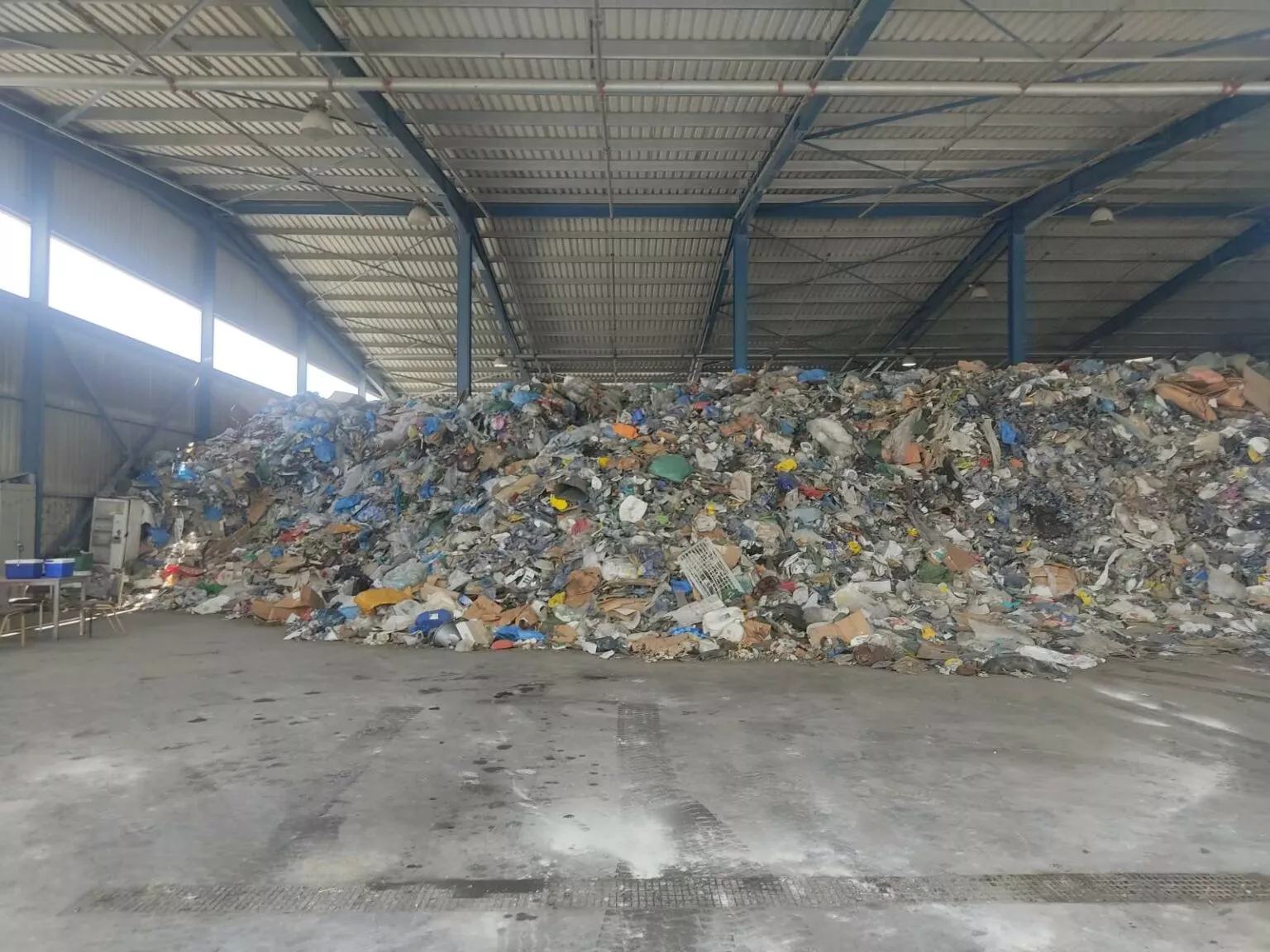
Years of delays, paperwork-only planning, and unresolved bureaucratic backlogs have left Cyprus facing severe financial penalties from the European Court of Justice over its environmental policy failures. The European Commission’s decision on October 1, 2026, to refer Cyprus to the Court of Justice of the European Union (CJEU) seals a multi-year trajectory of procrastination and a lack of political will.
Despite warning letters sent since 2021 and a reasoned opinion issued in December 2024, competent authorities failed to present a credible and actionable plan. Today, 21% of municipal waste in Cyprus is buried without any prior treatment, while total national reliance on landfilling reaches 63%, falling severely short of the EU target to limit landfill reliance below 10% by 2035.
For years, the state has relied on studies, consultations, transitional periods, and paper plans while infrastructure ages and waste accumulates. Rather than implementing bold reforms, decisions have been postponed and responsibilities shifted across departments, ministries, and local authorities. Key infrastructure failings are evident, with the Paphos Landfill remaining an open wound where waste essentially receives no management.
Sub-standard facilities and state inaction
The Pentakomo Integrated Waste Management Facility (IWMF) continues to underperform despite the Water Development Department (WDD) taking over its operations in December 2023. The facility carries accumulated technical, operational, and organizational backlogs, while its definitive upgrade is repeatedly postponed. Since taking over, the WDD, supported by the Development Agency of Limassol, has signed over 180 contracts to cover operational needs, equipment interventions, occupational safety, fire protection, and environmental safeguards.
A prime example of state inertia is the Kosii IWMF. When the illegal Kotsiatis dumpsite was slated for closure in 2018, massive volumes of Nicosia district waste—exceeding 270,000 tons of mixed waste—were redirected to Kosii. However, the facility lacked the capacity to process these quantities. Instead of timely planning for expansion to prevent raw waste from reaching the dumpsite, the state opted for easy landfilling, prioritizing the safety of delay over the responsibility of decision-making.
The existing Kosii infrastructure could have handled waste from Nicosia, Larnaca, and Famagusta without resorting to landfilling if necessary expansion investments and equipment renewals had been prioritized over its 15 years of continuous operation. Instead, equipment was allowed to age, cell capacity was exhausted, and Cyprus was led mathematically from Brussels to Luxembourg.
Government planning and compliance strategy
The primary challenge facing Cyprus in waste management remains its heavy reliance on landfilling. While significant investments have been made in waste infrastructure and recycling systems in recent years, a major share of municipal waste still ends up in landfills.
Definitive plans for upgrading the two IWMF units will be shaped by a forthcoming Sustainability Study of the Municipal Solid Waste Infrastructure Network, which will define necessary infrastructure for the national network through 2035 and is expected to conclude in 2028. High priority is given to the Paphos district, where waste is still disposed of untreated, with an interim action plan targeting the end of this practice no later than 2027.
Pending the study’s completion, immediate operational interventions are being promoted to cover transition periods. According to current planning, contract awards for upgrading the Pentakomo IWMF are expected in the second half of 2027, followed by the Kosii IWMF in the first half of 2028, with upgrade works estimated to take 36 months.
Compliance with European and national targets relies on implementing actions outlined in the Cabinet-approved Municipal Waste Management Plan 2022-2028, which includes rolling out source-separation systems and the Pay-As-You-Throw scheme.

