


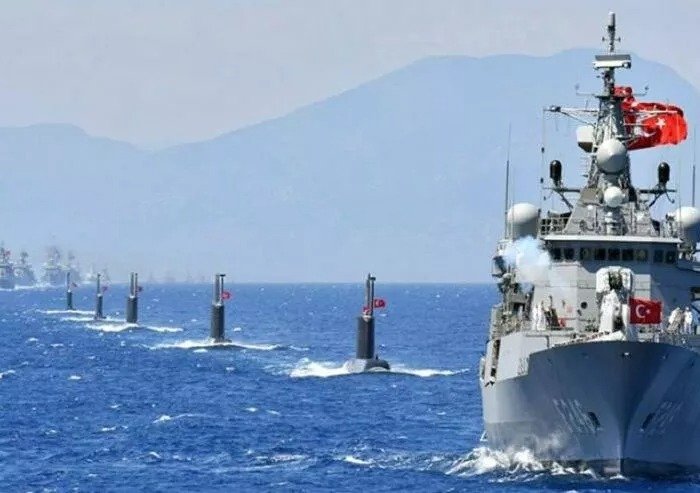
The European-backed electricity cable designed to end Cyprus’ energy isolation has become the latest flashpoint between Ankara and the EU, after Turkey warned it would not permit what it considers unauthorised cable-laying or survey activity in waters it claims as part of its continental shelf.
The warning came on Thursday, October 1, coinciding with the 66th anniversary of the Republic of Cyprus’ independence.
Turkey’s Defence Ministry said that any cable or pipeline installation, or scientific research in what it describes as its continental shelf, must first be coordinated with Ankara. Turkish officials cited maritime arrangements with Libya and the Turkish Cypriot authorities as part of the basis for their position.
What is the GSI?
The project at the centre of the dispute is the Great Sea Interconnector (GSI), a planned subsea electricity link connecting Cyprus to the European grid through Crete and Greece, with a later connection to Israel. For Cyprus, the stakes are particularly high: it remains the only EU member state without an electricity interconnection with the European grid.
The GSI’s Greece-Cyprus section is planned to run for roughly 900 kilometres. The European Commission has designated it a Project of Common Interest and allocated about €657 million through the Connecting Europe Facility. Brussels describes the project as strategically important for ending Cyprus’ energy isolation, integrating renewable energy and strengthening the resilience of Europe’s electricity system.
The project, however, has been repeatedly delayed by both financial and geopolitical obstacles. Cyprus’ government has said the interconnector is now expected to become operational in 2029, while the European Commission continues to describe implementation as delayed.
There has nevertheless been fresh movement this summer. In August, French investment group Meridiam became the majority shareholder in the GSI company established by Greece’s electricity transmission operator IPTO. A separate agreement with cable manufacturer Nexans was signed to advance seabed surveys, identified as a priority for moving the project forward.
Those surveys are now at the heart of the latest dispute with Ankara
Greek MEP Nikolas Farantouris, of the Socialists and Democrats (S&D) has asked the European Commission how it intends to respond to Turkey’s latest warning and how it will protect the sovereign rights of Greece and Cyprus and the implementation of the GSI.
“Together with the Commission, we call on the government to respond immediately, firmly, institutionally and officially to Turkey,” Farantouris said, calling for the issue to be raised at the European Council and with the wider international community.
Speaking to en.philenews, Farantouris described this development as an “escalation of provocations against a European project”, stressing that it came on Cyprus’ independence anniversary.
Background
The dispute reflects a much wider disagreement over maritime boundaries in the Eastern Mediterranean. The EU has previously rejected the legal effect of the 2019 Turkey-Libya maritime delimitation memorandum on third states, saying it does not comply with the law of the sea and cannot produce legal consequences for them. Brussels has also repeatedly reaffirmed its solidarity with Cyprus over its sovereign rights.
Ankara, for its part, maintains that activities in areas it considers part of its continental shelf require Turkish authorisation. Its latest statement also criticised the military parade in Nicosia marking Cyprus’ independence, arguing that military cooperation involving Cyprus, Greece and third countries contributes to tensions on the island.
For Brussels, the GSI therefore sits at the intersection of three issues: Cyprus’ long-standing energy isolation, the EU’s drive to build a more integrated electricity market, and the unresolved maritime and security disputes between Turkey, Greece and Cyprus.
The Commission has already said that it remains in regular contact with the governments and companies involved, including on the project’s geopolitical risks, and that the EU is committed to defending the interests and sovereign rights of its member states in accordance with international law.
(Sources: European Commission, European Parliament)
Read more:

