


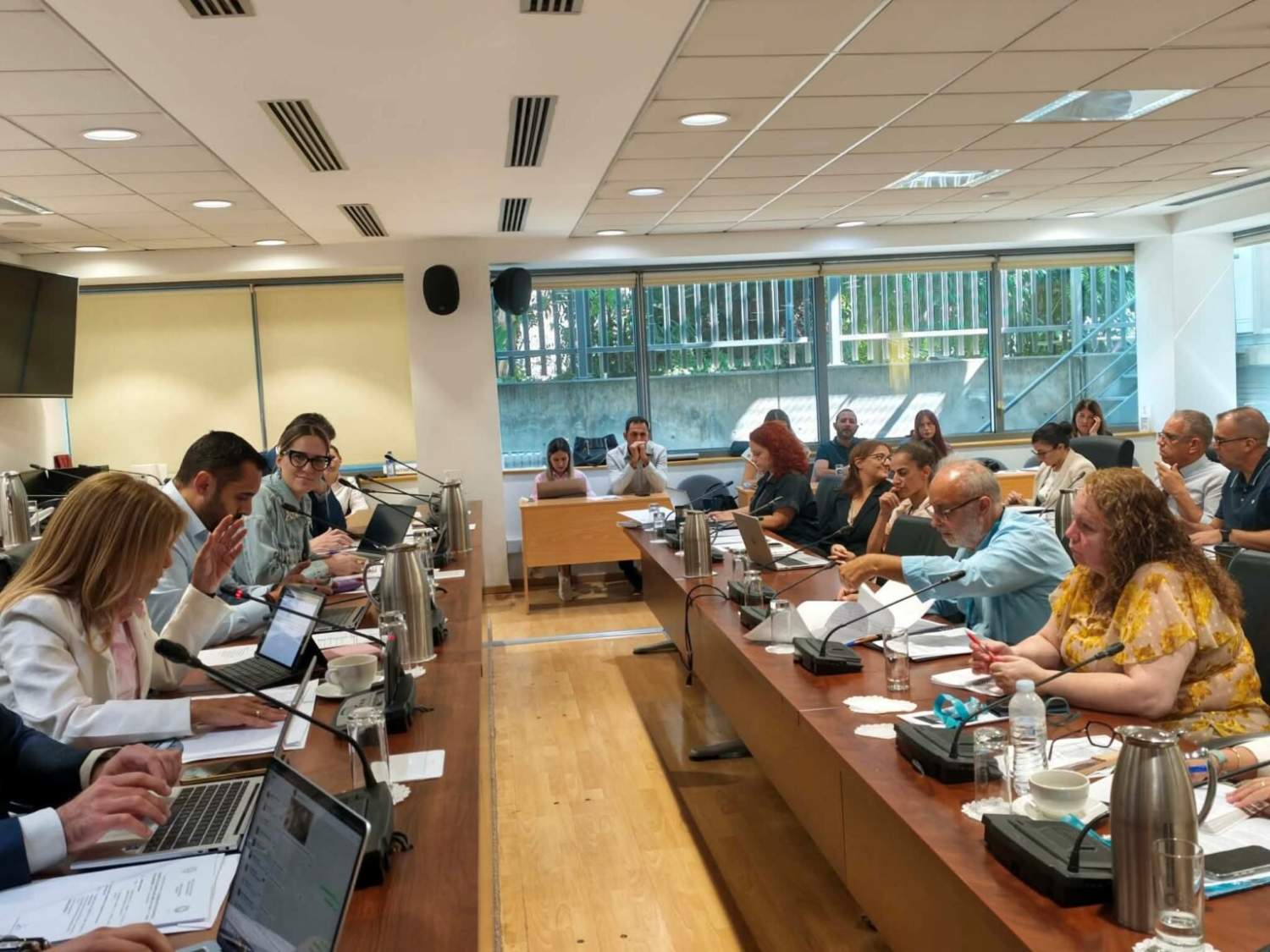
Companies are refusing to close anonymous accounts that hurl abuse, citing “freedom of expression”, Andreas Anastasiades, head of the Police Cybercrime Subdirectorate, told the House Human Rights Committee as it discussed hate speech.
When police ask the US company where an account operates for its details, the process is time-consuming, Anastasiades said. He said companies also often tell officers that a VPN is being used and the user cannot be traced.
Police have no dedicated unit for the issue, he said, but two officers in each district handle cases of incitement to violence online or offline. There were 57 recorded hate speech incidents in 2023, 54 in 2024 and 44 in 2025, with criminal cases opened in 32, 30 and 18 respectively.
The committee returned to the issue after a year and a half, on a proposal from parliament members Giorgos Koukoumas, Christos Christofides, Anastasia Hasikou and Argentoula Ioannou.
Christofides, who chairs the committee, said at the start of the session that at least 1,000 hate speech comments are produced every 24 hours in Greek-language content, recalling figures presented at the previous session. Of these, 48 per cent carry Nazi content, 21 per cent deny or distort the Holocaust, 11 per cent are anti-LGBTQI and 10 per cent are anti-refugee.
A representative of the Deputy Ministry of Innovation said the Cabinet has approved a plan to protect minors, proposing 15 as the minimum age for social media access so that children are not exposed to such content. A regulatory instrument, an age-verification tool, and prevention and awareness actions will follow, the representative said.
Justice Ministry representative Anthi Papoutsidou said several laws regulate hate speech, the most recent from 2025. She said a National Strategy was adopted in 2021 and actions were taken on racism, violence against women and other issues, a committee has been appointed for the LGBTQI community, and action for Roma is being prepared. Hate speech appears online, at work and in daily life, she said, and “the targets are usually vulnerable people”.
Journalists
The Cyprus Union of Journalists intervened in 26 cases of threats against journalists over the past ten years, six of them threats to their lives, its president, Giorgos Frangos, said.
Frangos said it is extremely important that journalistic content is clearly separated from any other speech expressed online and elsewhere. He recalled that a 2023 insult bill drew public outcry worldwide and across Europe, and did not go forward. He said the aim in trying to control hate speech is not to put a brake on journalism or censor the criticism it makes.
Media Ethics Committee chair Elli Kotzamani noted that the Code of Journalistic Ethics has had a special provision on hate speech since 2021.
Regulators
The Radio-television and Digital Services Authority supervises online platforms based in Cyprus, while the European Commission is responsible for the very large ones, such as YouTube and Facebook, the authority’s director, Irene Loizidou Nikolaidou, said. The authority is recording all platforms in Cyprus and has sorted them into categories such as gaming and pornography, so that it knows what it supervises. “Today we have 117 such platforms under investigation,” she said.
The Data Protection Commissioner’s office said hate speech is widespread and rising worldwide. Criminalisation would help, it said, but what is needed is a holistic strategy to tackle it.
Read more:

