


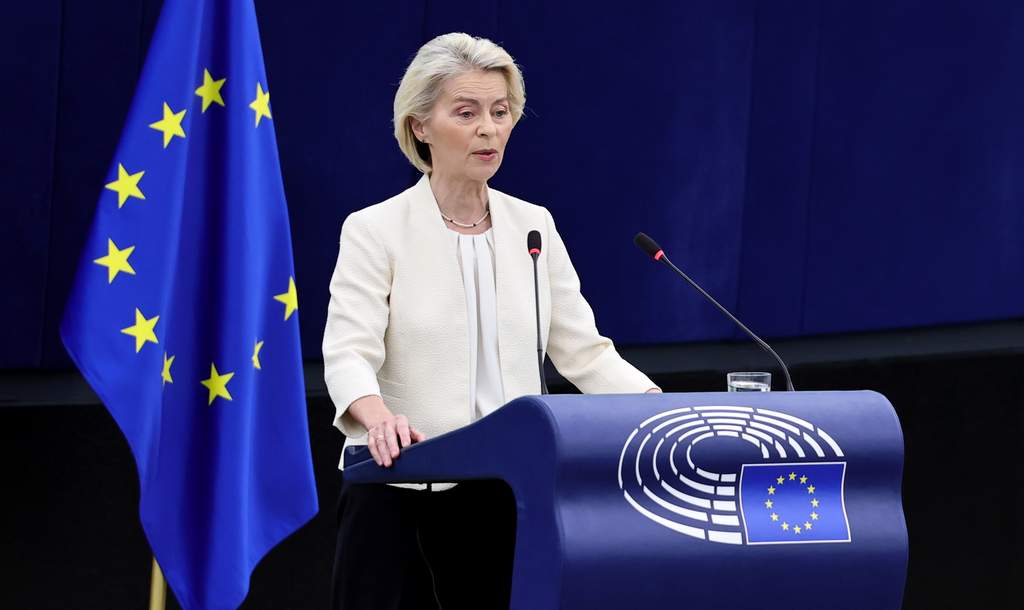
The major challenges facing Europe were at the heart of European Commission President Ursula von der Leyen’s annual address last Wednesday. A war on European soil, conflicts in its neighbourhood, intensifying economic and technological competition and increasingly complex threats to the European Union’s security have created an ever more complex landscape.
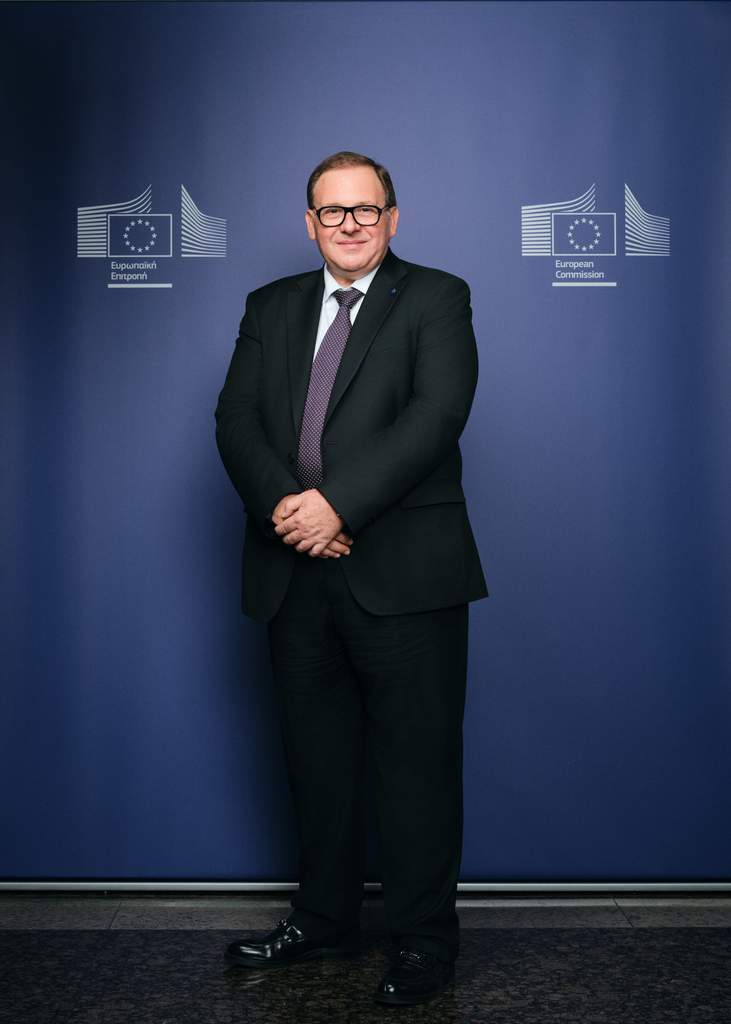
In an interview with Phileleftheros, Panayiotis Pourgourides, head of the European Commission Representation in Cyprus, discussed von der Leyen’s speech and stressed the urgent need for Europe to recognise its strengths and what it can achieve if it stands united.
“European independence means that we, as Europeans, must be able to make our own decisions and have the means to back them up. The world around us has fundamentally changed,” he said.
Pourgourides said the Commission president had highlighted the need to revitalise the European economy by completing the Single Market, cutting bureaucracy and mobilising European savings for investment. Particular emphasis was placed on energy independence and Europe’s “electric future”, which will require more clean and affordable energy, modern grids and greater storage capacity. For Cyprus, a geographically isolated member state heavily dependent on imported fossil fuels, these goals are even more significant.
Another major priority for Europe, he said, is preparing in good time for a range of crises. Climate resilience, water scarcity, heatwaves and wildfires are high on the European agenda, while a new Security Strategy aims to strengthen the shared response to cyberattacks, sabotage and other threats.
At the same time, Europe is examining its role in the Middle East and the Mediterranean, the implementation of the Pact on Migration and Asylum and the need for European solidarity with front-line member states such as Cyprus.
Beyond the major geopolitical challenges, however, Pourgourides said the European project will ultimately be judged by citizens’ daily lives: affordable housing, quality jobs, access to care and whether young people are able to remain in their communities and build their futures there.
The same thinking underpins the development of human-centred artificial intelligence and stronger protections for children in the digital environment. The ultimate test is whether Europe can become more than a collection of institutions and rules: a shared home capable of winning back the trust and hearts of the younger generation.
The Commission president described the EU as stronger but, at the same time, more vulnerable than ever, and argued for a “stronger, independent Europe”. What does that mean in practice, and why has it become so important now?
I believe that is precisely the central message of the entire speech. European independence means that we, as Europeans, must be able to make our own decisions and have the means to back them up.
The world around us has changed fundamentally. We have a war on the European continent, conflicts in our neighbourhood, fierce global industrial and technological competition, hybrid attacks and disinformation.
In this environment, the EU needs to reduce its dependence on third countries for energy, defence, critical raw materials and technology. That does not mean a Europe that isolates itself. It means a Europe strong enough to work with its partners while defending its prosperity, security and values.
As the President said, in this world, Europe’s future must remain in European hands.
Europe’s geopolitical ambitions also need to translate into prosperity for its citizens. With households and businesses under pressure from the cost of living, energy prices and borrowing costs, how does the Commission intend to reignite growth and strengthen Europe’s competitiveness?
The President was very clear: revitalising the European economy is the number one priority.
Europe has strong foundations: a vast market, world-class industries and services, substantial savings and one of the strongest currencies in the world. The problem is that our capital, networks and purchasing power remain fragmented.
That is why we need to move faster to complete the Single Market, accelerate approval procedures and cut bureaucracy. At the same time, we need to mobilise European savings for investment and create better financing conditions for our businesses.
Europe has the human resources, the companies and the innovation. What we need now is to unleash that potential and, above all, move faster.
Because ultimately, competitiveness is not an abstract economic concept. It is about our jobs and the ability of our families to look to the future with greater security.
Ursula von der Leyen spoke of an “electric future” for Europe and of ending dangerous energy dependencies. How can this agenda translate into more affordable and secure energy for European citizens, including those living in geographically isolated member states such as Cyprus?
Energy independence is now directly linked to both Europe’s security and its competitiveness.
The President put it clearly: we cannot remain an industrial power if energy prices are structurally too high. The crises of recent years have shown us the cost of energy dependence.
The answer is more affordable, domestically produced and clean energy, from renewables and nuclear power to biomethane and other technologies, while maintaining technological neutrality.
But the infrastructure needed to get that energy to where it is required is just as critical. Last year, more than 80 GW of new renewable-energy capacity was installed. Yet renewable projects with six times that capacity are still waiting to be connected to the grid.
We therefore need faster connections, better grids and greater storage capacity.
This is particularly important for Cyprus. The country’s geographical position and the particular characteristics of its energy system make the need for secure, affordable and clean energy even more urgent.
The objective is to double electricity’s share by 2040 and significantly reduce the cost of fossil fuel imports. That is what the President means when she speaks of Europe’s “electric future”.
She also warned that Europe is warming at twice the global average. How is Europe’s approach changing as it moves from simply responding to climate disasters to preparing properly for them, and what does that mean for Cyprus?
The President described this summer as a “summer of truth”. What we have experienced across Europe, as she pointed out, is only a glimpse of what may lie ahead.
That is why we need climate mitigation and adaptation, but also preparedness.
The Commission will present a new framework for climate resilience and propose a European plan to address heatwaves.
For a country such as Cyprus, it is particularly important that the President placed water and wildfires at the heart of this effort. She announced a new European initiative on water, while in the area of wildfires even the creation of a European firefighting force is being considered.
According to Ursula von der Leyen, the hybrid threats facing Europe are becoming “less and less hybrid and less and less threats”. What, specifically, does the proposed new European Security Strategy entail, and is Europe moving towards taking far greater responsibility for its own security and defence?
The security environment in and around Europe has changed dramatically.
Cyberattacks, sabotage, arson and drone incursions: as the level of threat rises, Europe’s level of preparedness must rise with it.
That is why the President announced a new European Security Strategy. One of its most important elements is the proposal for a European Security Emergency Protocol, what she described as a European “Article 4”.
If it is triggered by a member state, all member states would come together to coordinate a European response, prevent further escalation and contain the consequences.
Proposals will also be presented for a European Security Council, while a new European instrument is being created for strategic defence capabilities, ranging from air defence and transport to space and cyber.
The rationale is clear: a strong and credible European defence stance is essential to our security.
From Gaza and the wider Middle East to migration pressures across the Mediterranean, Cyprus is very close to some of the crises described by the President. What role does the Commission envisage for Europe in its southern neighbourhood, both as a geopolitical actor and in managing migration?
The President highlighted a very simple but critical reality: when Europe is divided, it cannot change the course of events.
In the Middle East, Europe continues to play a leading role in supporting the Palestinians. Through the Palestine Donor Group and the Team Gaza initiative, broad international support has been mobilised, with commitments of almost €1 billion for the reconstruction of Gaza and support for a modern Palestinian Authority.
The position set out by the President is clear: Israel has the right to self-defence and Palestinians have the right to live in security and dignity. Europe must keep the prospect of a two-state solution alive.
On migration, the fundamental principle is equally clear: all of the Union’s external borders are European borders.
The Pact on Migration and Asylum sets a common framework for responsibility and solidarity that must now be fully implemented. At the same time, Frontex is to be strengthened, returns accelerated and cooperation with third countries intensified.
The new initiative on skills and jobs for young people in the Mediterranean is designed to create real opportunities in countries across the region.
Everyday concerns at the forefront
She was also unusually emphatic in saying that housing, care and the ability to remain in the place where someone lives are rights, not privileges. At a time when affordable housing and demographic pressures are becoming increasingly acute in Cyprus as well, what does Europe propose to change on these everyday issues?
A stronger and more independent Europe only has meaning if that strength genuinely improves people’s daily lives.
That is why the social dimension featured so prominently in her speech. The Commission will continue to invest in the regions so that people genuinely have the “right to stay” where they live.
The President also announced a European Care Deal in response to demographic change, while the Commission has already proposed the EU’s first piece of legislation on housing, targeting short-term rentals and profiteering in the housing market.
The Quality Jobs Act, which will be presented before the end of the year, is part of the same approach.
Major economic and technological changes must create opportunities, not new inequalities.
Ultimately, Europe is also judged by whether a young person can access the care they need, find a decent job and secure affordable housing so they can build a life in the place where they want to live.
As the President summed it up: these are not privileges. They are rights.
Artificial intelligence was presented as both an enormous opportunity and a potential risk. How does Europe intend to remain competitive? And how will we protect our children?
Europe must remain in the AI race. It is critical to our competitiveness and our independence.
We need to invest even more in the infrastructure AI requires and in European companies, and above all we need to take AI beyond the screen and into the real economy: into factories, hospitals, agriculture, transport, energy and defence.
Europe has important advantages in this transition: world-class industries and high-quality data.
But a very clear principle was also set out: we want “AI with human agency”. It should help, for example, a doctor make a better diagnosis, not replace the doctor. Technology should empower people.
That principle becomes even more important when we talk about our children.
Here, the President addressed a deep concern affecting almost every family today, describing in very stark terms the consequences of a digital environment designed to keep children constantly in front of a screen.
The Commission’s proposed response is the EU KIDS ACT, with different levels of protection according to age: no social media for children under 13, no personal social media accounts for those under 15, and from 15 to 18 an obligation on platforms to ensure a safe digital environment.
There is also an important shift in philosophy here: the burden of proof is reversed. Parents and children should not have to prove that a platform is dangerous; platforms should have to prove that they are safe.
As the President put it, the question is not only when we allow minors to access social media, but when, and under what conditions, we allow social media to access minors.
In Europe, we decide the rules, not the big technology companies.
Europe is its people
At a time of geopolitical uncertainty, polarisation and growing distrust, what is the case for Europe that will resonate with a new generation of Europeans? In other words, how can Europe win the “hearts of Europeans”?
Perhaps we first need to remind ourselves what Europe really is.
It is not just institutions, legislation or economic indicators. It is people. It is our shared home and the belief that, as Europeans, we are there for one another.
Our Union was born as a peace project. Nations that had fought one another for generations chose to build a shared future of peace and prosperity, democracy and freedom.
And that European promise remains powerful. We need only look at Ukraine, Moldova, the Western Balkans and all those who still see their future within the European Union.
To mark 70 years since the Treaty of Rome, the President announced a new Conference on Europe that will bring together people from different backgrounds to shape a vision capable of inspiring the next generation.

