


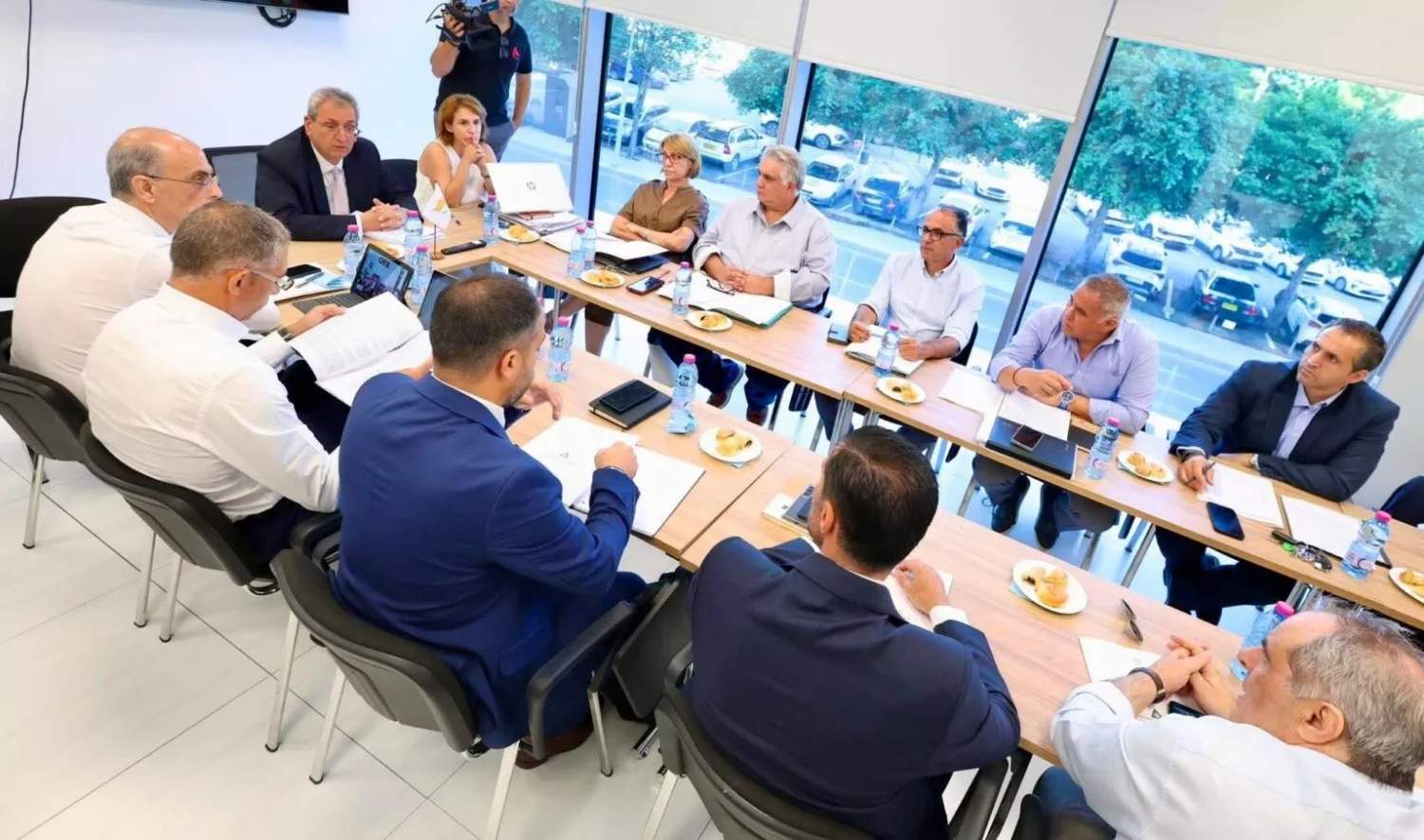
Cyprus’s Labour Advisory Body meets today for a session expected to focus on the cost of reforming the 12% pension penalty, with the Labour Ministry, working with the state actuary and the Finance Ministry, presenting its analysis of the proposals’ provisions and cost to trade unions.
The Labour Minister is expected to submit his own calculations on the cost of the unions’ proposals for the 12% penalty, as he had said he would do in recent days. Those proposals were submitted under former Labour Minister Yiannis Panayiotou, after unions disagreed with his suggestions during 2024-2025. The unions’ reaction to the government’s figures is expected to shape how the discussion proceeds.
According to Phileleftheros information, unions are already convinced that today’s study will show their proposals for the 12% penalty cost more than the government’s own plan, and expect the minister to ask them to drop another benefit from their proposal if they insist on keeping it. Unions are expected to respond by asking for a cost breakdown of every individual part of the bill, in order to establish the government’s real contribution and whether it is rising, falling or staying the same compared with the current system.
According to figures already made public, the government’s contribution to social insurance, beyond its share of each worker’s salary, comes to 182 million euros a year. That covers its contribution to the social pension, the low-income pensioners’ scheme and part of the minimum pension. Unions want to establish whether this amount would rise under the new arrangements.
SEK Secretary-General Andreas Matsas told Phileleftheros that while the two unions’ proposals are not required to be adopted as they stand, elements of all three proposals could be combined to achieve the best possible outcome for pensioners. He said the SEK and PEO proposals follow the same broad logic but differ mainly on process and timing, and made clear that unions are not seeking the penalty’s immediate abolition, despite this being implied in some quarters.
PEO Secretary-General Sotiroula Charalambous told Phileleftheros that today’s meeting would see unions ask the government side to present the costing of its own proposal chapter by chapter. “The government has not clarified the cost of the bill it has prepared,” she said, adding that this was why unions kept asking questions and requesting clarifications, since without that information they could not know what the eventual benefit to each pensioner would be, or when it would take effect. She added that if the changes simply amounted to a redistribution of existing resources, unions needed to know that too.
Meanwhile, in comments to Sigma on Wednesday, the Labour Minister reiterated that if the actuarial study due in 2031 shows corrections are needed, a provision already exists for increased contributions from all three parties: the state, employers and employees.
The minister also said he would begin a new round of talks with political parties from today to explain the government bill’s pension reform provisions, aiming to inform them of the bill and its underlying approach in order to keep the process and timetable for the reform’s planned implementation from January 1, 2027, on track. The talks begin today with DISY and are expected to conclude by September 10.
Read more:

