


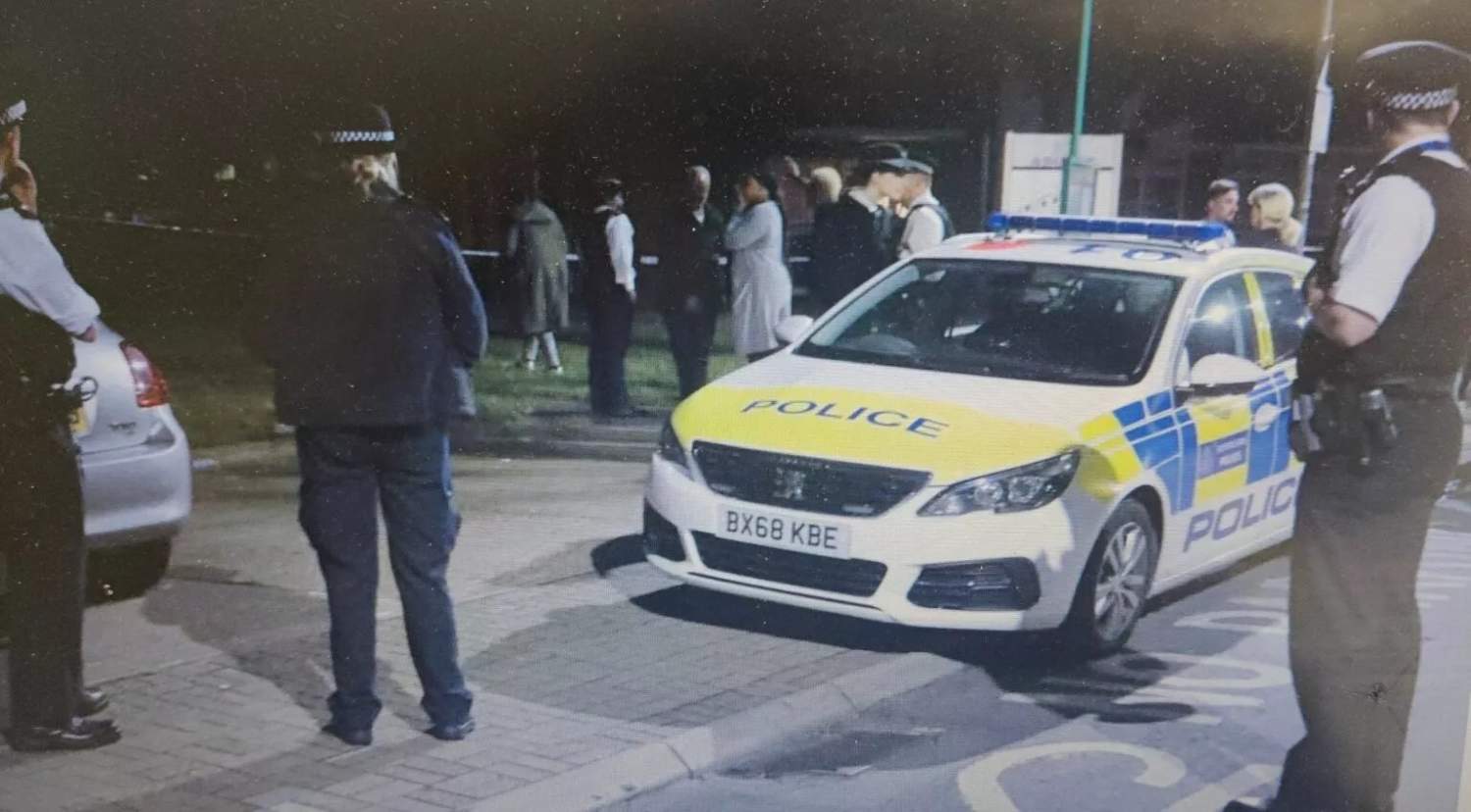
Of all the crimes committed daily in the great cities of America and Europe, one has stayed with me. This time it was London. The victim was a wealthy businessman. The whole thing was over in minutes, three o’clock on a Sunday morning, and by the time it ended the attackers, a small pack of five or six young men still being hunted by British police, had already scattered in every direction.
Two men were left on the pavement. One was a homeless immigrant, and somehow he dragged himself back up despite the beating he’d taken. The other will never watch the sun come up over this city again. Not that morning. Not any morning. He lay there soaked in his own blood, put there by the boots and fists of the men who killed him, his expensive suit torn to rags, his leather wallet untouched in the inside pocket of his jacket. This wasn’t a robbery. It wasn’t, in any real sense, about anything at all, nothing except the sheer savagery of the men who took his life.
The report itself read like just another random crime, one more unlucky moment, skimmed by readers of the websites and papers that ran it and forgotten within minutes, filed away in that automatic reflex we’ve all developed for switching off, as though it were fiction, a forgettable film plot, some dull page torn out of a crime novel. But the man was married. He had two young daughters. That night, the last night, he’d left his house outside the city and driven in with his wife and girls for a family dinner at his brother’s. After the meal, he and his brother went for a drink, and while they stood waiting for a taxi home, they walked straight into a gang beating a stranger senseless in the middle of the street. He didn’t know the man on the ground. It had nothing to do with him. And still he ran at them. Still he shouted at them to stop. That was enough. They let the other man drop, bleeding, and turned on him instead, and beat him to death right there in the street.
He wasn’t playing the hero. This wasn’t some grand act of self-sacrifice. Call it a pointless death if you like. Point out, if you must, that his one act of decency saved a stranger’s life and cost him his own. He’s under the ground now regardless. Why did he wade into a fight that wasn’t his? If you could put the question to him, he’d probably tell you the truth: that in that moment, he did the only thing he could do. He stood up for someone who needed standing up for. And that was reason enough to make it his fight after all.

