


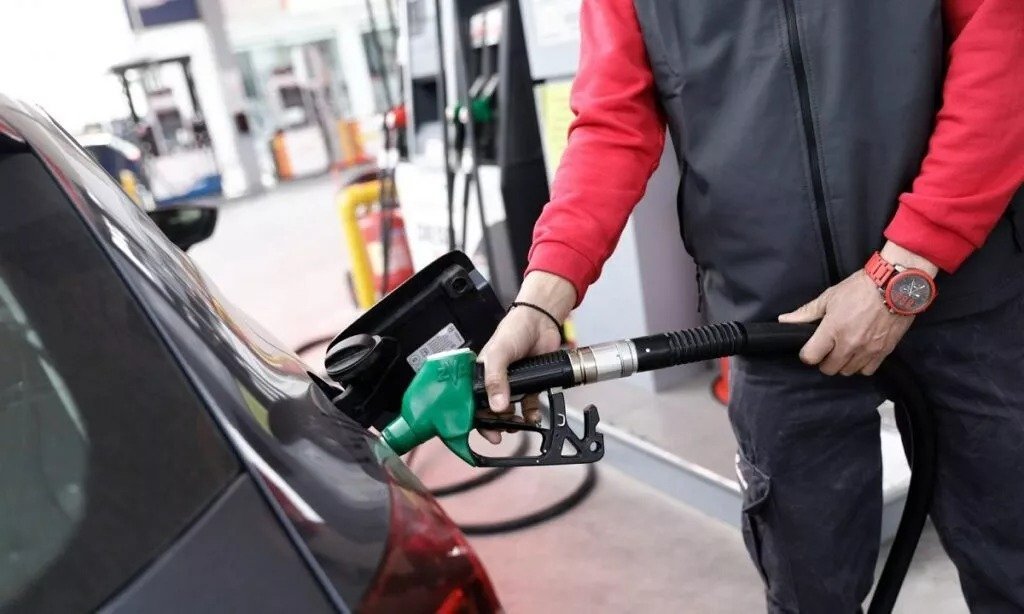
The Cyprus Consumers Association has expressed doubts over whether today’s retail fuel price levels are justified, with its president, Marios Drousiotis, telling CNA there are “strong indications that something isn’t right.”
The association does not dispute that recent price rises are directly linked to developments in the Middle East. It questions, however, whether those international developments justify the level prices have reached, or whether prices should be lower.
Heating oil up almost 50%
Drousiotis expressed particular concern over heating oil, the price of which rose, according to the association’s figures, from €0.950 on March 1 to €1.438 per litre.
That amounts to an increase of 48.8 cents, or around 50%, per litre. It means a household filling a 1,000-litre tank today needs around €488 more than it did in March.
“That’s why heating oil worries us even now, and we believe measures need to be taken,” Drousiotis said, noting that November is approaching, when households will need to refill their tanks.
Petrol at €1.595, diesel at €1.796
According to figures cited by the association’s president, between March 1 and August 13, 2026, the price of 95-octane petrol rose from €1.315 to €1.595 per litre.
Over the same period, the price of diesel rose from €1.413 to €1.796 per litre.
The increases amount to around 21% for petrol and 26% for diesel. Drousiotis noted that these percentages do not include the 8.3-cent subsidy, arguing that without it, the increases would have been even larger.
Calls for data to check prices
Drousiotis argued that the increases raise “reasonable suspicions that there isn’t adequate control over fuel prices.”
He said the association has repeatedly asked the Consumer Protection Service for data proving that prices are at reasonable levels.
According to Drousiotis, the response he receives is that the Service monitors prices and considers them reasonable, while more detailed data requests are told the information is confidential.
The association’s president countered that not all the data is confidential, arguing that around 30-40% of the figures used to monitor prices could be shared with the association.
Subsidy allegations
Drousiotis also referred to the rollout of the fuel subsidy in early April. According to the association’s figures, 19 petrol stations did not reduce their prices at all by the 8.3-cent subsidy, while a further 97 applied a smaller reduction.
He said that around ten days later, when an oil company announced a petrol price increase, 22 stations not belonging to that company also raised their prices.
The association had asked for clarification on whether the incomplete transfer of the subsidy to consumers constituted an offence.
According to Drousiotis, the Consumer Protection Service initially referred the matter to the Finance Ministry. The issue then returned to the Service, which said no offence had occurred.
“These are rock-solid examples that either prices aren’t being monitored, or they are and someone is turning a blind eye,” he said.
“Reassure consumers with data”
Asked whether he considers the price rise since March unjustified, Drousiotis repeated that there are “strong indications that something isn’t right with fuel prices in Cyprus.”
He added that the relevant authorities should reassure consumers by publishing data proving that prices are set at reasonable levels.
He recalled that the President of the Republic, the Finance Minister and the Director of the Consumer Protection Service had said prices would be closely monitored and that no irregularity would be tolerated.
He argued, however, that the association’s data show that monitoring has not been effective.
“If you don’t ensure the subsidy definitely reaches the consumer, why give a subsidy at all? To end up in the tills of petrol stations, or I don’t know where else?” he asked.
Concluding, the president of the Cyprus Consumers Association said he sees no intention on the part of the Government and the relevant ministry to effectively control prices.
“I don’t know if this is because they can’t or because they don’t want to. Let them answer us,” he said.
Read more:

