


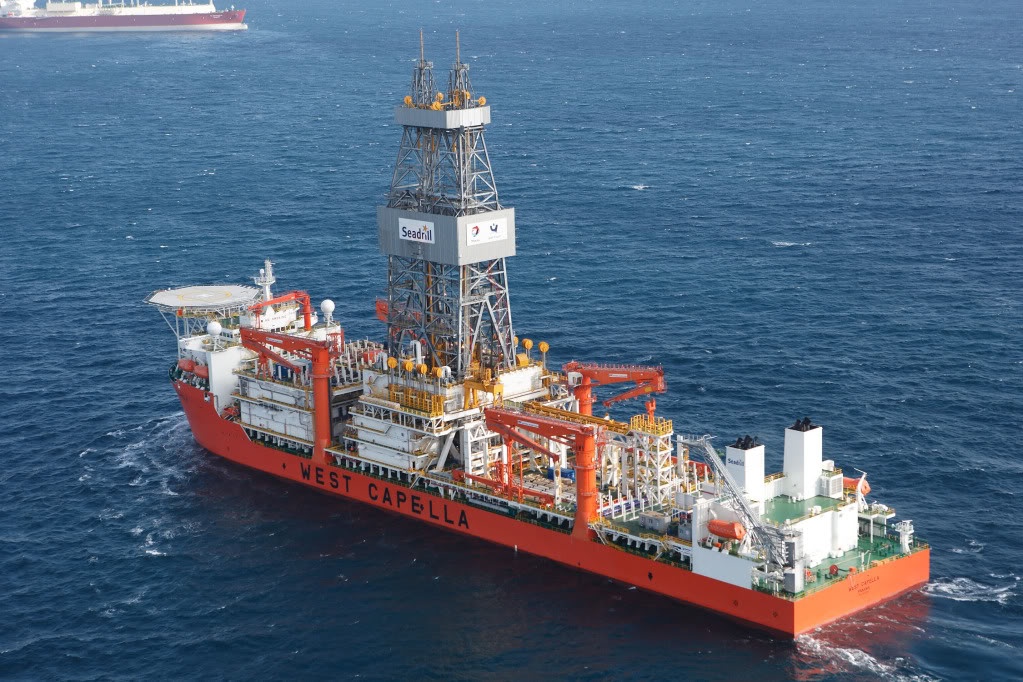
Italy’s Eni announced a few days ago that it has reached a Final Investment Decision (FID) on developing the Cronos field in Cyprus’s Exclusive Economic Zone, with the aim of bringing the first Cypriot natural gas to market in 2028. This is a very significant development, a step towards putting our country’s natural wealth to use.
Eni states that the project will develop the Cronos field, in Block 6 of the Cypriot EEZ, which is estimated to hold more than 3 trillion cubic feet of gas in place. The gas will be transported and processed at the existing Zohr facilities in Egypt, before being liquefied and exported as LNG to international markets, principally Europe. It is worth recalling that Block 6 is operated by Eni with a 50% stake, with French company TotalEnergies as its partner.
As has likewise been reported, production is expected to begin in 2028, which will make Cronos the first field of the Republic of Cyprus to be commercially exploited. After so many years of waiting, the gas will finally… start flowing. This matters because for years the question of its exploitation remained frozen, for well-known reasons.
It is clear that the energy issue must be addressed in relation to the wider developments under way in the region. It concerns Cyprus, but also the region, and the EU. According to Energy Minister Michalis Damianos, “energy cooperation in the Eastern Mediterranean is acquiring even greater significance in light of recent geopolitical developments,” stressing that “the need to diversify energy sources and supply routes has become more pressing than ever.” In this context, it should also be highlighted that the Republic of Cyprus’s status as an EU member state makes it a reliable partner in the region, and a stabilising factor. This is recognised by all.
It must also be said that the Republic of Cyprus’s energy programme, in which major international energy players participate, rests on international rules and constitutes a sovereign right of our country. We note this because occupying Turkey takes a different approach. The occupying kind!
The energy question has had a geopolitical dimension from the outset. Following the war in Ukraine, and the attacks on Iran, the reserves of the Eastern Mediterranean came to the fore, and third parties took an interest in them, the EU foremost among them. And this is significant.

