


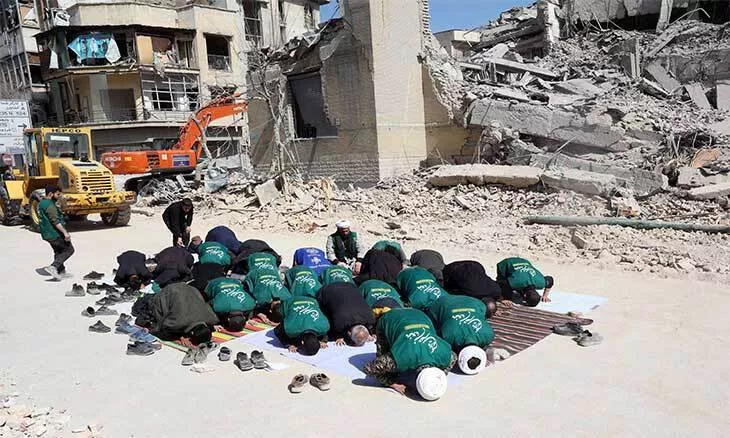
Two weeks after the start of the joint US-Israeli operation against Iran, and only hours after Israel announced that it had killed Ali Larijani — the man many regarded as the real “shadow leader” of the regime in Tehran even before the assassination of Ali Khamenei — the picture that is emerging is markedly different from the early scenarios of rapid collapse.
Iranian-American historian, Yale lecturer, author and journalist Arash Azizi describes a regime that has been heavily hit but not broken, a society that is exhausted but not organised, and a war that, despite the heavy blows, has not led to political overthrow.
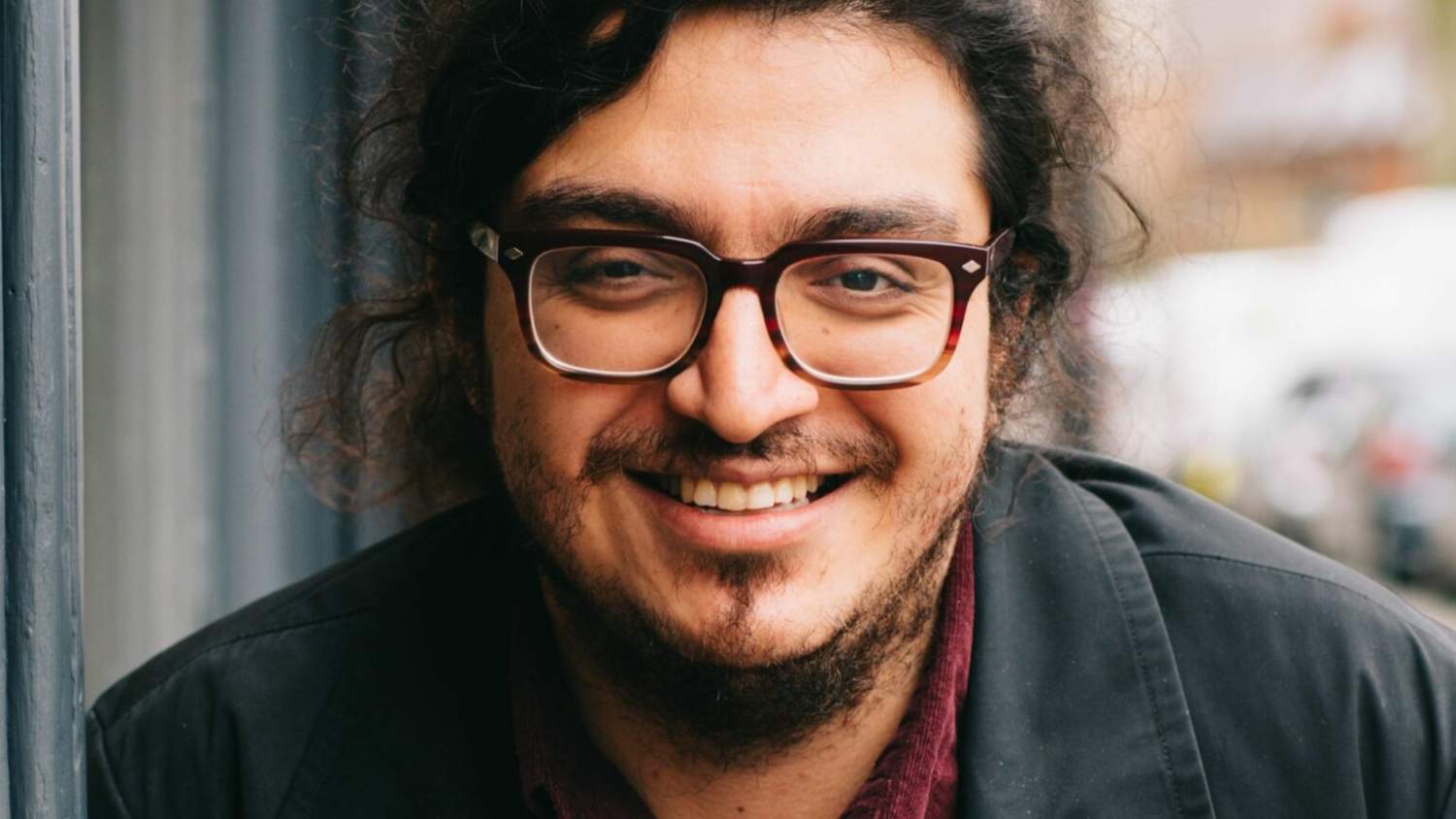
In Azizi’s view, Larijani’s death is a significant development, but not in itself decisive for the regime’s survival. The system, he says, does not depend on one man alone. There are always other figures who can step in, fill the gaps and keep the machinery running.
That does not mean Larijani was unimportant. On the contrary, Azizi stresses, he was a special case: a negotiator with decades of experience dealing with the United States and Europe, a man well versed in the international arena, educated and politically complex. But that, according to Azizi, did not make him a moderate. He was a hard man of the regime and is regarded as having been closely linked to the violent suppression of the January protests.
The critical point, however, is that the elimination of such figures, especially Ali Khamenei, did not lead to chaos. “The institutions functioned,” he notes. The succession process was activated quickly and Mojtaba Khamenei emerged as the new centre of power.
Even more important, in his view, is that this new phase did not trigger internal division. On the contrary, all the regime’s main factions, including figures who in other circumstances might have been seen as rivals or more “moderate”, rushed to line up behind him. For Azizi, that cohesion is the clearest sign that the United States and Israel achieved military attrition, but not political overthrow.
From that point on, he sees the early expectations of “regime change” already starting to recede. Gradually, they are being replaced by another logic: not overthrow, but weakening. In other words, a strategy that could allow a wounded but functioning system to regroup, reorganise and survive, perhaps with new faces coming to the fore.
In such a development, he does not rule out the rise of more “centrist” or “Western-leaning” figures from within the system itself.
If he had to identify who leads this somewhat more Western-facing wing, Azizi points first to Hassan Rouhani. The former president, he says, remains the leading figure of that tendency within the regime. He is already in his seventies, but, as Azizi notes, he is in good condition, and the prospect of his return to a leadership position is not inconceivable, provided he secures enough backing within the security apparatus.
At some point, the regime’s collective institutions may conclude that they need a man like Rouhani precisely because he knows how to speak to and negotiate with the West.
At the same time, other political figures, such as Ghalibaf — a man with deep roots in the Revolutionary Guards and now a central figure in the war effort — could also change tone if they saw that rapprochement with the West might serve as a vehicle for political ascent.
On the domestic front, however, Azizi appears clearly sceptical about scenarios of an immediate popular uprising. He considers that rather unlikely, at least at this stage.
First, because there is a strategic dead end: an uprising for exactly what purpose, and on what organisational basis? A spontaneous mass explosion is not impossible, but, as he insists, it would have to be spontaneous precisely because there are no sufficiently organised networks capable of sustaining it.
Second, the regime has already moved into a phase of intense mobilisation. It is organising, arming and deploying security forces and police in anticipation of clashes.
There is no organised movement.
He uses the same argument against the view that air strikes can break the regime’s capacity for internal repression. “How many roadblocks can you destroy? How many commanders can you kill?” he asks. The regime, he points out, has around one million uniformed personnel in its security forces, without even counting the regular army.
They can regroup elsewhere, organise through mosques, local centres and alternative hubs. Even if the strikes kill thousands of them, the number remains enormous. As a result, the idea that the regime’s internal repressive capacity can be neutralised in any meaningful way through air strikes alone strikes him as strategically flawed.
It might perhaps work only if, on the other side, there were already a mass, disciplined and organised movement ready to exploit that weakening. But he does not see such a movement in existence.
On the social level, his assessment is especially bleak. The war, he says, is horrific for Iranian civilians. Hundreds have been killed, cities such as Tehran are effectively operating as war zones, and people are simply trying to survive.
Politically, however, this is accompanied by a deep sense of powerlessness. Iranians can see that the main forces determining their fate — Israel, the United States and the various factions of the Iranian regime itself — do not have the interests of Iranian society even as a fourth priority, as he puts it.
As a result, society feels that its fate is being decided by others, while it lacks the organised strength to step forward itself.
That also leads to the great question about the society’s “day after” once the war is over.

