


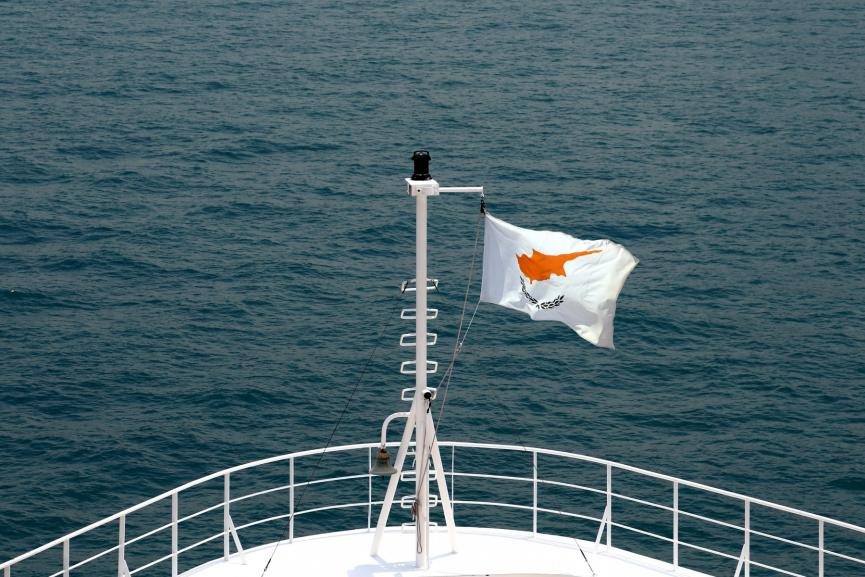
Sailors who do not wish to sail into war-designated zones have the right to disembark, the head of Cypriot maritime union OMEPEGE-SEK-SEK said on Wednesday, as an emergency meeting of the International Maritime Organisation got under way to address the safety of crews operating in the Strait of Hormuz and across the wider region.
Charalampos Avgousti, Secretary-General of OMEPEGE-SEK, said the union’s priority was the safety of sailors. “From the moment a zone is designated a warlike zone, sailors have the right not to be on a ship that will pass through it,” he said.
Avgousti said the union had no information indicating that Cypriot sailors were trapped in the Strait of Hormuz. He added, however, that some sailors covered by OMEPEGE-SEK contracts had been aboard a vessel that was struck — though all were safe.
The vessel in question was the Star Gwyneth, operated by Star Bulk, a company with Greek interests and offices in Cyprus. The ship was hit by a missile on 11 March, at the time approximately 50 nautical miles north-west of Dubai. “The ship has sustained damage — it has a large hole — but the sailors are safe and have supplies,” Avgousti said, adding that no injuries had been reported and the vessel had since moved away from the danger zone. Around 20 crew members were aboard. There were no Cypriot sailors on the ship, he said — some of the crew were Greek.
Star Bulk’s Cyprus presence means its shipboard employees are covered through the International Transport Workers’ Federation (ITF), jointly by OMEPEGE-SEK in Cyprus and PNO in Greece. Avgousti said the union was in contact with the Deputy Ministry of Shipping to determine whether any further action was required.
The ITF is participating in the two-day emergency IMO session that opened on Wednesday, focusing on the safety of crews in the Strait of Hormuz and the broader region. Avgousti said the entire Middle East had been added to the union’s warlike zones policy shortly after the war with Iran began. Some had pushed for the Eastern Mediterranean to be included as well, but that did not happen. “The positive is that there have been no strikes on vessels in the Eastern Mediterranean, whether near Cyprus or Israel. I don’t think it will be included,” he said.
He warned, however, that if the conflict continues for a prolonged period, the Eastern Mediterranean could eventually be added to the warlike zones list — a development that would carry significant economic consequences. An economic impact was already being felt, he said, as ships were avoiding the Strait of Hormuz and, to some extent, the Suez Canal.
Avgousti noted that Cypriot-flagged vessels do not typically transit the area under such conditions, and that there are not many Cyprus-interest tankers in the region. Regarding the 19 Cyprus-flagged vessels the Deputy Ministry of Shipping announced were blocked in the Strait, he said those ships were safe, had not come under threat, and had not loaded cargo. “Some have moved to a safer location,” he said.
(information from CNA)

