


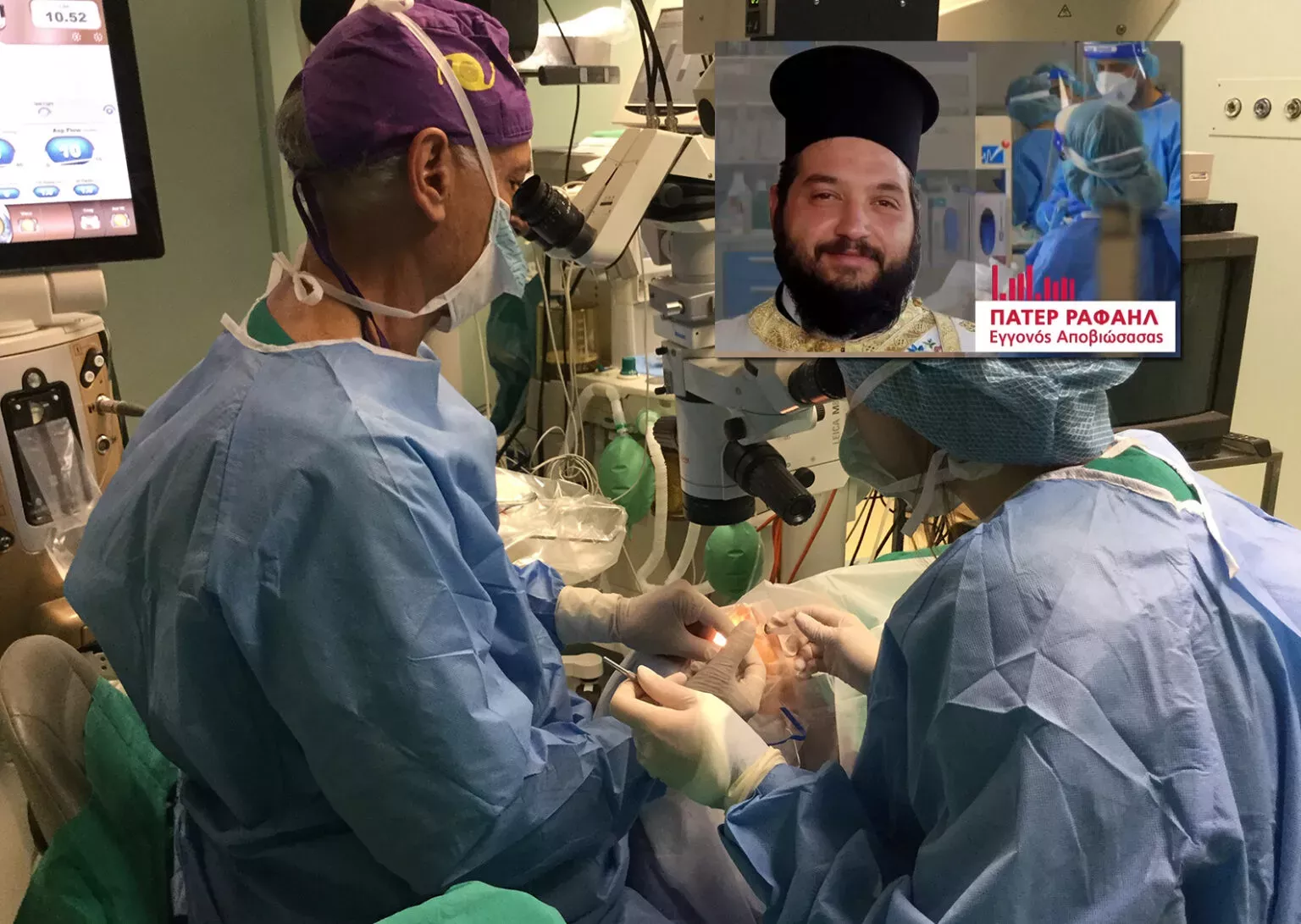
The trial for two ophthalmologists accused of causing blindness in eight patients through complications during cataract surgeries in October 2020 has finally begun, over five years after the incident shocked Cypriot society. The accused doctors, both in their sixties, face eight charges, one for each patient, relating to negligent acts under the Criminal Code, specifically articles 236(e), 20, and 35. If convicted, they could face up to two years in prison.
In April 2022, the two doctors denied the charges, and the case was scheduled for a hearing at the Nicosia District Court yesterday. However, after the defence lawyer, Marios Spyrou, suggested a motion to admit certain facts to save valuable court time, the trial was postponed.
Spyrou proposed that, in agreement with the prosecution, some facts be accepted, which would prevent the need for testimony from some of the 52 prosecution witnesses. The prosecutor, Elena Konstantinou, raised no objections, and District Judge Pavlos Agapitos set a new date for December 22 to declare the admitted facts and scheduled further hearings in March for the trial to proceed.
Details of the charges
The charges against the doctors stem from the surgery of eight patients. One example from the indictment outlines: “On October 13, 2020, at a private clinic in Nicosia, while acting as ophthalmologists, the accused performed a medical procedure in such a reckless or negligent manner that it risked human life or could cause bodily harm to others. During the surgery, they used disposable materials, such as eye drops, saline, and surgical tapes, resulting in the patient contracting a multi-resistant strain of Pseudomonas aeruginosa and losing vision in their left eye.”
The Cyprus Private Doctors Association had earlier issued a statement clarifying the situation, stating that the eight patients underwent cataract surgery at a private clinic in Nicosia enrolled in the General Healthcare System (GHS). It further explained that after the surgery, the patients suffered serious post-operative infections, requiring urgent vitreoretinal surgery that could not be performed at either the initial clinic or at Makarios Hospital, due to lack of necessary equipment and specialists.
Loss of vision and eye removal
The patients, four men and four women, suffered the following consequences after their surgeries:
- A male patient lost vision in his left eye.
- A male patient lost vision in his right eye, and the eye was removed.
- A female patient lost vision in her left eye.
- A male patient lost vision in his right eye, and the eye was removed.
- A female patient lost vision in her left eye, and the eye was removed.
- A female patient lost vision in her right eye, and the eye was removed.
- A female patient lost vision in her left eye.
- A male patient lost vision in his right eye, and the eye was removed.
Two patients died before the case was filed
The incident occurred in October 2020, and the case was formally filed in February 2022, but hearings have not yet begun. In the intervening period, two of the patients died. One of them, Christoulla Strati, passed away in October 2021 at the age of 79. Her grandson, Father Raphael, spoke to the Alpha TV station, linking her death to the cataract surgery she had undergone. “The death certificate states multi-organ failure and heart failure. I can reasonably conclude that this incident and the infection she suffered affected her vital organs,” he said.
Father Raphael, whose grandmother lost vision in her right eye and had her eye removed, vowed to seek justice for the eight victims: “I will make sure they are all justified. As long as I live, I will not allow anyone to say they are not justified.”
Delays in justice
The long delays in the judicial process in Cyprus have once again come to the forefront. As reported, the case arose in October 2020, but the Legal Service only instructed the filing of charges in February 2022. The slow pace of justice is highlighted by the fact that two of the victims had already passed away before the case was formally filed.
A recent statistical analysis by the Global Initiative Against Transnational Organized Crime, based on Interpol data from over 350 experts, points out significant challenges within Cyprus’ judicial system in handling organized crime cases. “The shortage of judges and the increase in cases have further burdened the system, resulting in low efficiency,” the report noted.

