


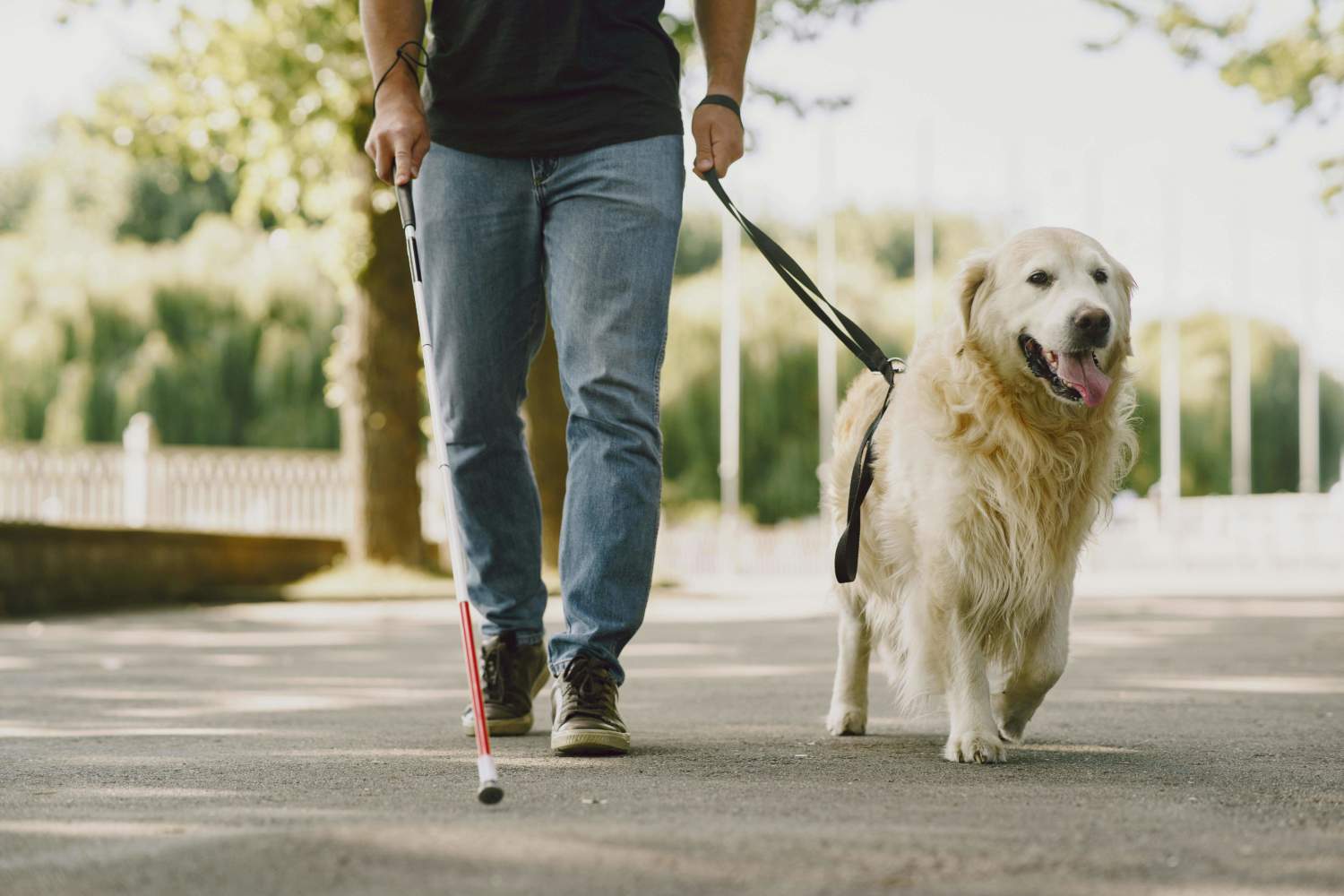
The House Human Rights Committee is moving to close a legislative gap that has effectively barred thousands of disabled citizens from using service animals in Cyprus.
Two separate legislative proposals, tabled by MPs Christos Senekis and Charalambos Theopemptou, seek to guarantee the right of persons with disabilities to be accompanied by assistance dogs in all public and private spaces, as well as on all forms of public transport. The urgency of the reform is highlighted by data from the Cyprus Confederation of Organisations of the Disabled (KYSOA), which reveals that of the approximately 2,000 blind residents in Cyprus, fewer than five currently have a guide dog—a statistic advocates attribute to the lack of legal protection and the prohibitive costs of training.
The proposed “Assistance Dogs Law” introduces severe penalties for those who obstruct access to individuals accompanied by service animals.
Under the draft legislation, offenders could face an initial fine of €4,000, which doubles to €8,000 for repeat violations. KYSOA President Themida Anthopoulou told the committee that without these deterrents, the regulation would be a “hollow gift,” noting that assistance dogs serve as the “eyes” of those with visual impairments. T
The push for reform has gained backing from the Ministries of Education, Agriculture, Labour, and Health, as well as the police and the Ministry of Transport, which confirmed that service dogs are already permitted on buses under current directives.
However, the Law Office has cautioned deputies that a simple declaration of rights will not suffice. Representing the Law Office, Alexis Antoniades stressed the need for an “holistic framework” to ensure the law is practically enforceable, covering aspects such as the welfare, certification, and specific training standards for the animals. A significant hurdle remains the financial burden; training a single assistance dog costs approximately €50,000, and with no domestic training facilities available, Cypriot citizens must currently look to Greece or other EU member states for these essential services.
The committee is expected to consolidate the proposals into a comprehensive legal framework that addresses both the accessibility rights of the owners and the regulatory oversight of the animals. Pelagia Karparsiti, representing the St. Barnabas School for the Blind, noted that they are currently aware of only one resident with a guide dog, who brought the animal from the Netherlands.
Read more:

