


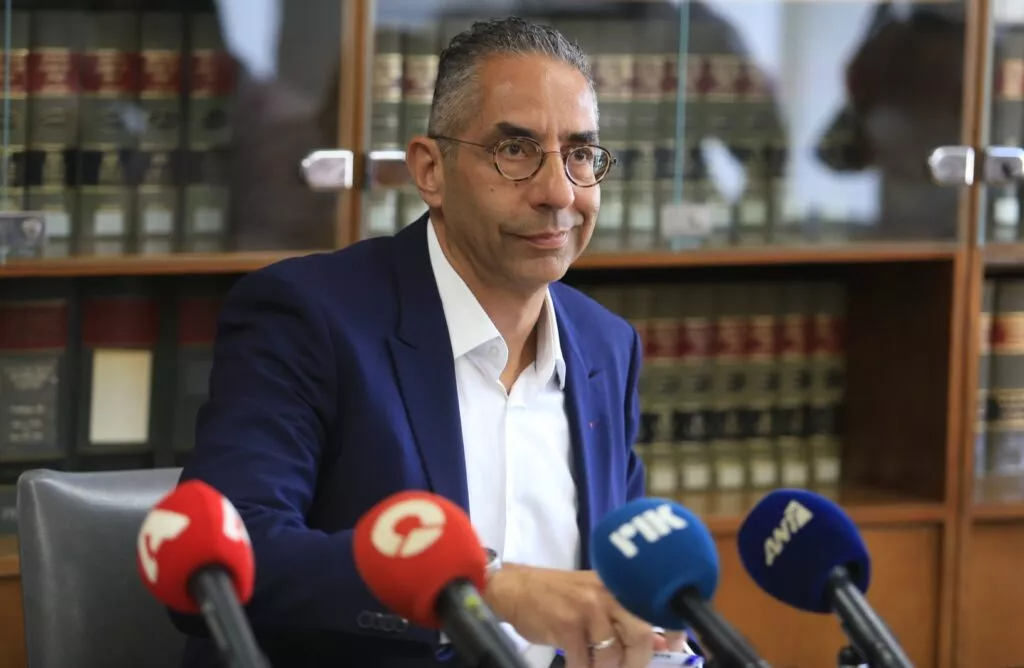
So Savvas Angelides isn’t resigning from his post as assistant attorney general after all. He simply met with the President of the Republic at the presidential palace, on a human level, to raise his concerns about various issues preventing him from doing his job properly—as well as others leaving him dangerously exposed.
That’s what transpired at the meeting between Angelides and Christodoulides, according to both the President himself and the deputy government spokesperson. And we’ve no reason to doubt them. But here’s the thing: when two people meet for a private chat, how on earth does the conversation leak out and feed the news cycle?
Did the assistant attorney general’s driver spill the beans? But how would he know what the meeting was about? We can’t imagine there’s that much intimacy that Angelides would tell his driver why he was going. Did the presidential palace guard blab? So many people go in and out—how would he know what they discuss with the President? Perhaps the palace gardener mentioned it? Or the cleaner who saw him climbing the stairs? Equally unlikely they’d know what was said. Even the waiter who brought the coffee wouldn’t have had time to hear much. Are there bugs in the presidential palace?
In other words, when two people meet behind closed doors to exchange concerns, and three days later not only the meeting itself but the subject of the meeting becomes news—it means one of them (or both) wanted it known. But why?
According to the initial report in Politis, Mr Savvas Angelides told the President of the Republic about incompetence and corruption within sections of the police force, which is preventing many cases from progressing. He also said he’s receiving threats from serious offenders who ring him from inside the Central Prisons, whom the Prison Service seemingly can’t control. He further mentioned feeling aggrieved by the stance of the Anti-Corruption Authority, which keeps complaints against him languishing in drawers without processing them—perpetuating whispers against him and making “certain known-unknown individuals feel they can blackmail him.”
Under such circumstances, Mr Angelides obviously should have resigned. How can he function in his position whilst being blackmailed? Yet “it’s up to him what he does,” as the President declared. And if we factor in the deputy government spokesperson’s statement that “in the past Mr Angelides had raised similar concerns,” what are we to conclude? Is the President, in the end, showing Mr Angelides the door?

