


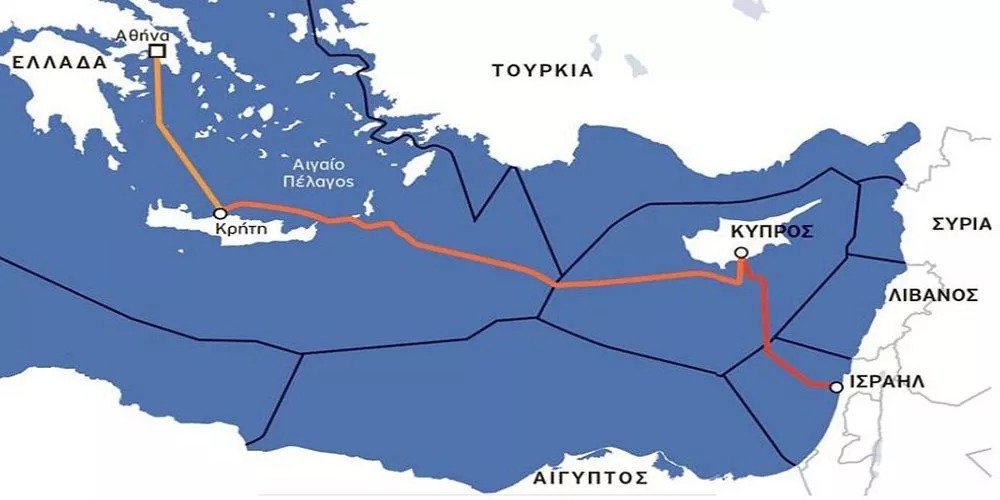
The electrical interconnector project between Cyprus and Greece, the Great Sea Interconnector (GSI), was unexpectedly put under review after talks in Athens between Cypriot President Nikos Christodoulides and Greek Prime Minister Kyriakos Mitsotakis.
Despite continuous recent assurances that the project was “viable, proceeding, and will be completed seamlessly,” the two leaders announced a decision to “update the techno-economic data of the investment.” The decision was formalised hours later during a meeting with EU Energy Commissioner Dan Jørgensen.
The need for an update is understood to mean commissioning a new feasibility study, a process that analysts warn will lead to a significant delay. Finding a consultancy firm to conduct the study will require a tendering process compliant with EU law, the terms and timeline of which are currently unknown. Experts estimate the process cannot be completed before mid-2026.
The project is now formally conditional on a positive finding from the new study.
It remains unclear whether the implementing body, IPTO (the Greek Independent Power Transmission Operator), will continue its cooperation with the French firm Nexans for cable manufacturing during the review period. Furthermore, the decision puts into question the fate of costs already incurred, including the €250 million IPTO is already seeking from consumers in both countries.
Unnamed sources in both Greece and Cyprus deny that the surprise decision to review the techno-economic data constitutes a “euphemistic abandonment” of the effort, particularly in light of geopolitical hurdles posed by Turkey regarding the cable’s deployment. However, this is precisely what is being discussed among the public, suggesting the new study may be a politically expedient way to postpone a crisis with Turkey.
Geopolitical and financial hurdles
Beyond the geopolitical obstacles, the development confirms IPTO’s reported financial difficulty in completing the project independently. IPTO’s expectations for cooperation with U.S., French, or other investment funds were reportedly disappointed, leading to the necessity of a new study and possibly new regulatory decisions.
These new decisions could concern the sharing of construction costs or the determination of the rate of return on capital, ensuring that the cost and benefit are fairly distributed among all potential investors.
The overall cost of the GSI project has steadily climbed over the years, starting at an estimated €1.2 billion, rising to €1.5 billion, and currently standing at €1.9 billion. Project delay is expected to further increase the construction cost.
European Commission involvement
Reports indicate that the new study will not be prepared under the sole auspices of IPTO. The European Commission is expected to take a leading role. Representatives from the two governments will also participate through a committee established by the EU Directorate-General for Energy.
If the completion of the project is significantly postponed—making the current 2029 operational target impossible—it raises the question of whether the final cost will truly determine the project’s viability, given that regulators have already secured the full repayment of construction costs (plus an 8.3% return on capital for 17 years) from electricity consumers in both countries.
Read more:

