


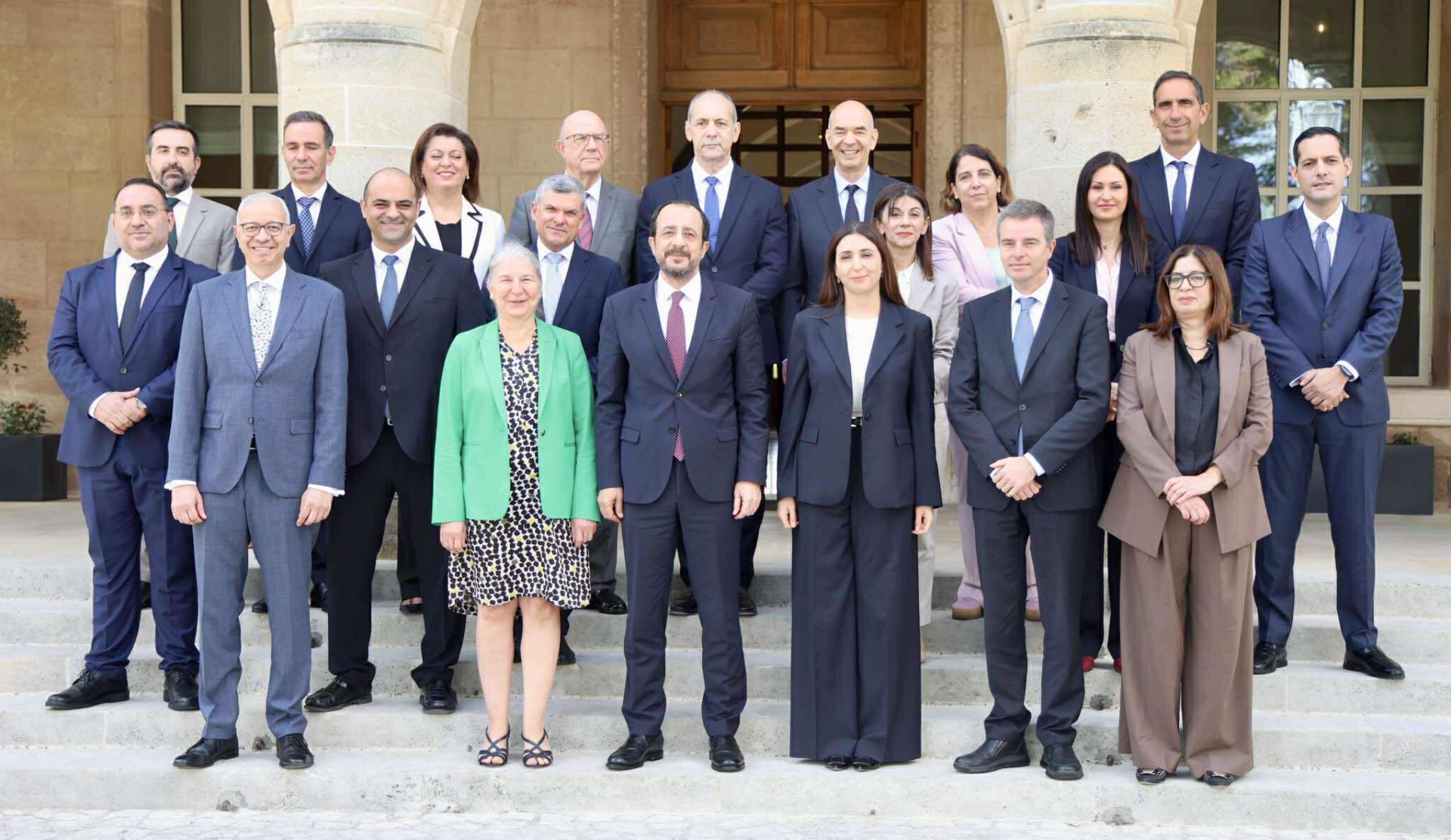
Cyprus is in full readiness to assume the EU Council presidency in the first half of 2026, with the government treating the upcoming presidency as a national mission aimed at putting its priorities at the centre.
President Christodoulides’s meeting with EU Council Secretary-General Thérèse Blanchet marks the culmination of the national effort for successfully assuming the Cypriot presidency of the EU Council on 1 January 2026. With preparations reaching their final phase, the Secretary-General’s visit, described as one of the most important preparatory missions, confirms the Republic of Cyprus’s full readiness in all aspects, including political, institutional, and operational.
Nicosia is treating the upcoming presidency as a national mission, aiming to establish Cyprus as an honest broker and reliable European partner. The president welcomed Secretary-General Thérèse Blanchet and Director-General for Institutional and General Policy Didier Seeuws, stressing that the presidency represents a top government priority and milestone for the Republic of Cyprus.
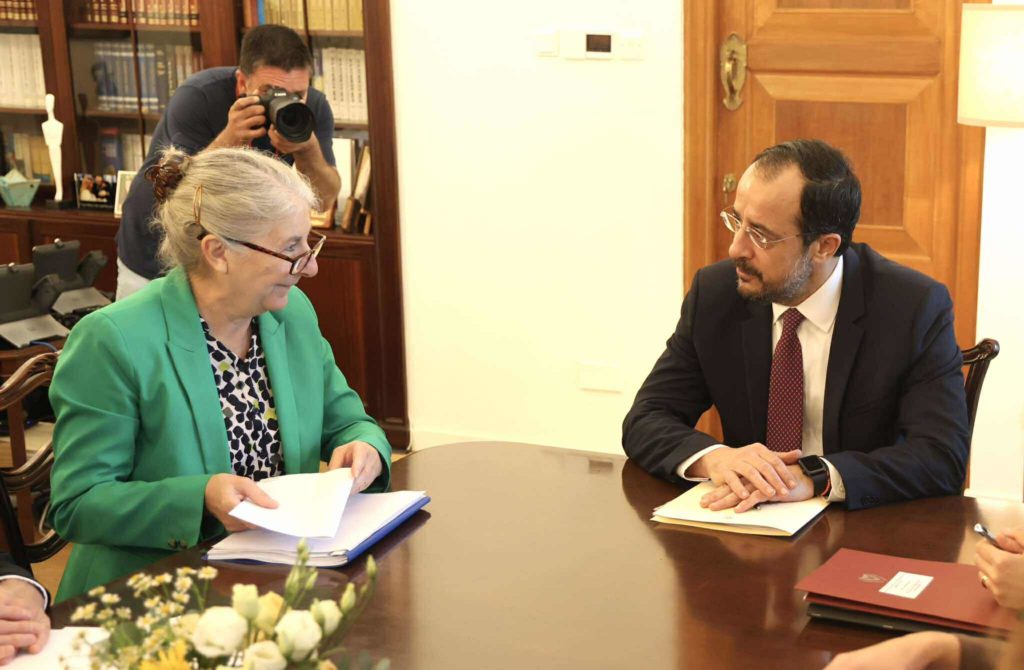
As President Christodoulides noted, less than two months before assuming the presidency, Cyprus has completed an extensive and demanding preparation process, whilst operational teams at the Permanent Representation in Brussels have been substantially strengthened.
President Christodoulides defined the central framework as an ambitious presidency, absolutely result-oriented and with a firm pursuit of consensus, transparency and inclusiveness. He stressed that Cyprus is approaching the presidency as a collective national mission that will strengthen the country’s position in the European edifice, highlight its role as the Union’s south-eastern border and contribute decisively to shaping policies that touch citizens’ daily lives.
The president attached particular importance to the role of the Council’s General Secretariat, expressing thanks for the institutional continuity, expertise and support it provides to the Cypriot presidency. He underlined that the Union is called upon to operate in a complex and often unprecedented geopolitical environment, where the challenge is to stand with stability, cohesion and the ability to project European interests.
Cyprus presidency priorities
Referring to the Cypriot presidency’s priorities, President Christodoulides highlighted the need for the EU to strengthen its autonomy and resilience, placing security and defence at the centre, continued support for Ukraine, competitiveness with emphasis on simplification, enlargement, innovation and completion of the new Multiannual Financial Framework 2028-2034, which he described as a strategic tool for implementing European priorities.
The president underlined that Nicosia is entering the home stretch with full operational readiness and commitment to success. He stressed that the Cabinet and the entire state machinery remain in full coordination with European institutions and especially with the Council’s General Secretariat, which he described as an irreplaceable institutional partner.
Meeting objectives and coordination
The meeting’s main objectives were confirming the Republic of Cyprus’s readiness, establishing Cyprus as an honest and reliable broker, ensuring institutional and organisational readiness in Nicosia and Brussels, recognising the General Secretariat’s role and coordinating on crucial European files such as Ukraine, the Multiannual Financial Framework, security and defence, competitiveness and simplification, enlargement, energy and climate, international trade and affordable housing.
The discussions gave particular attention to preparing the informal European Council in Cyprus on 23 and 24 April 2026, with possible participation by Southern Neighbourhood countries and presentation of flagship projects from the Mediterranean Pact, as well as coordination for a ministerial meeting on affordable housing.
Nine sensitive files for the next six months
The Secretary-General’s visit takes place at the culmination of two years of preparation. Cyprus is in full operational readiness aiming for a presidency that will deliver concrete and measurable results. The presidency programme includes 263 meetings, among them 19 informal Councils of Ministers, three ministerial conferences and one informal European Council of Heads of State and Government.
The Cypriot presidency aims to effectively manage significant, sensitive and demanding files, including the following nine: the Multiannual Financial Framework, Ukraine, competitiveness and simplification, European Parliament/Council relations, security and defence, EU-US relations and geopolitical competition, enlargement, affordable housing and the Islands Strategy.
Close cooperation with the Council’s General Secretariat extends to all areas: staff training, protocol, security, communication and high-level event calendar. The focus includes the six-month roadmap for affordable housing ahead of the European Commission’s Action Plan presentation in December 2025, as well as the informal ministerial meeting in Cyprus on 11-12 May 2026.
The priorities
Defence and security, competitiveness, Multiannual Financial Framework, affordable housing (with an informal ministerial council of housing ministers to be held in Cyprus), migration (Cyprus will host a ministerial meeting on implementing the Migration and Asylum Pact).
Cyprus will invest in cooperation with countries of origin and transit, addressing the causes of migration, fighting illegal trafficking networks, whilst opening legal pathways that meet labour market needs.
Implementing the Mediterranean Pact
As the EU member state at its south-eastern edge, government circles in Nicosia say the second Cypriot presidency of the EU Council is shaping up as a substantive, credible and successful presidency. A presidency that, as President Christodoulides stressed, will bear Cyprus’s mark at the heart of Europe.
Read more:

