


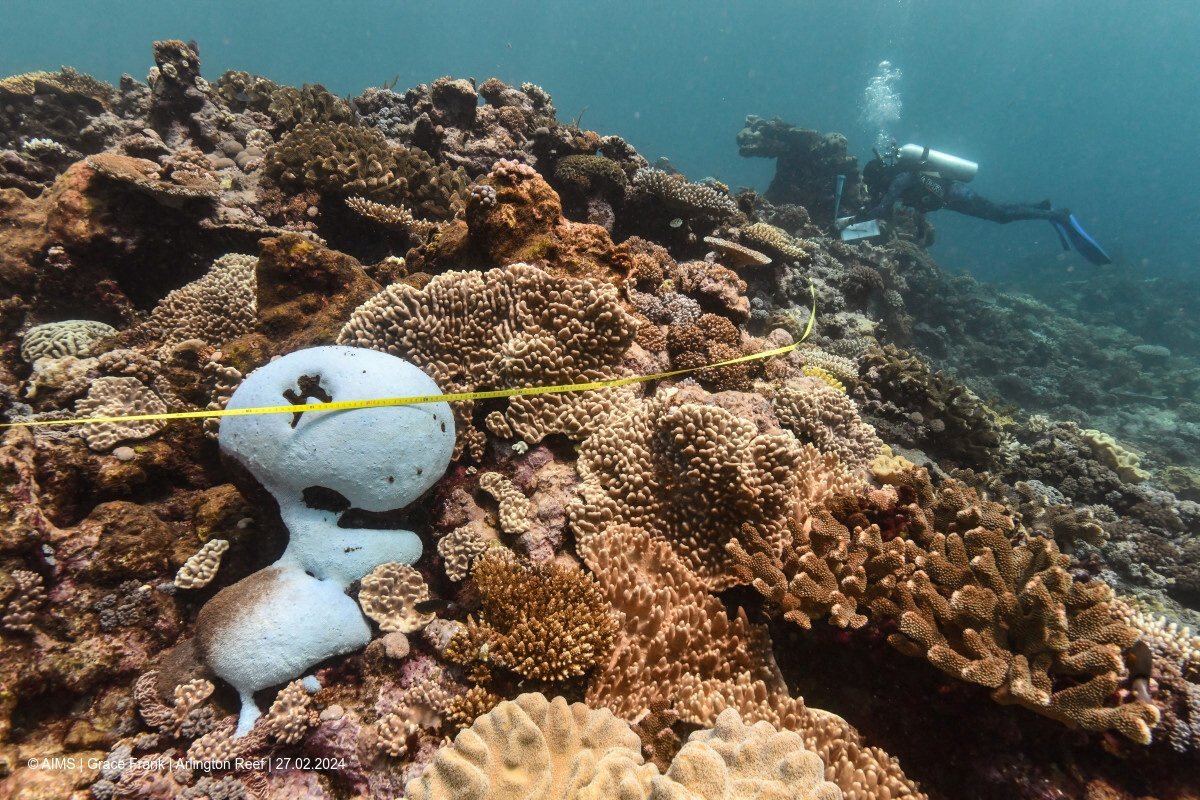
Warm water coral reefs have crossed the first catastrophic climate tipping point, entering irreversible long-term decline that threatens the livelihoods of hundreds of millions of people, scientists warned in a major new report.
The Global Tipping Points report estimates coral reefs reached their critical threshold when global temperatures hit 1.2 degrees Celsius above pre-industrial levels. Current warming stands at approximately 1.4C.
The University of Exeter-led study, financed by Amazon owner Jeff Bezos and involving 160 scientists from 87 institutions across 23 countries, concludes the world must return temperatures to 1.2C—and eventually to at least 1C—to retain warm-water reefs “at any meaningful scale”.
Professor Tim Lenton at the University of Exeter’s Global Systems Institute said the widespread dieback of warm water coral reefs has already begun. “We can no longer talk about tipping points as a future risk,” he said.
Coral reefs host about a quarter of all marine species despite covering less than one per cent of the ocean floor. Scientists classify them as among the ecosystems most vulnerable to global heating.
The world has experienced a global coral bleaching event since January 2023—the fourth and worst on record. Extreme ocean temperatures have affected more than 80 per cent of reefs across 80 countries, pushing reef systems into what scientists describe as “uncharted territory”.
The report identifies Caribbean reefs as particularly vulnerable, where marine heatwaves, low diversity and disease outbreaks have driven ecosystems “towards collapse”. Without rapid cuts to greenhouse gas emissions, global temperatures will breach the 1.5C threshold within the next decade, according to the study.
The findings also warn that the Amazon rainforest, parts of the west Antarctic ice sheet and the Greenland ice sheet are “looking perilously close” to their tipping points. Lenton said projections suggest the world will overshoot 1.5C of warming around 2030, placing Earth in a “greater danger zone of escalating risk”.
However, Professor Peter Mumby, a leading coral reef scientist at the University of Queensland, challenged the report’s conclusions. Whilst accepting reefs face decline, Mumby said emerging evidence suggests corals could adapt and some reefs might remain viable even at 2C of heating.
Mumby said coral reefs require “aggressive” climate action and improved local management, but expressed concern that people might interpret the report as predicting total collapse—a position he does not support. He warned that society might “give up on coral reefs” if the public believes they cannot be saved.
Dr Mike Barrett, chief scientific adviser at WWF-UK and report co-author, said conservation efforts have become more critical than ever. “The game has changed and the response has to be really urgent,” he said.
Barrett highlighted the importance of protecting coral refugia—areas where climate impacts remain less pronounced. “We have to make sure we have the seeds of recovery for a future world where we have managed to stabilise the climate,” he said.
Dr Tracy Ainsworth, vice-president of the International Coral Reef Society, said reef ecosystems in many locations are transforming, either losing coral dominance or shedding diversity. “The future of coral reefs is one of transformation, ecosystem restructure and new challenges,” she said.
The Australian Institute of Marine Science cautioned that global figures mask significant regional variability and that unstable global temperatures indicate “a narrow window of opportunity to act”.
The report offers measured optimism, suggesting “positive tipping points” in society—such as electric vehicle adoption—could trigger runaway effects that rapidly reduce greenhouse gas emissions.
“The race is on to bring forward these positive tipping points to avoid what we are now sure will be the unmanageable consequences of further tipping points in the Earth system,” Lenton said.
(With information from The Guardian)
Read more:

