


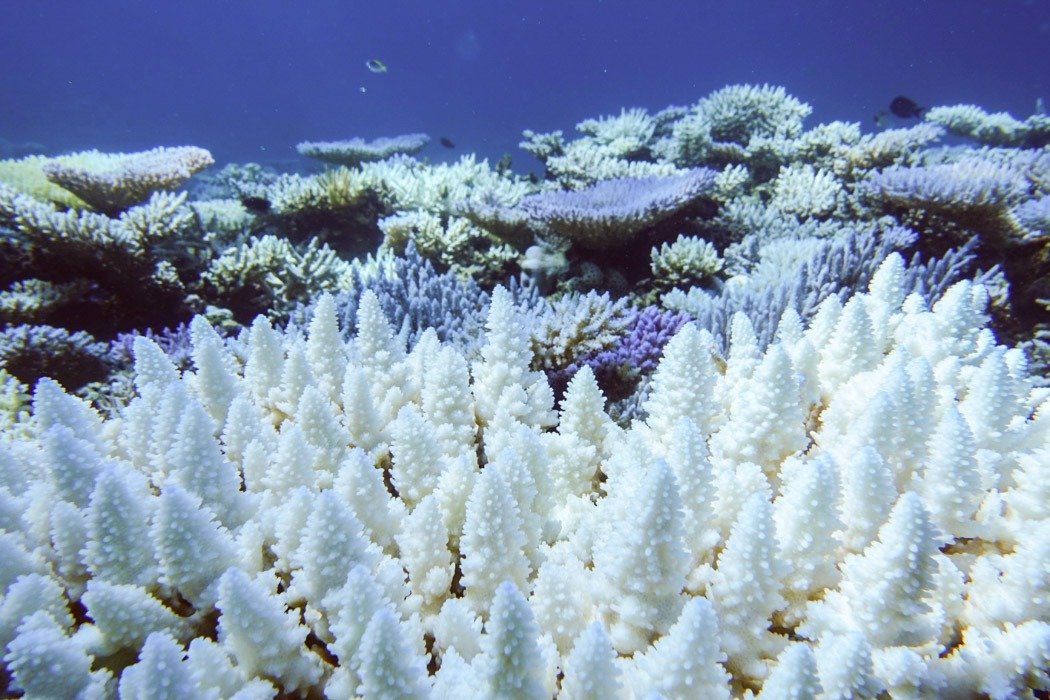
The worst global coral bleaching event on record has now impacted more than 80% of the world’s reefs, pushing these vital marine ecosystems into “uncharted territory,” according to a Guardian report.
Data from the U.S. government’s Coral Reef Watch shows that reefs in at least 82 countries and territories have been exposed to enough heat to trigger bleaching since the global event began in January 2023.
The current event has affected 84% of global reefs, significantly higher than previous bleaching events which impacted 68% of reefs between 2014-2017, 37% in 2010, and 21% during the first recorded event in 1998.
“The fact that so many reef areas have been impacted, including purported thermal refugia like Raja Ampat and the Gulf of Eilat, suggests that ocean warming has reached a level where there is no longer any safe harbour from coral bleaching and its ramifications,” said Dr Derek Manzello, director of Coral Reef Watch.
Coral reefs, often called the rainforests of the sea, support about a third of all marine species and provide livelihoods for approximately one billion people.
Many regions have experienced consecutive years of bleaching, including Australia’s Great Barrier Reef, where authorities last week declared a sixth widespread bleaching event in just nine years.
The heritage-listed Ningaloo reef off Western Australia has recorded its highest level of heat stress on record in recent months, while scientists have reported bleaching affecting reefs off Madagascar and the east African coast.
“Reefs have not encountered this before,” said Dr Britta Schaffelke of the Australian Institute of Marine Science and coordinator of the Global Coral Reef Monitoring Network (GCRMN). “With the ongoing bleaching it’s almost overwhelming the capacity of people to do the monitoring they need to do”.
After the extreme temperatures of 2023, Coral Reef Watch added three new threat levels to its global bleaching alert system to represent the unprecedented heat stress.
Initial surveys following bleaching events have revealed significant coral mortality. Across Florida, an average of one in five corals were lost, while one area on Mexico’s Pacific coast lost between 50% and 93% of its corals. Scientists documented a “graveyard of dead corals” in the northern section of the Great Barrier Reef with 40% mortality in one southern area.
Dr Lorenzo Álvarez-Filip, a coral scientist at the National Autonomous University of Mexico who has been surveying affected reefs, said the most devastating impact was the loss of reef-building corals that protect coastlines and support marine biodiversity.
“Many of the coral colonies I knew well, and which had survived [a major disease] outbreak just a few years earlier, died in a matter of weeks,” he said.
Dr Valeria Pizarro, senior coral scientist at the Perry Institute for Marine Science, described how shallow reefs in the Bahamas became “white landscapes” in July 2023, with widespread death among corals used in restoration projects.
“World leaders need to really commit to reduce fossil fuels and increase investments in clean energies and make it a reality,” she said. “We need them to stop having it on paper and on the news, we need it to be real”.
(information from The Guardian)

