


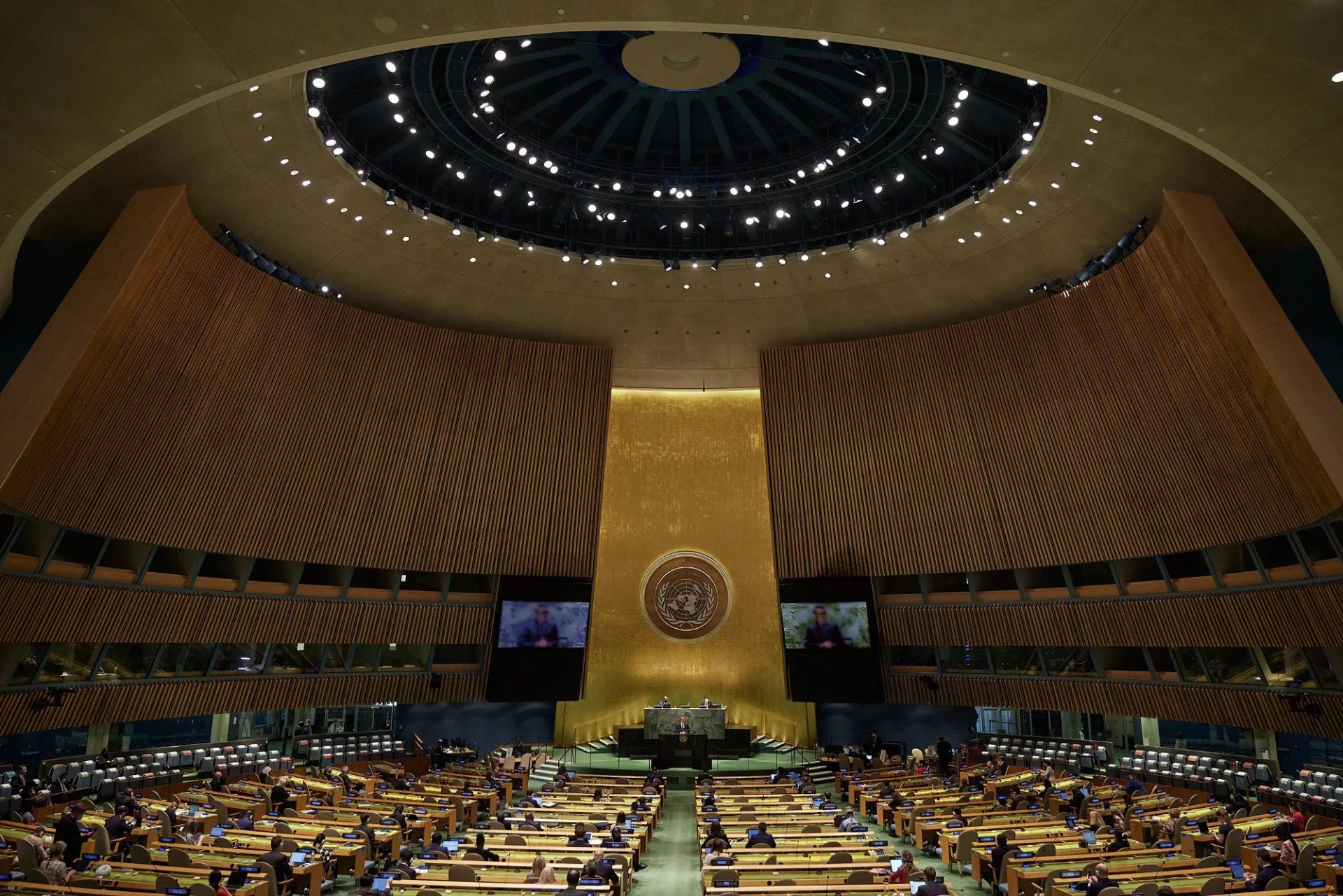
UN Secretary-General António Guterres, marking the opening of the General Assembly’s work, called on all to transform it into a “week of solutions” rather than impressions.
The head of the United Nations made an appeal concerning substance, touching the core of the UN’s role, emphasising that this week “cannot be about scoring points, but must solve problems”.
The truth is there have not been many instances during General Assembly sessions when international or bilateral problems were resolved.
However, this gathering of leaders from UN member states provides an opportunity for meetings and discussions, aimed at finding common ground and compromises for differences that cause tensions and crises.
The truth is that the United Nations’ role has been degraded. To be fair, we must note that the international organisation is absent from international conflicts.
It has no role, no voice. It is bypassed whilst others attempt to mediate and intervene. Examples include Ukraine and the war in Gaza. Diplomatically, the UN is absent.
The Secretary-General nevertheless set as his priorities ceasefire and the path to peace in Gaza, Ukraine and Sudan, stronger action to address climate change; and so forth.
He referred, as is known, to the Cyprus issue, sending a clear message that “I am not optimistic, I am not pessimistic; I am determined. I will not give up”.
The Secretary-General’s goal is to keep the mediation channel open and contribute to restarting the process. Mr Guterres’ statements were welcomed by Nicosia with a statement from the President of the Republic, as it is the Republic of Cyprus that urgently needs a solution.
The United Nations comprises its member states. This is its strength. This is its weapon. However, it is clear that interests prevail—the interests of the powerful and strong.
We do not live in a different reality. We know that everything is shaped by geopolitical interests and pursuits.
The Secretary-General himself admitted that, for example, UN reform is not progressing, and this leads to the “paralysis” of the Security Council due to existing geopolitical divisions.
However, this does not mean the principles and values of the international organisation will be lost.

