


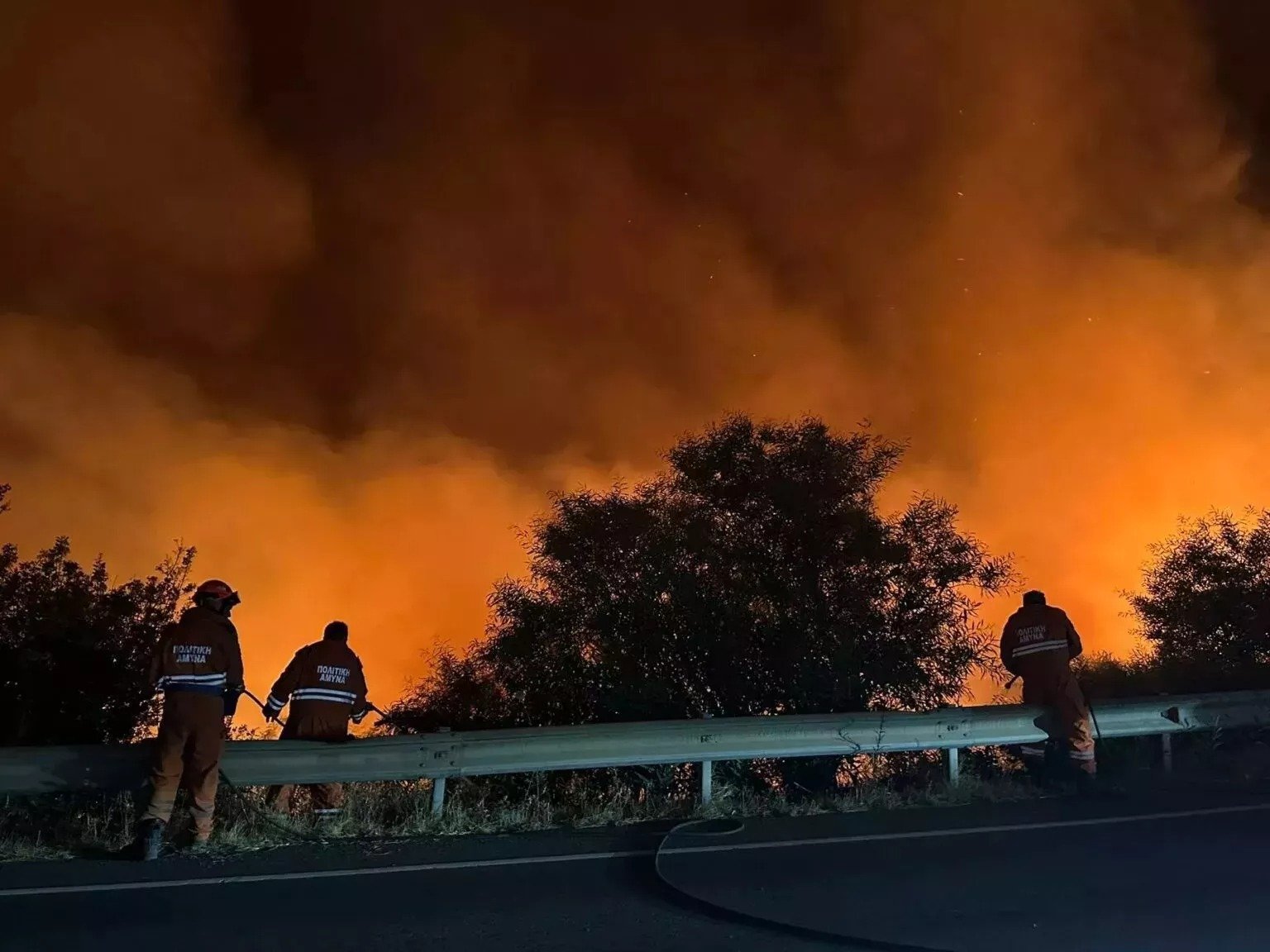
The Civil Defence has published an evacuation report that makes no reference to a couple who burnt to death whilst attempting to flee their holiday home during the recent Limassol wildfire.
The report details evacuation instructions issued at 8pm on Wednesday, 23 July, for the village of Sylikou, which fell under Civil Defence responsibility. However, it omits any mention of the couple’s deaths or the failure of the early warning system for citizens.
Civil Defence chief Maria Papa informed the Interior Minister that during evacuations, residents are encouraged to travel to neighbouring communities using private vehicles where possible, or with assistance from Civil Defence and other state services for those without transport.
The report states that Civil Defence provides directional guidance to evacuating residents after receiving instructions from other competent services, including the Fire Service, Police, and Department of Forests.
Residents receive notifications through mobile phone messages where such systems are implemented by communities, door-to-door information campaigns, bell ringing, or other methods deemed appropriate by Community Councils and Civil Defence when present.
Civil Defence vehicles are equipped with sirens and loudspeakers.
EU assistance declined
The report reveals that Cyprus declined the possibility of hosting ground forces from the EU with personal equipment only or firefighters with their vehicles and equipment, citing complex hosting, training, insurance and familiarisation procedures with Cyprus’s terrain and conditions.
Officials deemed this option provided “no additional value to Cyprus”.
Camps lack regulatory framework
The report highlights a potentially serious future concern regarding camps, stating there is “no relevant legislative framework” for conducting camps and “insufficient preparation by organisers for evacuating premises in emergencies, as well as no institutionalised notification of Civil Defence about the operation of such facilities”.
Papa noted that Civil Defence maintained a list at its Emergency Coordination Centre of camps whose organisers voluntarily reported their operations or were identified through contact with community leaders in affected areas.
Guidance was provided in coordination with the Fire Service.
The report acknowledges that Civil Defence “had no clear picture regarding camps operating during the fire”.
Staffing challenges cited
The report attributes operational limitations to understaffing, stating: “The limited number of available Civil Defence personnel and volunteers during extensive incidents such as this fire makes it objectively impossible to maintain simultaneous physical presence at all evacuation points and escort all evacuees”.
Despite this, Civil Defence claimed it “mobilised to the maximum of its capabilities, activating all prescribed procedures and utilising every available means for guiding and supporting the population”.
The Interior Ministry has also received reports from Police, the Department of Forests and the Fire Service regarding the incident.
Read more:

