


Monks from Mount Athos were preparing to expand into Cyprus, establishing a foothold in Paphos where they found fertile ground to operate a monastery. However, the deposition of Bishop Tychikos halted their plans, given that Archbishop Georgios is now in charge as the locum tenens of the Paphos throne
Initially, the new monastery, which was planned to operate in Drouseia, would be staffed by a small number of monks from Mount Athos (2-4 individuals), and gradually, their number could increase as needed.
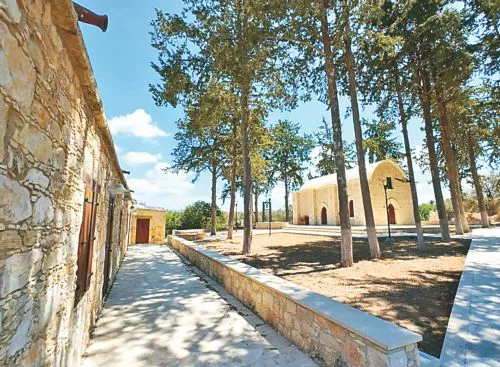
On the premises, there are 3-4 rooms/cells where the monks can reside, if and when the monastery eventually operates. The recent events have overturned the entire endeavor. For the Athonite monks to resume and re-promote their efforts, either the appeal submitted by Mr. Tychikos to the Ecumenical Patriarchate must be accepted, or the new Metropolitan of Paphos must give his consent. This alone points to a battle not only over who will control Paphos and the single vote that person will have in the Synod, but also over the penetration of the Athonite monks into Paphos, where they are already networked. It is believed that individuals sympathetic to the Athonite monks have gained significant influence in Paphos through their long-standing presence and activities, which intensified under Tychikos, finding favorable ground to operate. It is noted that, according to information that reached members of the Holy Synod, some of the people who organized support for Tychikos in recent protests are supporters of Metropolitan Athanasios of Limassol.
It is noted that whoever takes over the administration of Paphos also becomes the locum tenens of the throne, so such a development would constitute another step in the long-term effort to elevate an Athonite to the archiepiscopal throne.
Nevertheless, any candidate (for the Paphos throne) favored by the Metropolitan of Limassol is expected to be included in the three-person shortlist, which is considered the first decisive step towards his elevation to the Paphos throne. Supporters of the former Metropolitan of Paphos, Mr. Tychikos, will also contribute to this. However, the final decision will be made by the Holy Synod, the majority of which does not currently appear to favor the elevation of a Metropolitan with Athonite roots or support.
The power dynamics within the Holy Synod were one of the reasons why both Metropolitan Athanasios of Limassol and his supporters advocated for the election of an Archbishop by the people or with the people’s decision having significant weight, as reflected through the ballot box.
The History of the Monastery of Saint George of Nikoxylitis
But what about the Athonite monastery? As “Phileleftheros” has learned, it refers to the facilities located next to the Holy Church of Saint George Nikoxylitis in Drouseia, whose inauguration was performed by Mr. Tychikos on May 2, 2025. It is noted that the restoration of Saint George Nikoxylitis was completed and handed over on October 23, 2024. Indeed, Mr. Tychikos had also received the relic of Saint George the Trophy-Bearer.
It is recalled that on Friday, September 9, 2022, the then Minister of Transport, Communications and Works of Cyprus, Mr. Yiannis Karousos, accompanied by the then Director of the Department of Antiquities, Ms. Marina Ieronymidou, visited the church. Mr. Karousos visited the church after the restoration of the ruined Monastery and Church of Saint George, which cost approximately €600,000.
The Monastery of Saint George of Nikoxylitis is located approximately 3 km northeast of the village of Drouseia, in the Paphos district.
As indicated by relevant reports, the monastery dates back to the 9th or 10th century and was built by monks from an older monastery, which was also dedicated to Saint George and was abandoned due to Arab raids.
The monastery acquired significant wealth, and it is characteristic that in the early 19th century, it was ranked among the richest monasteries in Cyprus with extensive land property and several dependencies (metochia). However, around 1808, when the Turks arrested and held hostage all the metropolitans of the island and demanded a significant sum of money for their release, the countdown began.
To achieve the release of the hierarchs, it was decided to sell part of the immovable property of the richest churches and monasteries, among which was the monastery of Saint George of Nikoxylitis. At that time, a large part of its land property was sold to private individuals.
Only the church of Saint George remained from the monastery, which was completely renovated in 1923 after a fire. Gradually, the church was abandoned and also suffered damage due to the earthquakes of 1953.
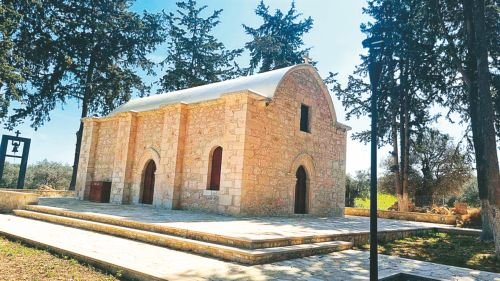
As we read, the chapel is stone-built, constructed in the style of a single-nave basilica. Its interior is particularly simple, consisting of a plain iconostasis with a few icons.

