


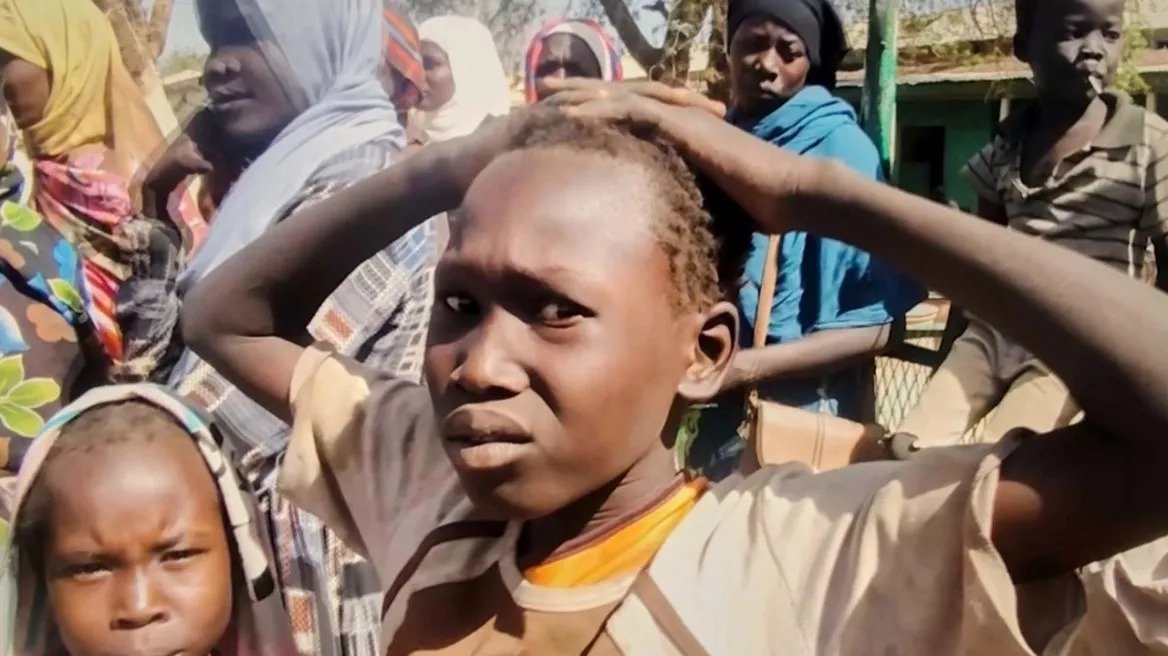
The head of the World Health Organisation has condemned an attack on a hospital in Sudan that killed more than 40 civilians, as the country’s civil war continues to fuel the world’s largest humanitarian crisis.
The attack on al-Mujlad hospital in West Kordofan occurred on Saturday near the frontline between the Sudanese military and the paramilitary Rapid Support Forces (RSF). The WHO’s local office said six children and five health workers were among the dead, with dozens more injured. The organisation did not assign blame for the attack.
WHO Director General Tedros Adhanom Ghebreyesus said in a post on X: “We cannot say this louder: attacks on health must stop everywhere!”
Conflicting accounts over responsibility
The RSF blamed Sudan’s armed forces for Saturday’s attack, calling it “barbaric aggression” that constitutes “a flagrant violation of international humanitarian law, including the 1949 Geneva conventions, which explicitly prohibit the targeting of health facilities and personnel”.
The news site Darfur 24 cited the West Kordofan Emergency Response Rooms as saying the attack was an airstrike carried out using a Sudanese military plane. Emergency Lawyers, a group that documents abuses by both sides, said the hospital was hit by a military drone.
However, Nabil Abdallah, a spokesperson for Sudan’s military, denied the allegations. “Sudanese armed forces do not violate international law and do not target civilians, but target the places of militia gatherings everywhere as legitimate targets, against facilities used by the militia for military purposes,” Abdallah said.
“These are lies and propaganda aimed at blaming false charges [on] the Sudanese state and its armed forces and [are] part of the regional and international conspiracy against Sudan”.
Ongoing humanitarian crisis
The RSF and Sudan’s armed forces have been fighting since April 2023, when a power struggle erupted into open warfare in the capital, Khartoum. Tens of thousands have been killed and more than 12 million displaced, with 4 million fleeing to neighbouring countries. More than 20 million people need food aid and areas of the country are experiencing famine.
Unicef said: “The attacks do not only kill and injure but also severely impede the communities’ ability to receive life-saving services. We urge the government and all parties to the conflict to uphold their obligations under international humanitarian law. The attacks and violence must end now”.
Pattern of attacks on healthcare
In January, 70 people were killed in an attack on what was then the only functional hospital in the besieged city of El Fasher, in the Darfur region. The attack was blamed on the RSF.
Earlier this month, a UN aid convoy came under attack whilst trying to bring supplies to El Fasher, which has been under RSF siege for more than a year. Five people were killed in that incident.
Genocide warnings
Virginia Gamba, the UN Secretary General’s special adviser on the prevention of genocide, told the UN Human Rights Council on Monday: “Both parties have committed serious human rights violations”.
She said: “RSF and allied armed Arab militias continue to conduct ethnically motivated attacks against the Zaghawa, Masalit and Fur groups. The risk of genocide, war crimes and crimes against humanity in Sudan remains very high”.
In March, Sudan’s armed forces recaptured the presidential palace as they asserted control over Khartoum, whilst the RSF consolidated their dominance over the western region of Darfur, where their predecessors, the Janjaweed Arab militias, were accused of committing genocide against non-Arab tribes in 2004.
(information from The Guardian)
Read more:

