


The number of people forced to flee their homes but remaining within their countries’ borders reached an unprecedented 83.4 million by the end of 2024, equivalent to Germany’s entire population, according to a report released on Tuesday.
Armed conflicts—particularly in Sudan and Gaza—along with natural disasters drove the 10% increase from 75.9 million displaced at the end of 2023, the Internal Displacement Monitoring Centre (IDMC) and Norwegian Refugee Council (NRC) stated in their annual report.
“Internal displacement is where conflict, poverty and climate collide, hitting the most vulnerable the hardest,” said Alexandra Bilak, IDMC director. “These latest numbers prove that internal displacement is not just a humanitarian crisis; it’s a clear development and political challenge”.
The report shows a 50% increase in internal displacement over the past six years, with the number of countries experiencing mass displacements tripling in the past 15 years.
Nearly 90% of internally displaced persons (IDPs), or 73.5 million people, were forced to move due to violence and armed conflicts—an 80% increase since 2018. Ten countries each reported over three million people displaced by conflict, double the number from four years ago.
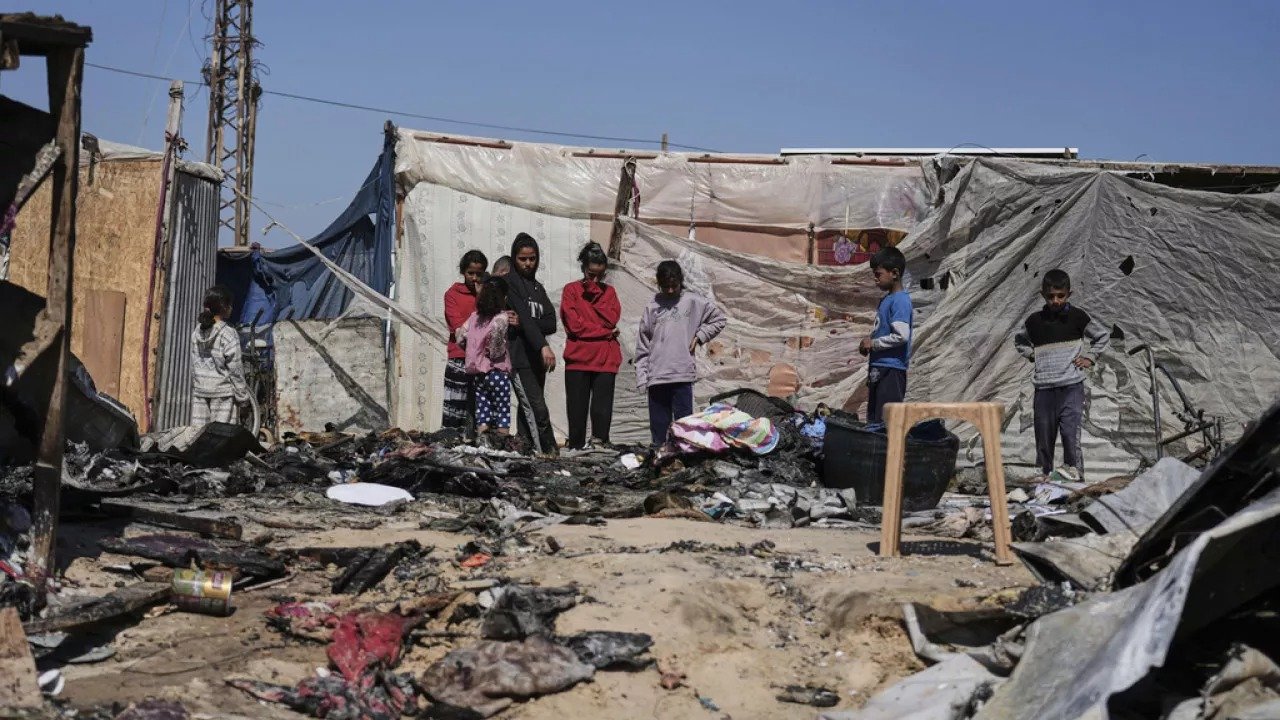
Sudan topped the list with a record 11.6 million internally displaced people—the highest number ever recorded in a single country. In Gaza, nearly the entire population was displaced by the end of 2024, even before new mass displacements following the resumption of Israeli bombardments on March 18 after a two-month ceasefire.
The Democratic Republic of Congo, Palestine and Sudan together accounted for 12.3 million internal displacements in 2024, nearly 60% of the global total for conflict displacements.
An additional 9.8 million people were living in displacement due to disasters by year’s end, a 29% increase from the previous year and more than double the figure from five years ago. Afghanistan (1.3 million) and Chad (1.2 million) accounted for nearly a quarter of this total.
Weather-related events triggered 99.5% of disaster displacements during 2024, with many intensified by climate change.
Disasters caused 45.8 million displacements throughout the year—the highest annual figure since IDMC began monitoring disaster displacements in 2008 and more than double the annual average of the past decade.
Extreme weather events like hurricanes Helene and Milton in the United States and typhoon Yagi in East Asia triggered 54% of disaster-related movements. Floods caused another 42%, with major events on every continent.
The United States recorded 11 million internal displacements due to natural disasters—nearly a quarter of the global total. It was one of 29 countries and territories to record their highest figures ever.
Many disaster displacements were pre-emptive evacuations that saved lives in the United States, Philippines, Bangladesh and elsewhere.
Of the 163 countries reporting disaster displacements, 53 documented pre-emptive evacuations, though incomplete data suggests the true number is likely higher.
Nearly 75% of people displaced by conflict were living in regions highly vulnerable to climate change, creating overlapping crises that erode recovery capabilities and stretch government resources.
The number of countries reporting both conflict and disaster displacement has tripled since 2009. “The cost of inaction is rising, and displaced people are paying the price,” said Bilak.
These alarming statistics come as humanitarian organisations worldwide face increasing difficulties due to funding suspensions by the United States following a decision by President Donald Trump’s administration.
“Every time humanitarian funding gets cut, another displaced person loses access to food, medicine, safety and hope,” said Jan Egeland, NRC Secretary General. “The lack of progress is both a policy failure and a moral stain on humanity”.
He called the figures a “wake-up call for global solidarity,” noting that internally displaced people often receive less attention than refugees who cross international borders.

