



The University of Cyprus is celebrating 33 years of operation. During this time, it has managed to establish itself academically, as shown by the continuous improvement in its international rankings, and in the consciousness of society, becoming a reliable institution of knowledge and stability.
In an interview with Phileleftheros, Tasos Anastasiou, Chairman of the Council of the University of Cyprus, spoke about the achievements of the leading university in our country and its highly positive contribution to the economy and society, creating a multidimensional footprint that transcends its purely academic role.
According to Tasos Anastasiou, through research, innovation, and its connection with the job market, the University of Cyprus supports an ecosystem that directly and indirectly employs over 12,000 people and contributes to reversing the brain drain by retaining valuable human resources in the country.
At the same time, assessing the state’s investment in the University of Cyprus shows that its contribution to the economy is decisive, creating significant multiplier benefits. As he noted, for every euro invested, multiple amounts are generated in GDP and the country’s economic output, while hundreds of jobs are supported. This confirms that the university is a strategic investment benefiting Cyprus’s society, economy, and human capital, he said.
The University of Cyprus, however, is not limited to what it has achieved so far but focuses on what can be done in the future. Its goal is to continue developing and become a regional centre for higher education. The challenges are significant, acknowledged Tasos Anastasiou, but strengthening its role as a pillar of social and economic progress remains at the core of the strategy for everyone at the University of Cyprus.
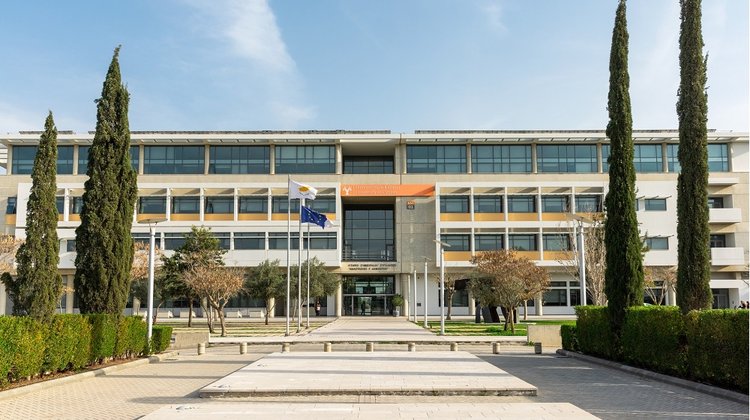
For 33 years, the University of Cyprus has been at the epicentre of higher education in our country. What do you consider its greatest successes during this period?
Undoubtedly, the early establishment of the University of Cyprus in international academic institution rankings is a great success. However, this establishment is not one-dimensional: the institution has been established in the consciousness of society as a whole as an institution of reliability, knowledge, and stability. It has also gained recognition among a large proportion of students as their first choice for studies, among employers who see our graduates as having the necessary scientific training, and by the state, which seeks scientific documentation for policy decisions. Beyond that, and without referring to specific international successes of our academics and researchers – which are many – I consider the greatest success to be that the operation of the University of Cyprus has instilled a different culture of academia and broader civilisation in Cypriot society that was so desperately needed. The study by the Centre for Economic Research that we recently presented highlights this exact multidimensional character of the University of Cyprus: its economic and social impact on our country, a footprint that far exceeds its narrow academic role.
The University of Cyprus is not just an educational institution. How do you assess its contribution to the Cypriot economy?
You are absolutely right that the educational aspect, which is characterised by excellence and of which we are very proud, is only part of our educational institution’s contribution. The University of Cyprus is simultaneously a driving force for economic development and human capital formation, with a pioneering role in research and innovation, and perhaps the main institution protecting and strengthening the island’s social fabric.
But let’s focus specifically on the University of Cyprus’s contribution to employment. Can you tell us about this?
In my capacity as a former employer of hundreds of UCy graduates, I can testify to the successful connection between the University and the job market. Our 35,000 graduates provide private and public organisations with exceptional quality human capital. Furthermore, UCy supports an ecosystem that directly and indirectly employs over 12,000 people and makes an enormous contribution to reversing the brain drain. According to the study conducted by the Centre for Economic Research, approximately 1,000 high-value-added positions that would otherwise be active abroad exist in Cyprus due to the University of Cyprus’s operation.
How do you respond to those who often complain and comment that the level of state investment in the University of Cyprus is too high? Is there any evidence of the return value of these investments?
I want to emphasise unequivocally that we want and seek scrutiny and rigorous evaluation. However, this must be done on the right basis, with appropriate criteria. Let me mention some of the conclusions from the recent study conducted by the Centre for Economic Research on UCy’s added value: for every one million euros invested in UCy, the country’s Economic Output increases by 7 million, GDP by 3.42 million euros, and 80 jobs are supported. For 2024, UCy’s contribution amounts to 1.2 billion euros in Economic Output, 574 million euros in GDP, and support for over 12,000 jobs. Regarding UCy’s contribution to reversing the brain drain, this is measured for 2024 at 118 million euros in Economic Output, 51 million euros in GDP, and approximately 1,000 jobs.
It is therefore proven that the University of Cyprus constitutes a continuous investment with multiplier benefits for the country’s economy, society, and human resources, and as such, it should be judged and evaluated, and not, as we unfortunately see in some cases, as a simple cost centre. Activities beyond teaching, such as research, dissemination of knowledge to society, contribution to policy-making and others, cannot be ignored in favour of oversimplified and distorting analyses that simply divide the total budget by the number of students.
Tell us about the social role of the University of Cyprus. What social footprint does our country’s highest educational institution leave?
The social footprint of the University of Cyprus is perhaps the crowning achievement of its entire contribution to our country. The knowledge and scientific approach developed do not remain confined within the narrow boundaries of the University campus but are disseminated throughout Cypriot society through hundreds of annual actions, positions, events, interventions, and lectures on a vast range of topics. In collaboration with public and private organisations, know-how is transferred, policies are documented, and educational projects and social support programmes are offered, skills enhancement, promotion of entrepreneurship, multilingualism and much more. I should also mention the Institution’s contribution to preserving the sources of our history and cultural heritage, as well as promoting reading.
Beyond the above, there is another dimension to the University of Cyprus’s social footprint: that of an institution strengthening the social fabric. If in Cyprus we are largely satisfied with social mobility – meaning that the economic class into which someone is born does not determine their subsequent development and advancement – this is due, among other things, to the institution of the University of Cyprus.
In which areas do you consider the University of Cyprus to excel the most?
Academic excellence and research success through securing funding of many tens of millions of euros apply to all scientific fields without exception that fall under the existing Schools of the University of Cyprus. Of course, perhaps due to closer connection with the job market, some fields attract more intense interest, such as medicine, finance, law, sciences, etc. We recently had, for example, the success of securing external private funding to create a chair in the field of Artificial Intelligence. However, the mission of the public university is to offer studies in areas such as humanities, archaeology, and philosophy, which a modern developed society also needs, so that there is a more comprehensive perspective and approach.
How do you assess your cooperation with the Cypriot state? Are you satisfied with the support provided, or do you expect more?
My personal experience is that there is very good cooperation with the state bodies responsible for the University, and I see a willingness on both sides for this cooperation to improve even further. There is certainly room for further support from the state, but on the other hand, I want to be objective and say that this requested support must be substantiated in an appropriate and understandable way. I believe that conducting the study on the University of Cyprus’s footprint, apart from transparency needs, also serves this purpose: to establish the basis for the criteria by which enhancement should be judged. On the other hand, support should also be reciprocal: the University of Cyprus has a major role to play in the state’s main strategic pursuits, such as establishing Cyprus as a regional centre for Higher Education, utilising technology, research and innovation as the main drivers of economic development, reversing the brain drain, and strengthening the social fabric. Further strengthening of this cooperation, therefore, only offers benefits to both sides.
The goal is internationalisation and attracting foreign students
What is your vision for the University of Cyprus in the coming years?
I believe a cycle is being completed that concerned the establishment of the University of Cyprus at an academic level, as well as major infrastructure projects such as the buildings of the School of Engineering, Medicine, and Biology. The next era can only concern the further internationalisation of the Institution to attract students and staff from abroad, which will allow it to continue its upward trajectory both in rankings and in substance, since only through the synthesis and convergence of people and ideas from different backgrounds can there be continuous reformation of ideas.
It is no coincidence that the internationalisation of universities carries significant weight in all ranking indicators. Broadening the base of potential students, and consequently the number of students attending the University of Cyprus, will allow better utilisation of the new infrastructure and thus maximise the return on investment in the University. After all, we cannot talk about establishing Cyprus as a centre for regional higher education if the first public academic institution is absent.
Following on from the previous question, what challenges does the University of Cyprus face, and higher education in our country in general?
The main challenges in the direction I mentioned earlier are certainly the modernisation of legislation that will allow the offering of foreign-language programmes, as well as other legislation such as those concerning spin-offs and university clinics. Internal changes must also be made to provide solutions to new challenges, such as the reorganisation of the organisation to successfully manage the need to attract quality foreign students, and to find solutions for student residences.
Higher education in our country, in general, must be guided through conditions of guidance, understanding, and complementarity to achieve the ambitious goal of making the knowledge economy the driving force of the Cypriot economy. We must stop having a static view where one’s gain is another’s loss and vice versa. We must believe that as a country, we have all the credentials to multiply the “pie,” if I may use the expression, of the Higher Education market, which will benefit both public and private educational institutions, as well as our country in general.
Recently, Greek universities have expressed interest in establishing branches in Cyprus. To what extent are you concerned that the University of Cyprus may no longer be the first choice for students, meaning it would lose the best students as happens today?
I am a fervent supporter of the free competition philosophy, provided that it is done with clear rules that apply to all participants. With this prerequisite, which does not apply today due to the absence of the legislation I mentioned earlier, the arrival of branches of Greek universities will enhance the educational product and force everyone to improve what they offer. I believe that each educational institution, either based on scientific fields or on the profile of the students it addresses, has certain characteristics that make it the first choice for some students. I believe that students who choose the University of Cyprus today will continue to have it as their first choice even after the arrival of Greek universities, provided that the distortions I mentioned are eliminated.
Read more:

