



Four out of ten working women in Cyprus have experienced sexual harassment at some point in their career, a much higher percentage than the 2024 EU average of 30,8% according to a study by the European Institute of Gender Equality, said Gender Equality Commissioner’s Office official Niovi Georgiadi.
But what’s of increasing concern is the fact that most of these cases never see the light of day, as fear of a vengeful boss, prevents women from reporting them.
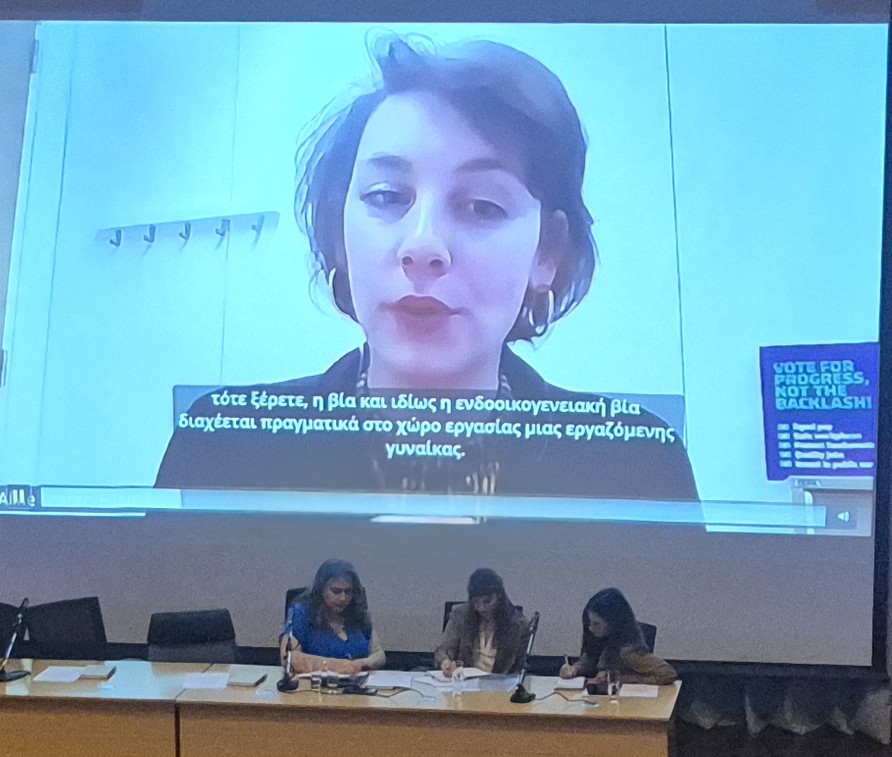
The issue was approached in all its social aspects at an event organised in Nicosia by the CARDET research centre and focusing on prevention and effective ways of combatting and limiting sexual harassment in the work place.
From a legal perspective, senior Labour Ministry official Alexia Hadjikoumi referred to the existing framework that can secure gender equality and prevent such incidents at the office.
Also taking part were representatives of labour unions SEK and PEO, the Chamber of Commerce and Industry and other competent organisations, including Italy’s Oxfam, with CEO Martina Brunelli referring to successful strategies employed by other countries, through the project «Safe at Work, Safe at Home, Safe Online».
Aline Brüser, a gender equality Adviser at the European Trade Union Confederation), noted that gender violence in the workplace is not just limited to sexual harassment but is directly connected to third party violence, domestic violence and internet violence.
Harassment and sexual harassment in the workplace was criminalised in Cyprus more than 20 years ago and through an amendment four years ago, the employer is obliged to adopt and adhere to a Code of Sexual Harassment Prevention and Action Code. But it has to become part of the social fabric.
What differentiates sexual harassment from mutually acceptable friendly behaviour is the forceful nature of the incidents, whereby in most cases women are subject to what those instigating this behaviour like to call ‘flirting’, when in real terms it is nothing less than unwanted inappropriate advances.
What unions are promoting is not just doing away with this phenomenon, based on the power dynamics at the office (usually employer to employee, senior to junior) but also create a culture of zero tolerance against those that might use their position to force themselves on female employees, who remain silent, too afraid to be stigmatised or become the subject of vengeful reaction, should they refuse.
Sources told Phileleftheros that recently a female doctor was fired from a private clinic after reporting sexual harassment. The excuse was that she was bad at her job.
Should anyone wish to report sexual harassment in the workplace, the labour union SEK support line is 77775575. Last year alone, it received 258 reports, a significant rise.
When the victim reports sexual harassment, overcoming their fears and misplaced shame, the perpetrator launches a systematic process of psychological pressure known as mobbing, whereby they attempt to decriminalise themselves and pass on the guilt to the victim. In many cases, this dissuades women from taking the case to court.
The main conclusion drawn from the event is the need to forge younger generations that reject any form of violence and veer away from accepted sexist social norms as well as create policies that strengthen women’s financial independence, so they won’t feel trapped in abusive relationships.

