


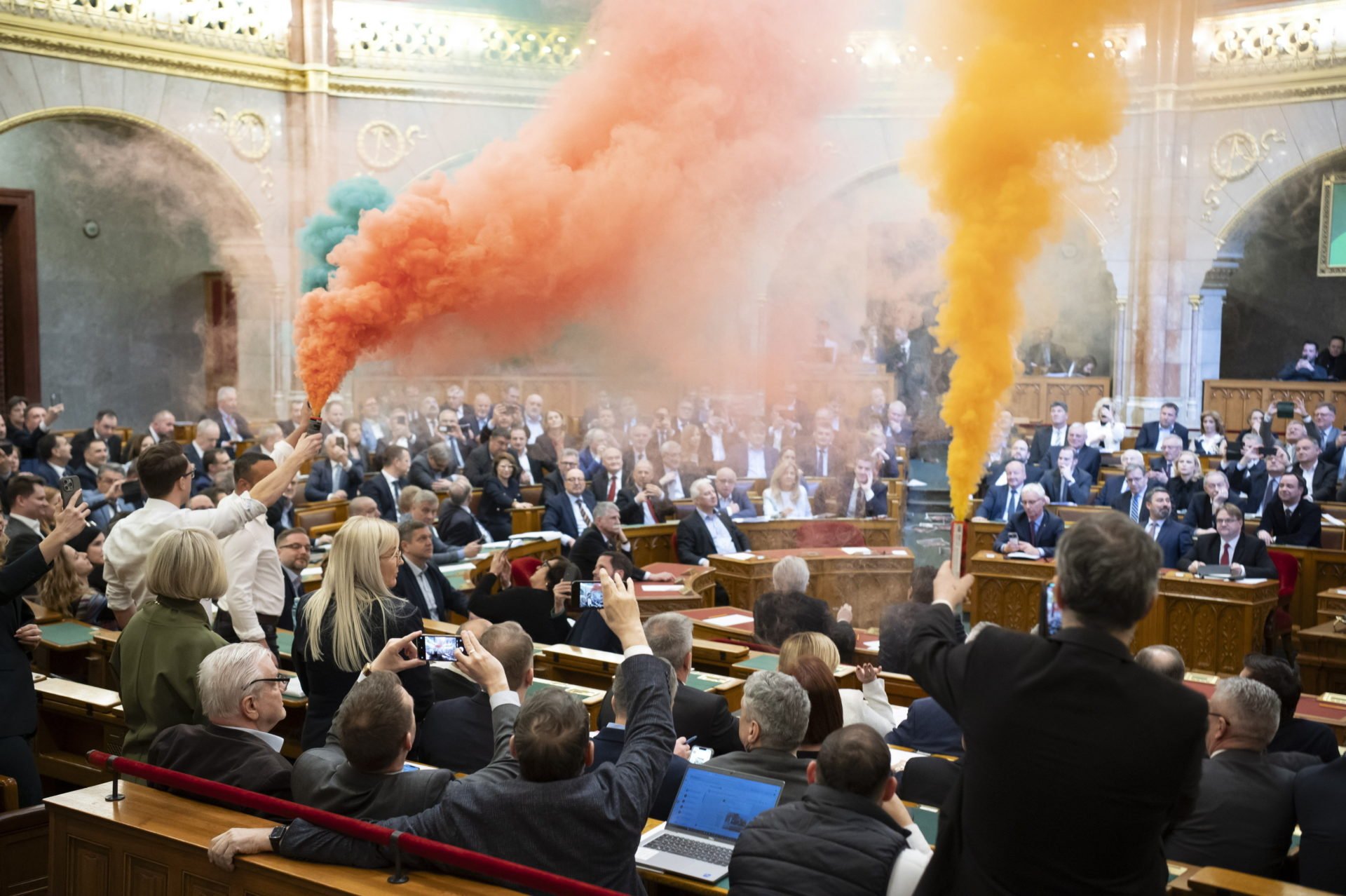
Hungary’s parliament on Tuesday passed legislation banning Pride events and permitting authorities to use facial recognition technology to identify and potentially fine participants.
The amendment to the country’s assembly law was approved by 136 votes to 27, just one day after being submitted to parliament. The legislation modifies existing “child protection” laws that prohibit the “depiction or promotion” of homosexuality to minors under 18.
Amnesty International condemned the measure as a “full-frontal attack” on the LGBTQ+ community and “a blatant violation of Hungary’s obligations to prohibit discrimination and guarantee freedom of expression and peaceful assembly.”
🇪🇺🚫🏳️🌈Hungary just became the first EU country to ban Pride events in Viktor Orbán's latest anti-LGBTQ crackdown, allowing facial recognition to identify and punish disobedient attendees. Liberal opposition MPs (Momentum party) protested inside parliament by using smoke grenades. pic.twitter.com/dU9aLYm9r6
— Szabolcs Panyi (@panyiszabolcs) March 18, 2025
EU Commissioner for Equality Hadja Lahbib suggested the law contradicts the values of the 27-nation bloc, stating: “Everyone should be able to be who they are, live & love freely. The right to gather peacefully is a fundamental right to be championed across the European Union.”
The legislation comes as Prime Minister Viktor Orbán faces an unprecedented challenge from former Fidesz party member Péter Magyar ahead of next year’s elections, leading some analysts to suggest the ban aims to appeal to far-right voters.
“It is easy to win votes by restricting the rights of a minority in a conservative society,” said Szabolcs Hegyi of the Hungarian Civil Liberties Union, warning that curtailing civil liberties for political gain represents a concerning trend.
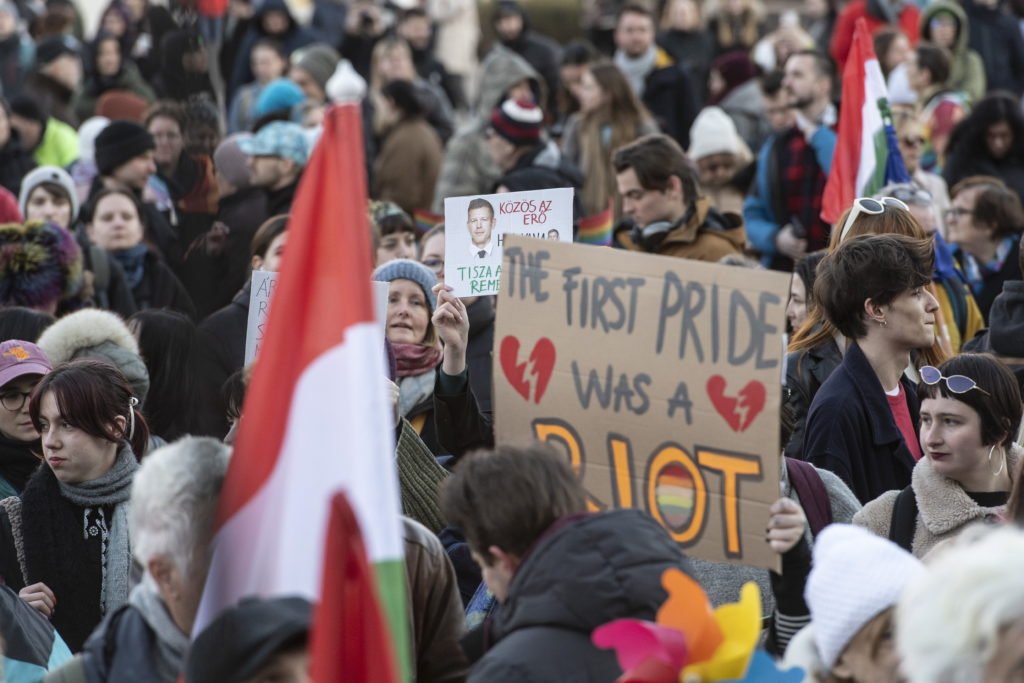
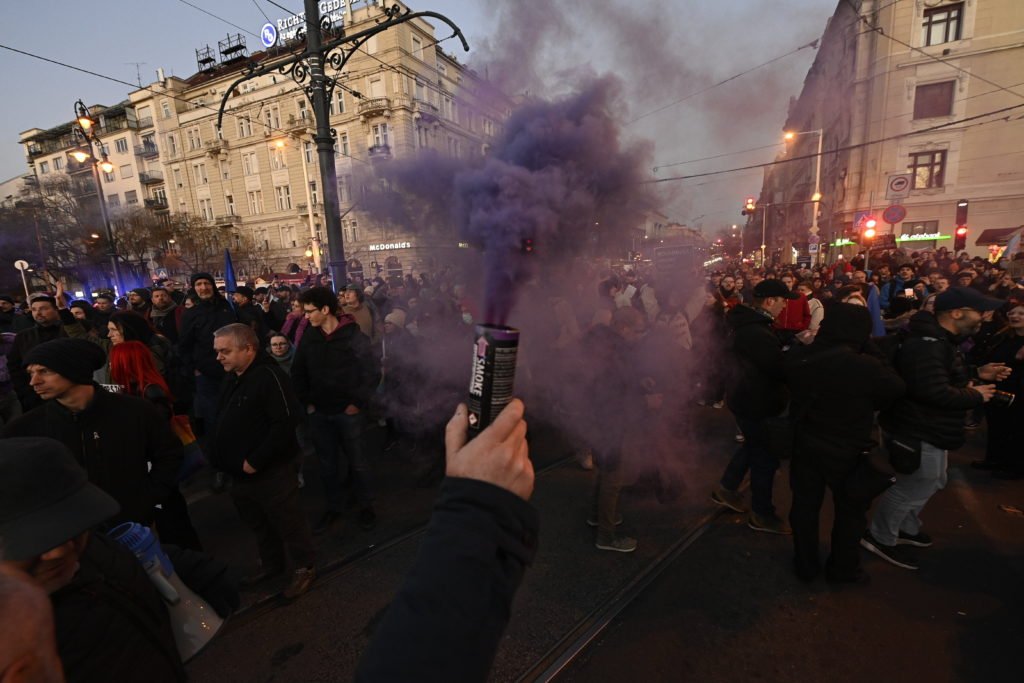
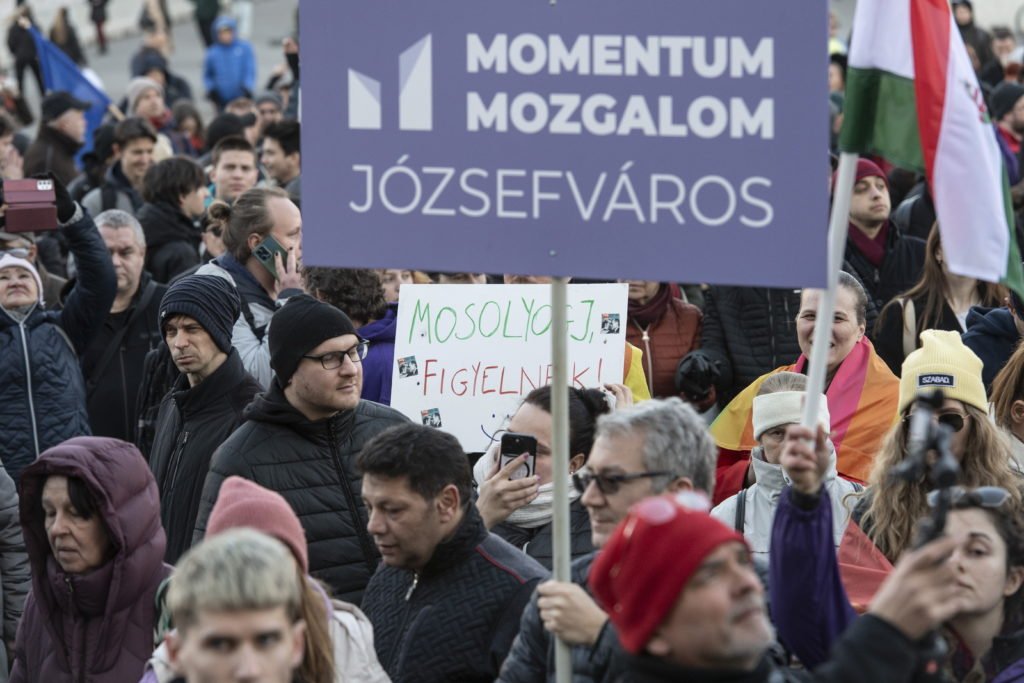
Budapest Pride organisers have vowed to proceed with their planned march despite the new restrictions. “This is not child protection, this is fascism,” they stated. The event would mark its 30th anniversary this year.
Jojó Majercsik, a spokesperson for Budapest Pride, told the Associated Press that the organisation had received an outpouring of support following the vote. “Many, many people have been mobilised,” Majercsik said, noting that even people who previously had not attended Pride events were now planning to participate.
As the vote was held, opposition MPs ignited smoke bombs in parliament, filling the chamber with colourful smoke in protest.
Since returning to power in 2010, Orbán has faced criticism for weakening democratic institutions and undermining the rule of law. His government has portrayed itself as defending traditional family values while implementing measures similar to those in Russia, including blocking same-sex couples from adopting children and banning LGBTQ+ content in school education programmes.
EPA/ZSOLT SZIGETVARY
EPA/ZSOLT SZIGETVARY
EPA/ZSOLT SZIGETVARY
Read more:

