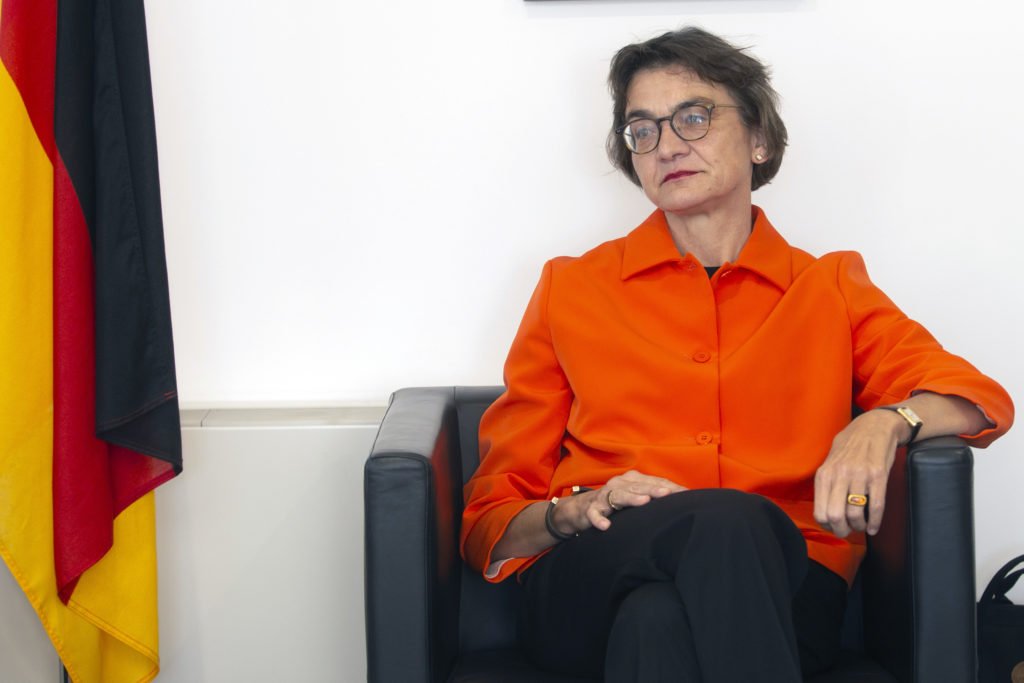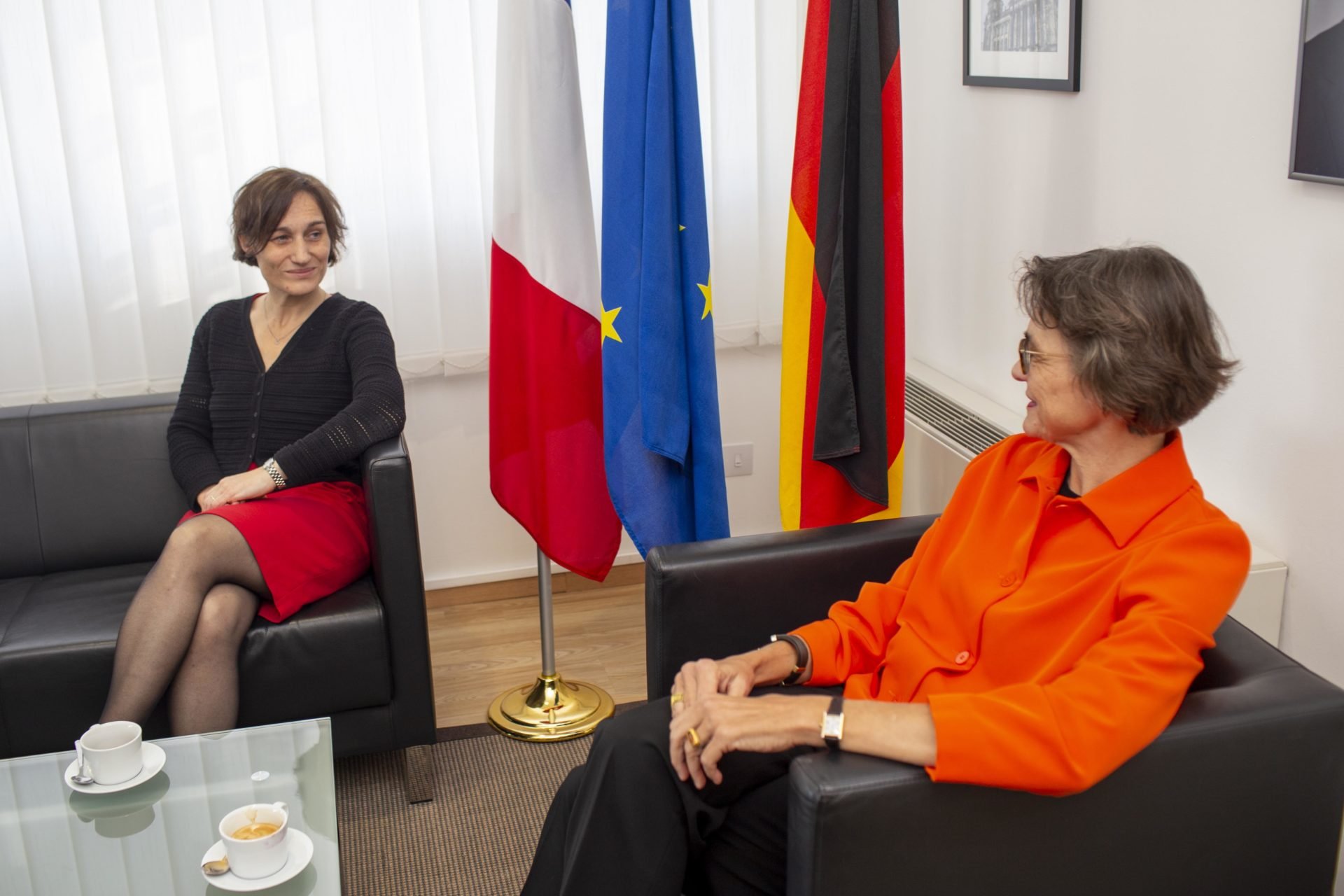
If today everyone in Europe can refer to the Franco-German axis or the cooperation between Berlin and Paris, it is thanks to two leaders, Chancellor Konrad Adenauer and General Charles de Gaulle, who signed the Élysée Treaty on January 22, 1963.
This treaty is now a reference point as it marks how two countries, once sworn enemies, reconciled and have worked together ever since. The German and French Ambassadors spoke exclusively to Phileleftheros about the significance of the Élysée Treaty and its importance to their countries.
Both Anke Schlimm and Clélia Chevrier Kolačko emphasise the relevance of the Franco-German example for Cyprus and its people. They stress that it is up to the key players in Cyprus to chart their course, just as France and Germany did.
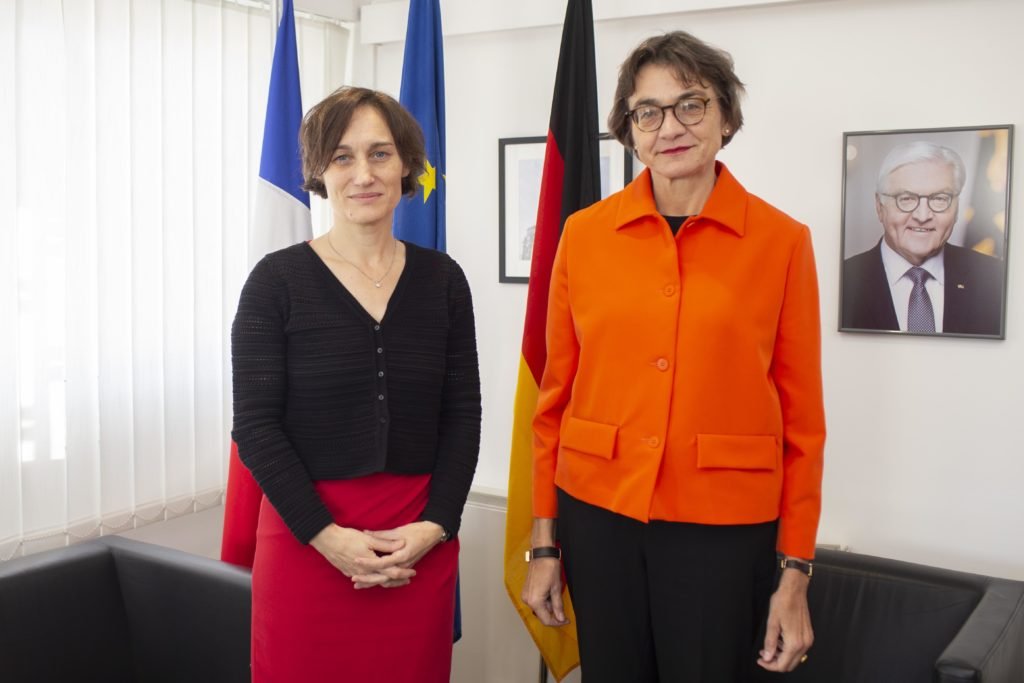
Why do you consider the Élysée Treaty significant for France and Germany, which came nearly 20 years after WWII’s end?
Clélia Chevrier Kolačko – First of all, let us remind the readers exactly what we are talking about. On January 22, 1963, nearly two decades after the end of the Second World War, chancellor Konrad Adenauer and General de Gaulle, signed a bilateral cooperation treaty between Germany and France, known as the Élysée Treaty. It was a founding act of Franco-German friendship that we will be commemorating in a few days’ time. On that day, our two countries, which had been bitter enemies, decided to become the closest of allies, thus ending almost a hundred years of war.
The Treaty organises relations between our two countries in order to deepen their cooperation, particularly in the fields of defense, foreign affairs, education and youth. Not only has it given a lasting form to cooperative Franco-German relations, but it has also anchored this partnership in something less subject to change and chance than personal chemistry and leadership, bounding de Gaulle’s and Adenauer’s successors to perpetuate those cooperative relations.
Even today, this Treaty remains the reference text for a vast cooperation based on trust between our countries and our fellow citizens, in the service of Europe.
Anke Schlimm – The Élysée Treaty holds great importance for both France and Germany, as it symbolised a profound commitment to lasting peace and mutual cooperation. It demonstrated to the world that two historically conflicted nations could reconcile and chart a shared future. Through systematic consultations at the highest governmental levels, Germany and France fostered a framework of trust that enabled joint action on political, economic, and cultural matters. These cooperative mechanisms advanced European integration, laying the groundwork for the European Union’s continuing evolution.
For Germany, the treaty especially represented a critical step toward rejoining the international community with respect and credibility. It also reinforced Germany’s vision for a stable, democratic Europe unified by common values. Encouraging direct exchanges among citizens, particularly young people, expanded mutual understanding and friendship. Ultimately, the Élysée Treaty cemented a partnership based on equality, reflecting a shared commitment to unity and collective progress despite historical adversities. Today, its legacy endures, shaping ties and inspiring Europe.
In a very similar vein, the German-French Treaty of Aachen, signed in 2019, reaffirmed and expanded upon these commitments by deepening bilateral integration and reinforcing a united European approach to global challenges. By focusing on areas like digitalisation, defense, and youth exchanges, it ensured the enduring vibrancy of this partnership for generations to come.
What relevance does this treaty hold today, and what can we draw from it?
Anke Schlimm – The Élysée Treaty remains profoundly relevant in our modern age, underscoring the value of reconciliation, dialogue, and shared commitment among nations. Even decades after its signing, Germany and France continue benefiting from the trust and common purpose it fostered. By emphasising joint interests and encouraging youth exchanges, the Treaty serves as a blueprint for forging close partnerships and maintaining regional stability. It has inspired collaborative approaches within the European Union, contributing to the promotion of peace and economic progress. Beyond Europe, the “Élysée spirit” suggests that longstanding disagreements can be transcended through consistent communication and mutual respect.
Clélia Chevrier Kolačko – While Franco-German friendship cannot make everything possible and does not sum up Europe, it is precisely because there was this Franco-German reconciliation that Europe could be built. Since then, Franco-German friendship has been a driving force for European integration.
Today, at a time when Ukraine is resisting Russia’s aggression and the ideals of peace and dialogue have been flouted, we need more than ever to promote the ideal of a more united Europe, with a strengthened sovereignty.
Just a few days ago, our two foreign ministers, Annalena Baerbock and Jean-Noël Barrot, made a historical gesture by travelling to Syria with a European Union mandate to meet the de facto Syrian authorities so as to deliver clear messages to the new forces in power. We are determined to continue making the friendship between Germany and France one of the pillars of Europe, in the service of peace and prosperity.
Could a similar agreement be achieved between Cyprus and Turkey, or Greece and Turkey?
Anke Schlimm – France and Germany set an example of reconciliation that serves worldwide as a reference and model to overcome divisions. Against this background, I firmly believe that reconciliation, dialogue and personal contacts between people are of utmost importance in order to put a foundation of trust and a good neighbourhood. I believe that the youth is key in that respect. That is why, for example, the German Government supports the “Imagine” project which brings together students from the Greek-Cypriot and the Turkish-Cypriot community in workshops in order to get to know each other. The “Imagine” project has brought together approximately 7900 young people and 2400 teachers from both communities since 2017. It would be my hope that these young people profit as much from these workshops and joint activities.
I would not want to draw a comparison between the relationship of Cyprus with Turkey or Greece with Turkey and Franco-German relations. Every country and its people are different, and the geopolitical context in the Eastern Mediterranean is specific. But maybe we can draw two messages of hope from the French/German experience. First, there is a message of reconciliation and hope: Something that had not been imaginable in the past, a Franco-German “couple”, today is a self-evident reality. And the second message is one of hard work: It needed a lot of work of rapprochement between the French and German people to reach the final goal of reconciliation.
Clélia Chevrier Kolačko – It’s important to understand that the Franco-German rivalry was at the root of immense disorder in Europe, and indeed throughout the world, paving the way to two World Wars with heavy tolls. The starting point for the rapprochement between Germany and France was therefore the realisation of a shared moral responsibility for these disasters, and therefore a new responsibility to do everything in our power to guarantee world peace. It is this very painful shared past that has certainly contributed to the leaders’ intention.
But, as said before, however engaging and powerful the messages it conveys are, a treaty of this kind is not an end in itself. The idea it embodies must endure and thus be nurtured as a profession of faith. Today, if the Treaty endures after 60 years, if it has even been strengthened over the years, it’s because the intention still endures. I believe that intention is one of the key words in such reconciliation.
Likewise, I would be careful not to draw a comparison with the Cyprus question, as each situation has its own dynamics. In Cyprus, it is up to the protagonists alone to find within themselves the intention and draw the way forward, as France and Germany did 60 years ago. With the signing of this Treaty, France and Germany, once an impossible « couple », have shown what willpower, courage and political strength can achieve together.
What messages does this send to Cypriot leaders and their people?
Clélia Chevrier Kolačko – The starting point of the Treaty is the awareness of its power, the power to match symbol with intention – that of reconciling Germany and France for good. The Treaty is not an end in itself, but the channel through which this ideal is embodied in symbols, projects and initiatives. What is also important to know is that this treaty was not intended to be made for and by the heads of State but that it was designed for the citizens of both countries so that they get closer to each other by getting to know, talk to and appreciate each other. This friendship has notably led to the signing of more than 2,300 twinning agreements between French and German cities and a proliferation of initiatives by the civil society. One of the most concrete achievements of the Treaty, the Franco-German Youth Office, enabled almost 10 million young people to take part in some 400,000 mobility programs.
Anke Schlimm – A key lesson is we should acknowledge the past, fully, even the darkest hours, but not blame ourselves for it. The aim is to reconcile people, even if it is a long and difficult process. Cypriots on both sides can make daily life easier, cooperation between Greek Cypriots and Turkish Cypriots as real partners for a better future is crucial. The Élysée Treaty might constitute a meaningful and constructive object of study for all those striving to resolve the Cyprus problem. Its lessons reveal that former adversaries can forge lasting friendships, provided they remain dedicated to cooperation and the pursuit of common goals in a fast-changing, increasingly dynamic, modern world.
Personal experiences
What does this treaty mean to you personally as a German/French citizen, rather than in your diplomatic capacity?
Anke Schlimm – The relation between France and Germany is marked by a centuries-old bloodshed between our two countries. I remember, as a child growing up in the 60ies, that an overall feeling of resentment and mistrust against French people continued to prevail in the generation of my grandparents: “der Franzose”, the Frenchman, was referred to as the former enemy, a neighbour to be suspicious of. This changed in my early teenage years and I believe that this change was directly linked to the signing and implementation of the Élysée Treaty: As a family we started to go on vacations to France almost every summer, and this was true for several years.
In the context of an exchange programme my family used to stay in so called “maisons familiales”, family homes, in different parts of France where German and French families would spend their holidays together. I have wonderful memories of those vacations where we joined in sports activities and common meals with lots of fun and French wine. II liked the French people and the French language a lot, chose French as a core subject at school and today I would consider myself to be both francophile and francophone.
Clélia Chevrier Kolačko – As a French schoolgirl, I directly benefited from the Treaty: German was the first foreign language I learnt at school and I was lucky enough to visit Germany several times as part of a school program. Such programs are at the heart of the Treaty’s objectives. I was 11 when I first went alone to Northern Germany, and I remember having been welcomed very warmly there, and having really enjoyed learning the German language.
Those travels have had a direct influence on my professional life, as I decided to study in Germany after having completed my degree in France and chose to write on Franco-German cultural differences in business as the subject of my “Diplomarbeit”, which in a sense paved the way to my choice of becoming afterwards a diplomat. And I’ve never stopped using the German language, either personally or professionally, in Germany of course, but also in other countries, where I’ve been able to forge close links and a few long-lasting friendships with German and German-speaking people.
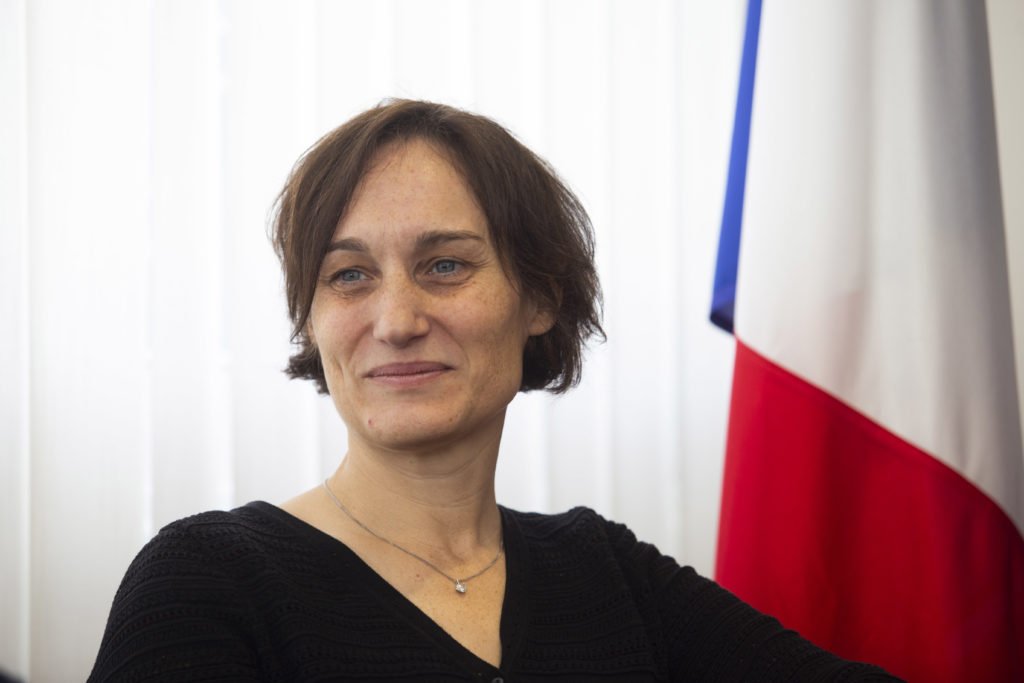
How has the joint Franco-German history textbook initiative shaped younger generations’ understanding of their shared past?
Clélia Chevrier Kolačko – The Franco-German history textbook, introduced in 2006, is a unique achievement: It is not a textbook on Franco-German history, but a history textbook from a Franco-German point of view. It presents the same content on both sides of the Rhine, multiplying points of view and stimulating reflection on each side’s vision of history. It has made it possible to develop an acceptable, appeased, dispassionate vision of the past. But do not be mistaken: This textbook was the culmination of years and years of memory work by German and French historians who have accomplished an extraordinary and unprecedented amount of research.
As such, this textbook is a great symbol of Franco-German friendship. It helps teaching the next generation how far both countries have come.
It is in fact one of a number of initiatives designed to bring German and French young people closer together. For more than 60 years, France and Germany have been working together on a wide range of educational projects, in particular to promote convergence in teaching and learning, and a better understanding of the French and German languages. These include the creation of the Franco-German Youth Office in 1963, the first Franco-German baccalauréat ten years later, and the Franco-German University in 1994.
Anke Schlimm – The Franco-German history textbook is the result of a unique collaboration between historians and educators from both countries. This book enabled the harmonisation of our school textbooks thanks to a shared vision of a common science and fact-based history, while it had previously too often been rewritten through a national prism. It is part of the curriculum in both France and Germany and serves as a powerful educational tool to teach students about key historical events, from the World Wars to European integration, from a balanced perspective. Its impact has been profound: Young people gain a deeper understanding of historical nuances and are inspired to approach differences with empathy and dialogue. This initiative not only fosters a shared memory but also strengthens the European identity among younger generations.
Maybe that is a project that could be implemented, with time, in other places such as Cyprus.
How did France and Germany address public scepticism in the treaty’s early years?
Clélia Chevrier Kolačko – As with any deep-rooted conflict, the path to French and German reconciliation was by no means immediate or easy. Both leaders Konrad Adenauer and General de Gaulle had to show great political courage. Perhaps the most significant driving force of this treaty was that it not only focused on government institutions, but also dealt with the importance of building people-to-people ties, in particular between the youth. It provided a framework for an extensive network of contacts in every walk of society.
There was nothing obvious about this gesture. Since then, our friendship has been based on a willingness, cooperation and trust that permeates all our institutions, our societies and our driving forces.
Anke Schlimm – A century-old entrenched enmity between two countries cannot be overcome from one day to the other. After the terrible experience of the First and Second World War much pain and sorrow persisted in both countries. Less than 20 years after the terrible sufferings of World War II animosity and preconception remained actually very strong between our two countries. The wounds of the past needed healing, prejudices against each other had to be overcome.
When it all started, in the 1960s with the Elysée Treaty, the subject was reconciliation and peace. We should keep in mind that the conclusion of this treaty didn´t come easily. It owes a lot to the personality of both Konrad Adenauer and Charles de Gaulle, who managed to get actually ahead of what the people of the time thought, to demonstrate incredible political will. The Elysée Treaty includes cooperation on all levels including political, economic, financial and cultural cooperation, spreading interaction from contacts between officials in the direction of ordinary people. Most important are provisions on education and youth: increasing the teaching of respective languages in schools, organising exchanges between young people, boosting scientific cooperation. People-to people contact changed everything for the future of the two countries and of Europe, and the leaders of that time prepared the path through their visionary thinking.
Which consultation mechanisms from the Élysée Treaty could serve as models for building trust between divided communities?
Anke Schlimm – The Élysée Treaty introduced systematic, high-level consultations that continue to serve as a potent model for overcoming divisions. By institutionalising regular meetings between governmental representatives, it fostered enduring communication, helping both Germany and France align their policies and cultivate deeper mutual trust. Such ongoing dialogue, supported by shared educational projects and cultural exchange programs, can be instrumental for communities seeking to bridge longstanding gaps. These mechanisms encourage direct engagement, allowing leaders to coordinate on pressing issues and jointly shape constructive strategies. Furthermore, involving youth in structured cooperation fosters a generation that grows up valuing collaboration rather than division. These principles can have particular relevance in contexts such as Cyprus, demonstrating how sustained political will and systematic consultation can ease tensions. Ultimately, the Élysée model reminds us that consistent, transparent communication, reinforced by practical initiatives, can help foster confidence and partnership—ultimately even a certain quality of unity—among historically divided communities in modern Europe today.
Clélia Chevrier Kolačko – The French-German relation is indeed punctuated by a series of high-level annual meetings at all levels in politics, defense, economics, education, and other bilateral fields. The treaty called for example for a minimum of two meetings every year between the heads of state and government and four times each year for the foreign ministers, while their senior officials had to hold monthly meetings, alternately in each country. In the area of security, defence ministers were to meet four times each year and the chiefs of staff of the armed forces were to come together at least once every two months. As a working basis for the development of cooperation in all fields, the Treaty later gave rise to the creation of several consultation bodies, such as the Franco-German Council of Ministers. This regular dialogue ensured transparency and reduced the likelihood of misunderstandings that could lead to conflict.
Finally, one great success of the agreement is that it has led to a proliferation of initiatives from civil society.