


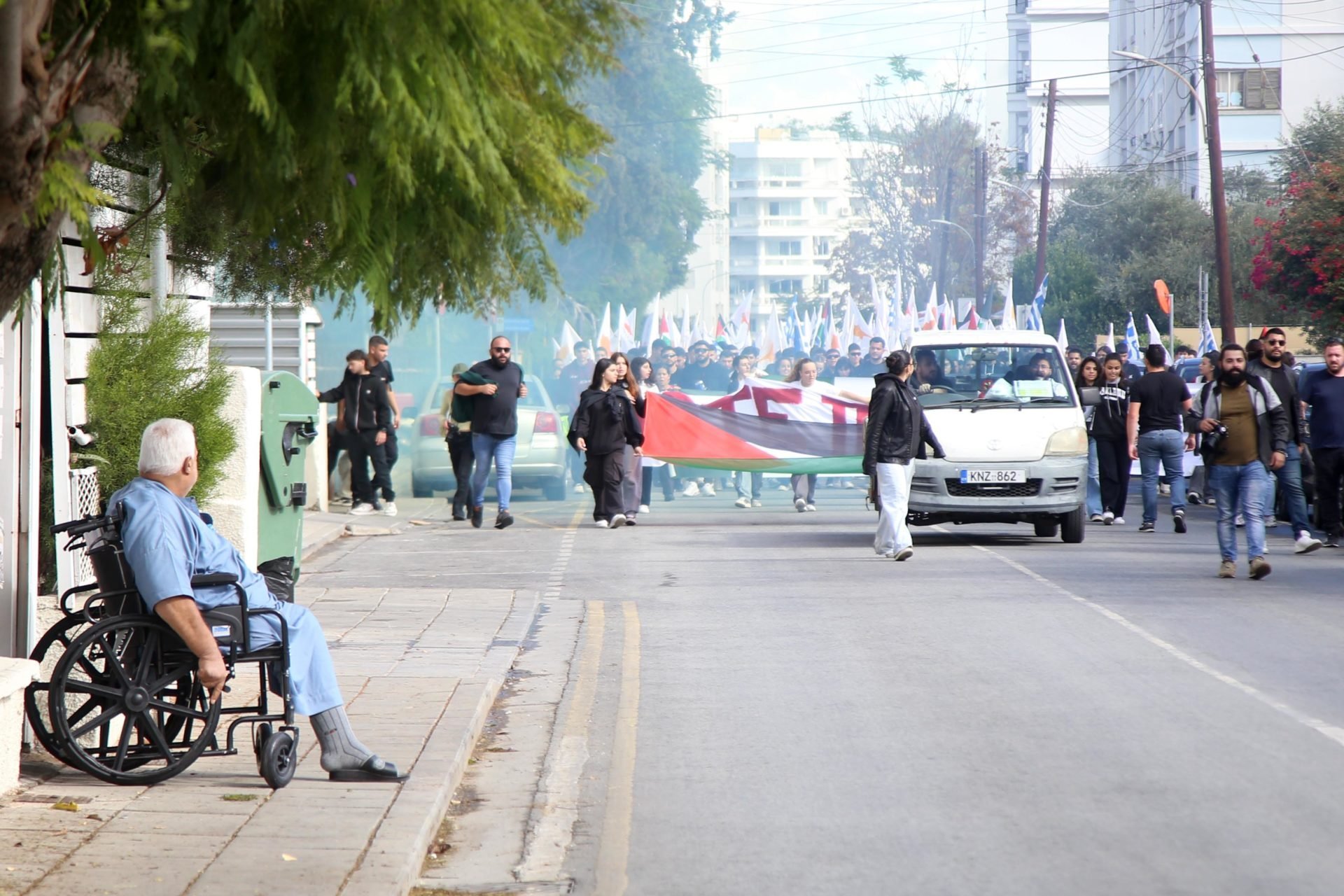
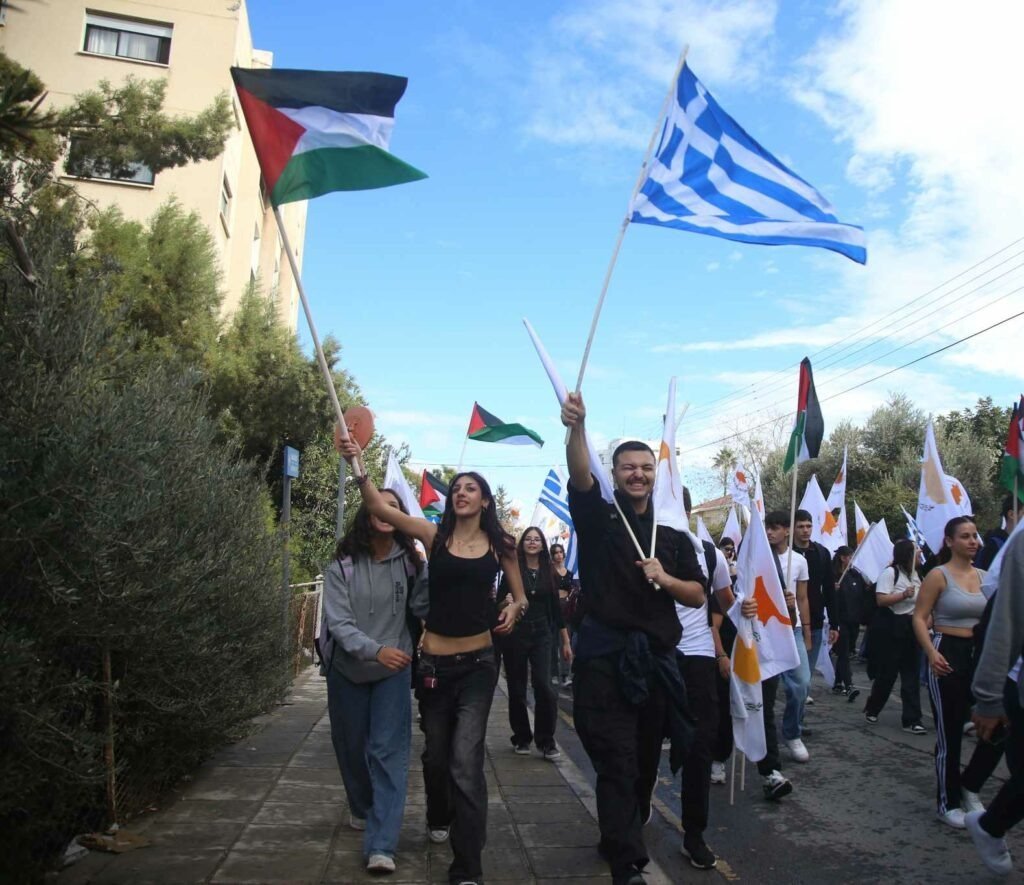
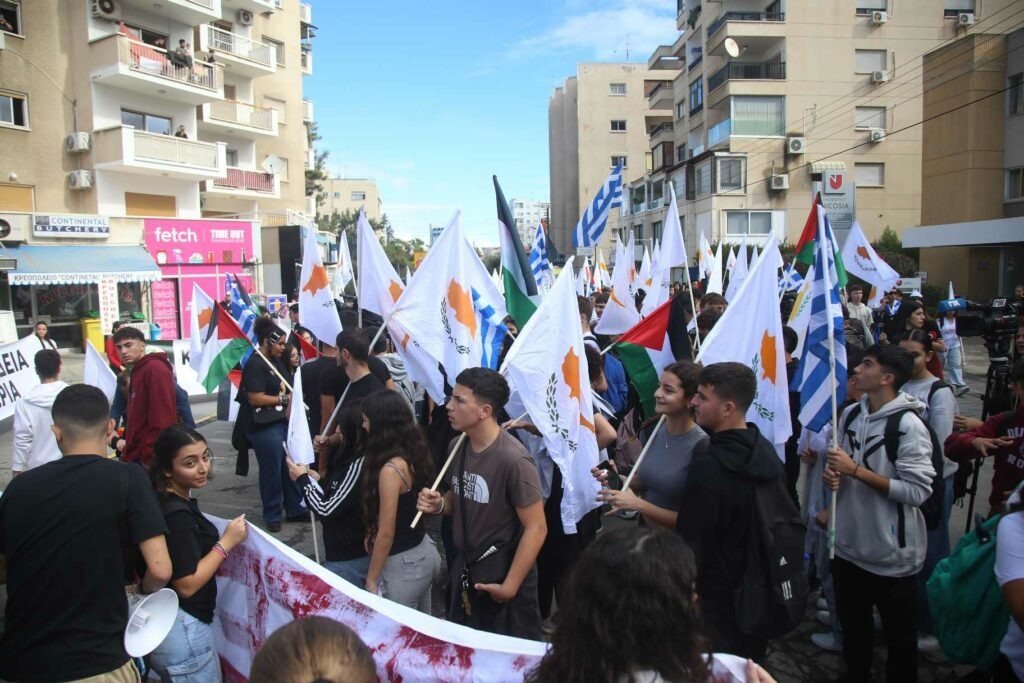
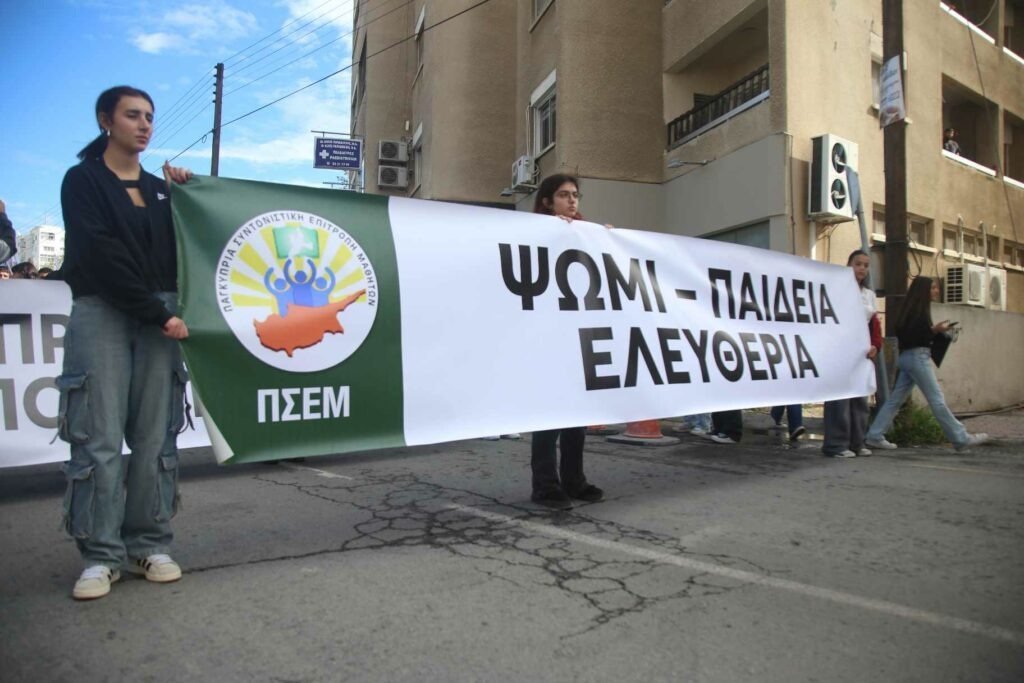
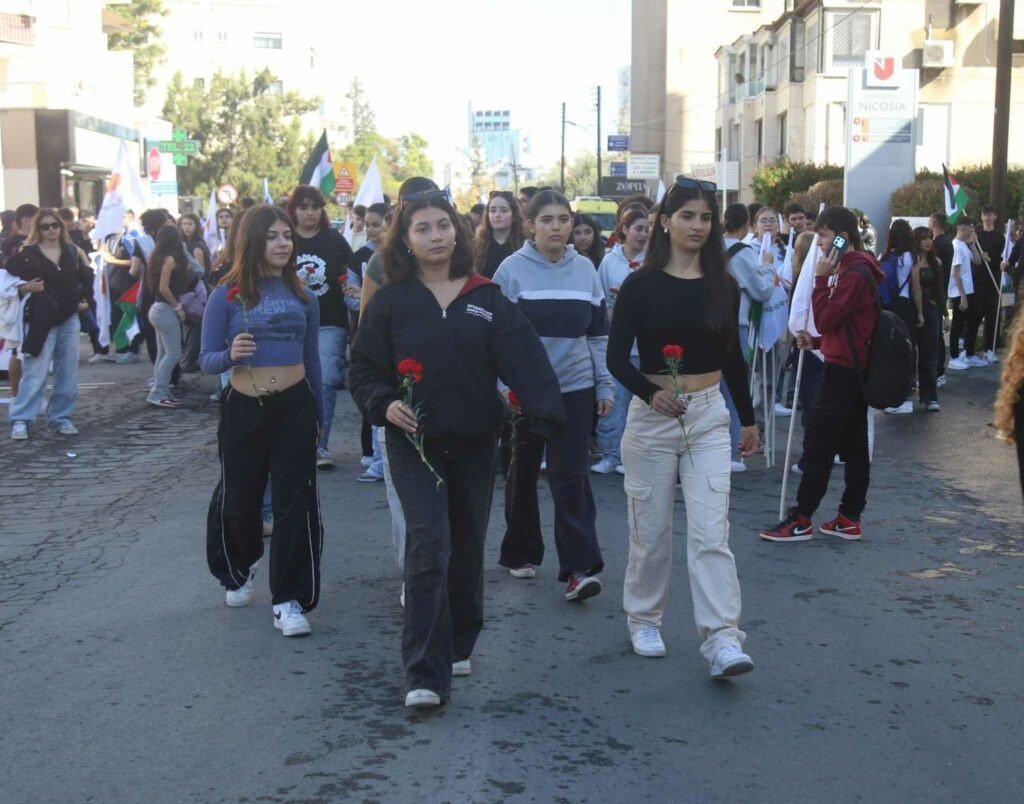
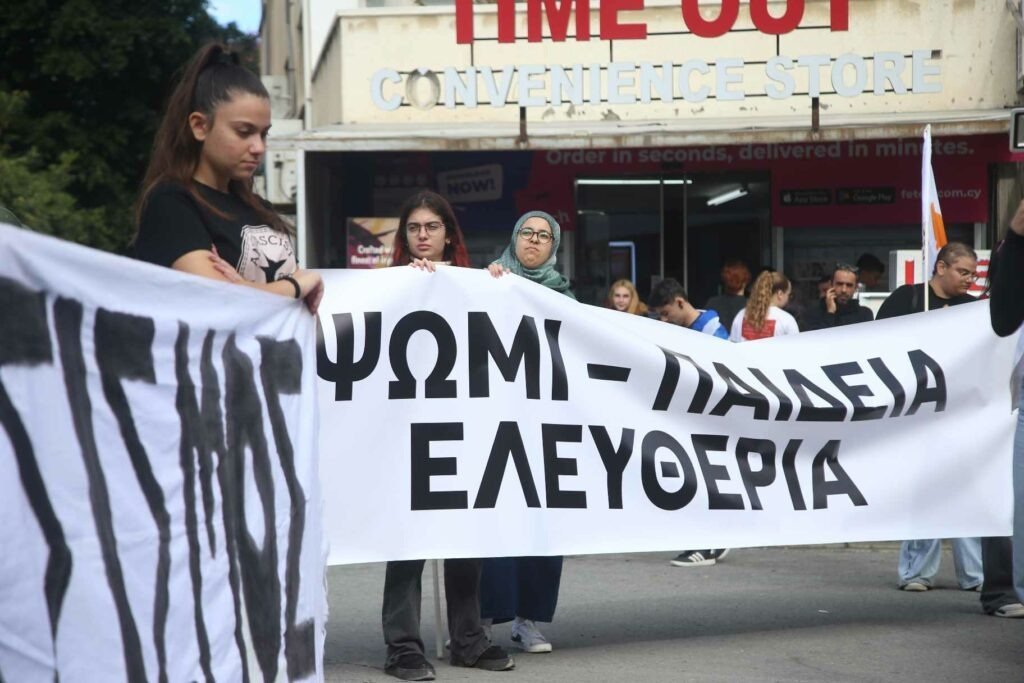
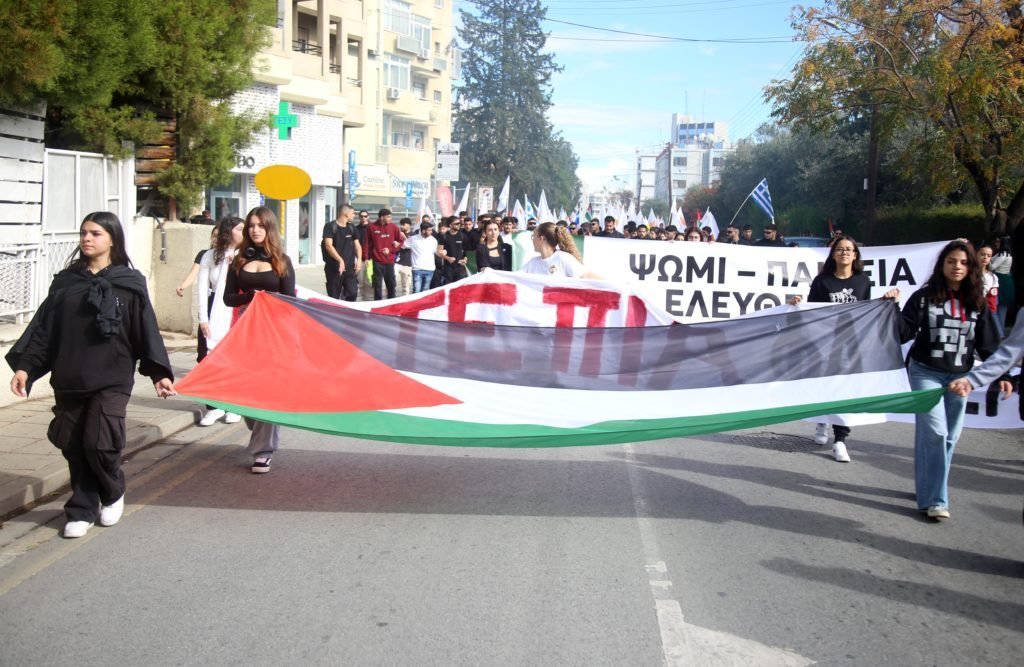
Students marched in Nicosia on Monday to commemorate the Athens Polytechnic uprising, carrying banners with slogans “Bread – Education – Freedom”, “Never Again Fascism”, “Cyprus – Polytechnic” and Palestinian flags.
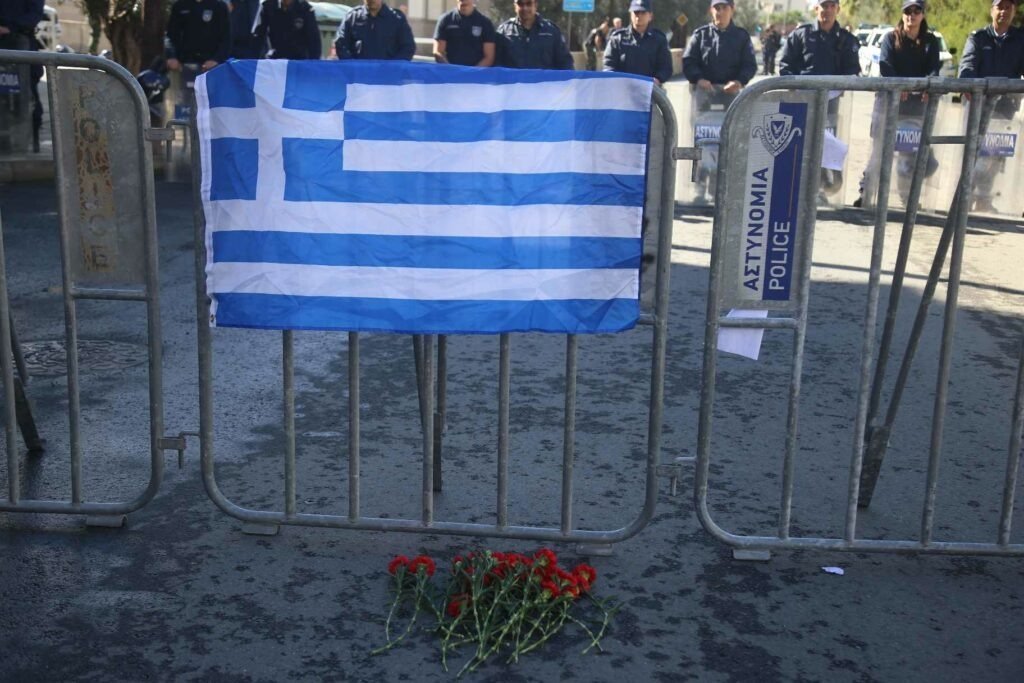
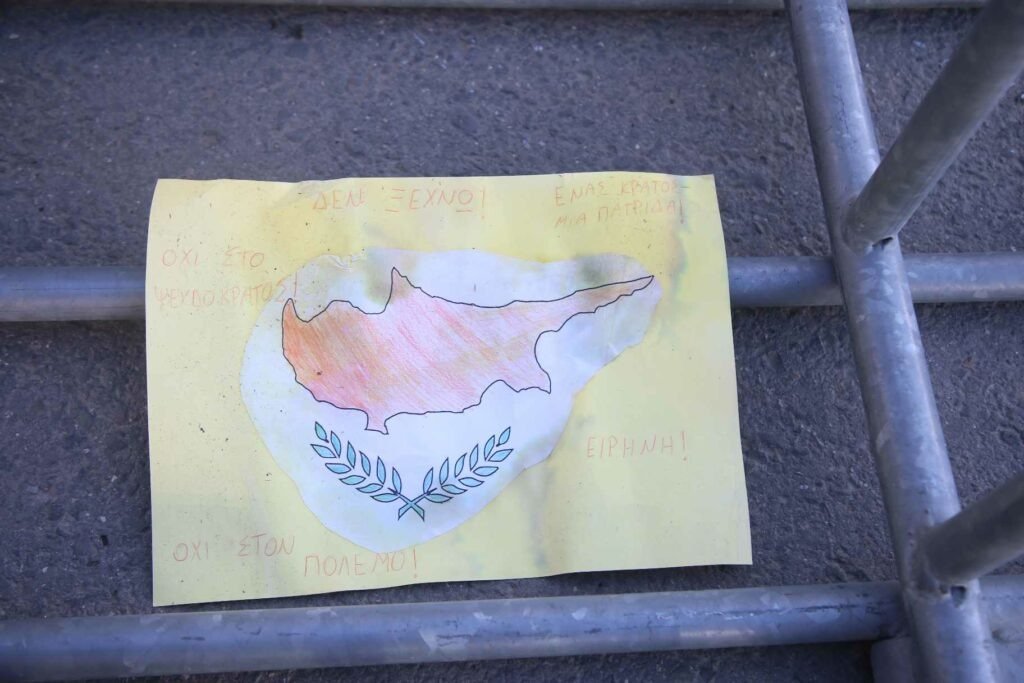
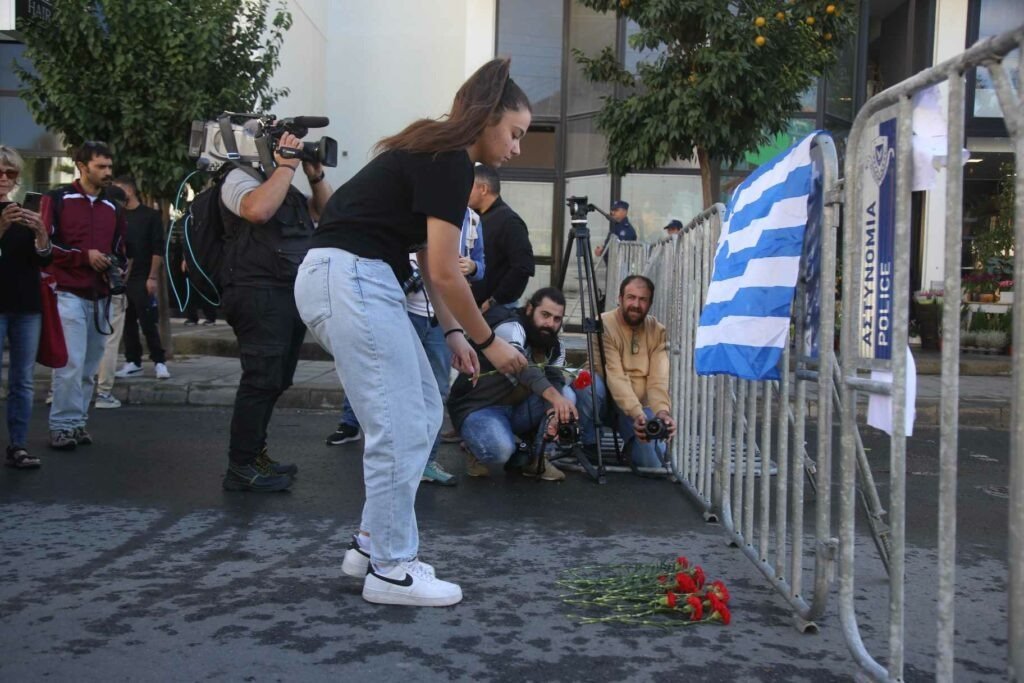
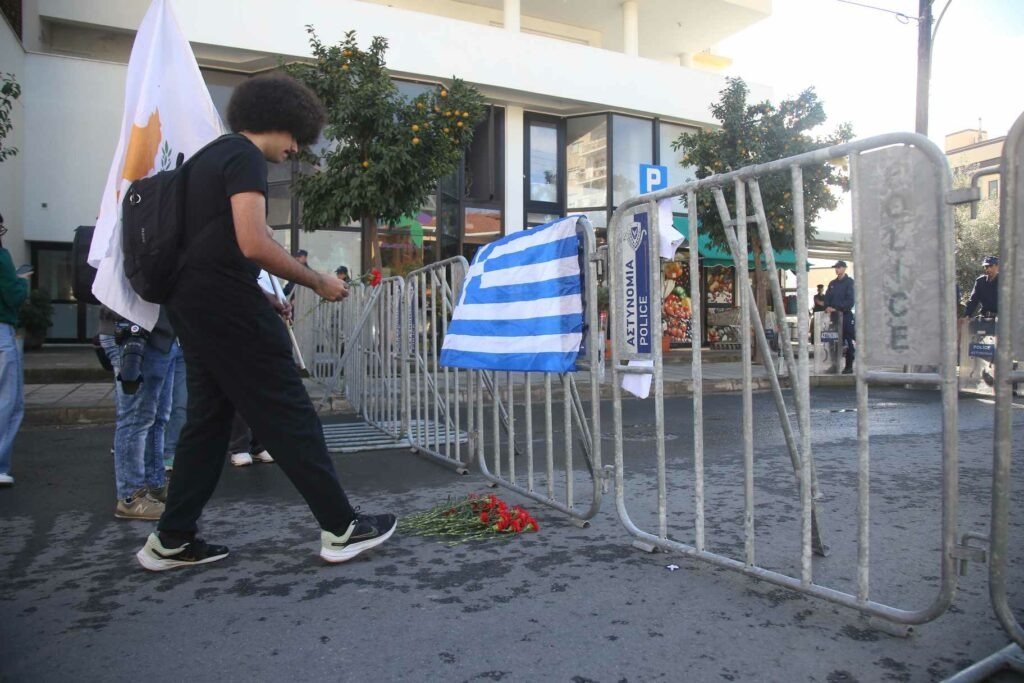
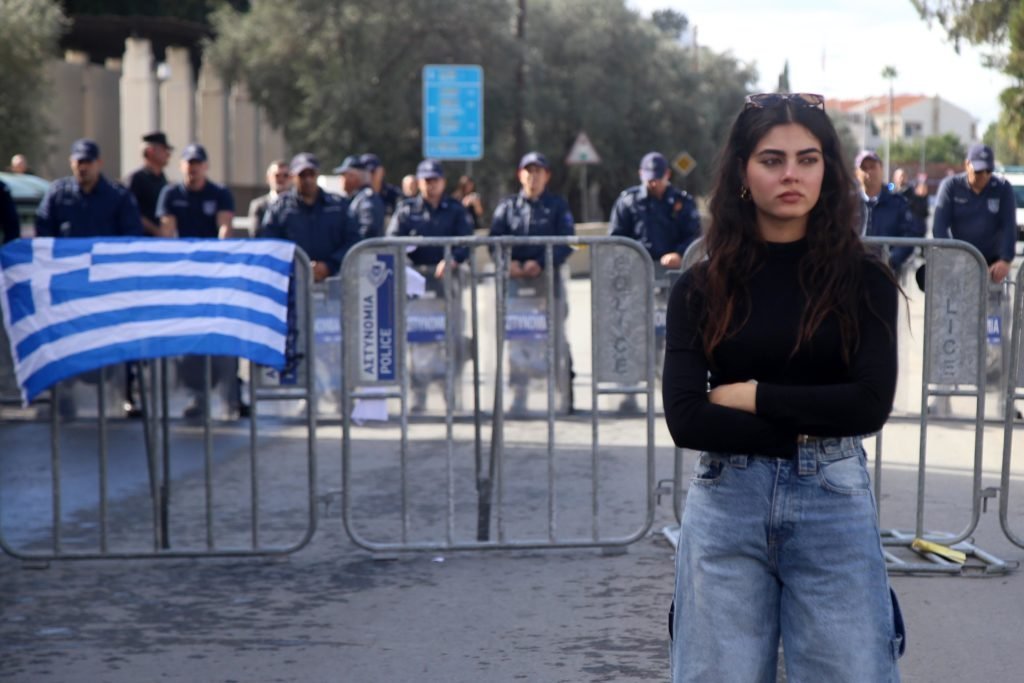
Members of the Pancyprian Confederation of Students’ Organisations (PSEM) laid red carnations at the gates of the U.S. Embassy in Nicosia, where the youth march concluded, and hung a Greek flag on the railings.
In a statement, PSEM said: “We draw lessons for our own struggles, the struggles of the student movement. At the same time, we unite our voice with all struggling peoples, against fascism and imperialism, against wars and barbarism”.
The commemorative event began at 11:00 a.m. outside the American embassy, with participants gathering at PASYDY at 10:30 a.m. before marching.
Students from Nicosia’s lyceums and student representatives from other districts participated in large numbers.
Historical background
The 1973 Athens Polytechnic uprising was a massive student demonstration of rejection of the Greek military junta of 1967–1974.
Beginning on November 14, 1973, with a student strike and an occupation of the Athens Polytechnic by a students’ assembly, it escalated to an open anti-junta revolt, before ending in bloodshed in the early morning of November 17 after a tank crashed through the gates of the Polytechnic.
Recorded casualties from the uprising amount to 24 civilians. These include Cypriot Greek high-school student Diomedes Komnenos, who was reportedly shot by a police sniper during a protest on November 16. An additional 16 casualties have not been identified. Hundreds were also injured during the clashes.
Also, in 1980, police in Athens killed two protesters during a Polytechnic commemoration event, after the government prevented marchers from passing by the American Embassy.
U.S. support for the junta, which was staunchly anti-communist, has been one of the causes of anti-Americanism in Greece and Cyprus.
The Greek junta government received material and political support from the United States as a Cold War ally, due to its proximity to Eastern Europe, in order to act as a buffer against communism.
The Athens Polytechnic uprising is a landmark moment in Greece’s modern history and is considered to have been the beginning of the end for the military junta which ruled the country for seven years and eventually fell on July 24, 1974, after failing to respond to the Turkish invasion of Cyprus.
November 17 was established as an official state anniversary in Greece in 1981 by the leftist PASOK government.


(Footage by MATTPRESS)

