


An Israeli news outlet has put forth a different theory regarding the cause of death of Hezbollah leader Hassan Nasrallah, asserting he may have died from asphyxiation following an Israeli missile strike in Beirut last Friday.
Channel 12 reported that Nasrallah likely succumbed to toxic smoke generated by the missile attack on the underground shelter where he was located. The channel based its claim on the assertion that Nasrallah’s body was recovered without visible injuries from the craters left by penetrating missiles, suggesting he was buried under debris caused by the 80 tons of explosives used in the strikes aimed at him and other Hezbollah officials.
The debris from the strikes reportedly caused asphyxiation for the 64-year-old leader, who is said to have faced a distressing death as smoke filled the room where he was sheltering, according to the Israeli channel.
However, medical personnel and security officials involved in the operation to recover Nasrallah’s body told Reuters that the most likely cause of death was trauma from the explosions.
Understanding Bunker Busters
Bunker buster bombs (GBU) are precision weaponry developed by the U.S. military in 1991 during the Gulf War, designed to penetrate and destroy heavily fortified or deeply buried structures that conventional munitions cannot affect. There are two types of these bombs: the GBU-28, weighing approximately 2,300 kg and equipped with laser guidance for precision strikes, and the newer GBU-37, which uses GPS guidance, making it effective in poor weather conditions and ensuring accuracy against deeply buried targets. Both types feature casings made from surplus artillery barrels, allowing them to penetrate concrete or earth before detonating.
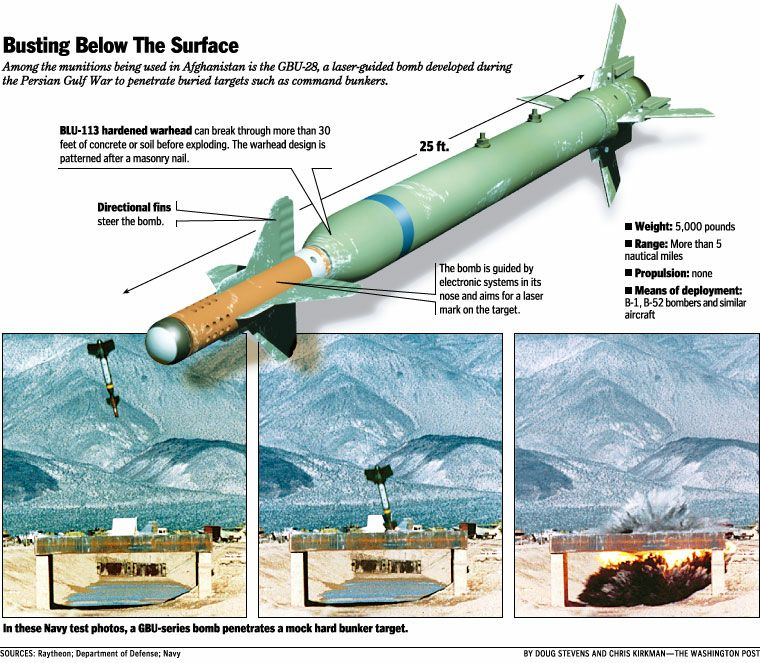
These bombs also possess a slow-action fuse, which ensures detonation occurs only after penetrating their target, maximizing damage to underground facilities, such as command centers or weapon storage depots. The U.S. military also employs the GBU-57, known as the Massive Ordnance Penetrator (MOP), the largest bunker-buster in its arsenal, weighing 30,000 kg. This bomb is designed to penetrate up to 60 meters of reinforced concrete or earth before exploding, targeting deeply buried, heavily fortified facilities.
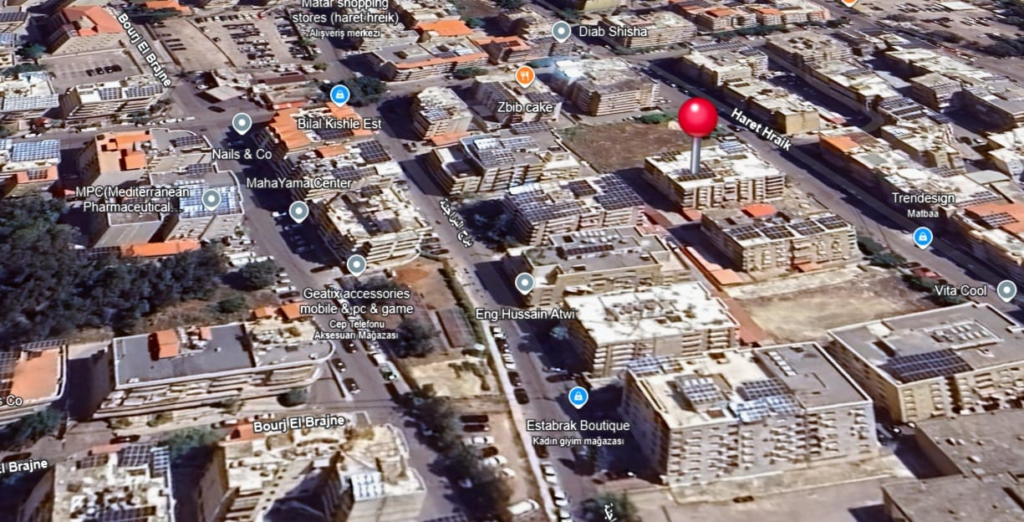
In the case of the recent airstrikes in Beirut, 85 bombs weighing 5,000 pounds (2,300 kg) each detonated at depths of 30 meters, resulting in unprecedented destruction. International media representatives in Lebanon—some of whom are seasoned war correspondents—described scenes, unlike anything they had witnessed before, as the bombing created chaos in Beirut, obliterating everything within a city block and leading to the deaths of Nasrallah and at least six others, alongside 91 injuries.

