


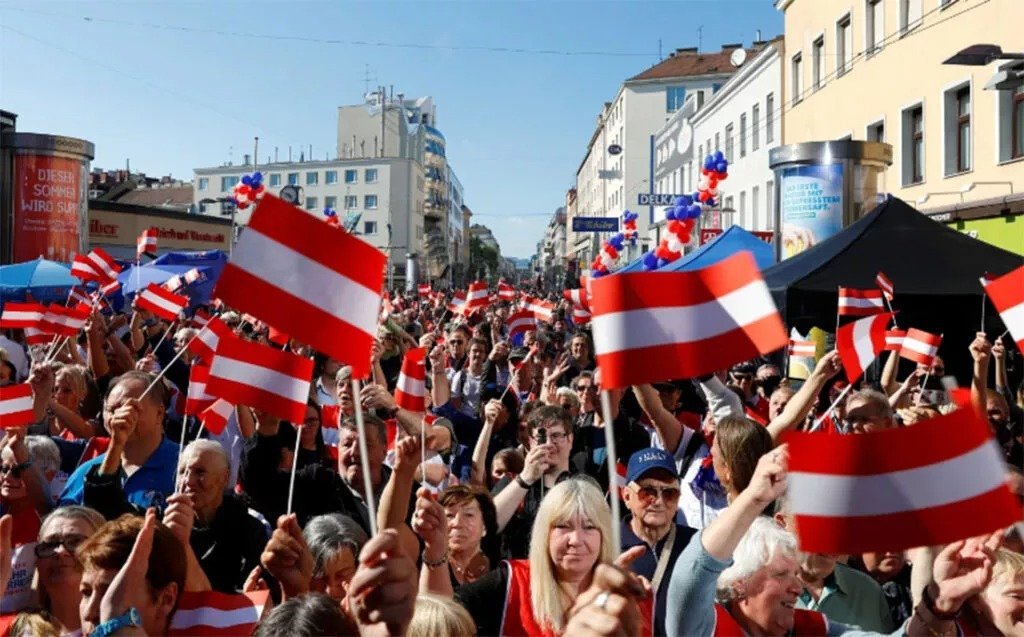
In 1999, when the far-right Freedom Party (FPO) in Austria, then led by Jorg Haider, came in second in the elections, there was an uproar. Austrians took to the streets to protest, others cried out about the rise of the far right, and the European Union imposed sanctions on Vienna because the FPO participated in the government.
None of this will happen if the Freedom Party not only wins the elections on Sunday but is also in a position to form a government, as predicted. This possibility is currently remote, as few want to ally with them, and the Austrian President himself has stated that he will not swear them in as Chancellor.
What has changed since 1999? A lot. Back then, the rise of the far right was just beginning, and few suspected how far it could go. It was a time of optimism about the changes taking place, and most believed that “the best is yet to come.”
However, the events that followed—September 11, the 2008 financial crisis, the migration crisis, the COVID-19 pandemic, several wars and conflicts, and Russia’s invasion—created a perfect storm of uncertainty and fear.
Of course, this does not mean that things are actually worse than before. Despite attempts to make us believe otherwise, fewer people are going hungry today, life expectancy is increasing, new treatments for serious illnesses are constantly being discovered, and fewer wars are being recorded. We see progress in many areas and a redefinition of values and lifestyles.
Nevertheless, there is a widespread perception that life has become worse and that things will become even more difficult in the future. It is precisely this fear that far-right and far-left parties exploit to the fullest, attracting dissatisfied voters. They sell the image of fighting against the system and struggling for the people, managing to win their votes.
The success of the far-right is not an Austrian issue but a universal one. It is not a bogeyman or something citizens should fear but an alternative political force. It has a rhetoric that is not only not scary but, on the contrary, is attractive and says what citizens want to hear.
Few in Austria, and in Europe on Sunday night, will remember 1999. The far-right has been normalised and has become part of the political system.

