


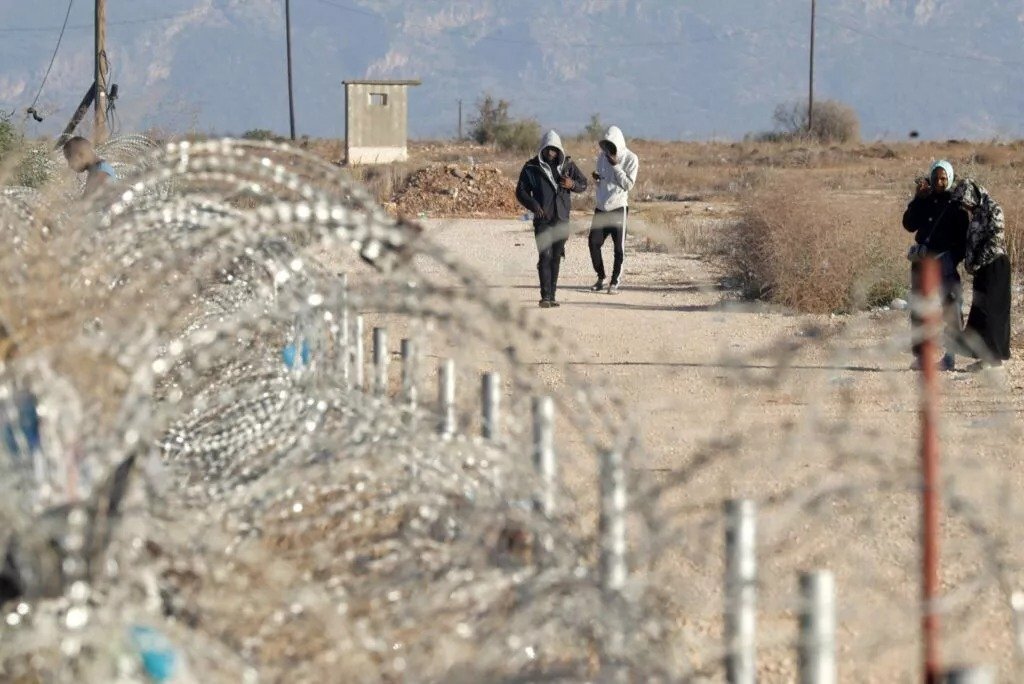
Cyprus is strengthening security along the buffer zone to prevent migrant arrivals, officials said on Wednesday.
The Deputy Ministry of Migration claimed that it is responding to increasing numbers of migrants crossing from Turkey through the occupied north.
The announcement comes amid growing tensions with the United Nations over the handling of the migrant crisis. The UN High Commissioner for Refugees (UNHCR) has painted a bleak picture of migrant living conditions in buffer zone camps, prompting a rebuke from Cypriot officials.
“The Republic of Cyprus has been providing humanitarian aid and medical care from the outset,” Lampros Kaoullas, Director of the Deputy Ministry of Migration’s Office told Philenews. “But any discussions and actions are based on the policy of deterring the creation of irregular migrant routes,” he added.
According to information, 44 migrants are currently living in tents inside the buffer zone near Avlona, while another 29 individuals are stranded in Aglantzia behind the University of Cyprus.
The Deputy Minister of Migration, Nicholas Ioannides, will visit the Avlona area on Thursday to assess the situation and address concerns raised by residents.
International organisations have accused Cyprus of failing to uphold international law by denying these people access to asylum procedures.
Both the United Nations High Commissioner for Refugees (UNHCR) and the United Nations Peacekeeping Force in Cyprus (UNFICYP) claim that the Republic of Cyprus is pushing back asylum seekers to the buffer zone.
Activists said that police are even rounding up people who arrive in Pournara to apply for asylum, put them inside vans and transfer them to the buffer zone.
The Cyprus Mail yesterday reported that 46 migrants are suing the government over the alleged pushbacks.
Kaoullas stressed that Cyprus is acting within the law, citing the Green Line Regulation which mandates that the Green Line is a ceasefire line requiring monitoring by the Republic. “The Green Line is neither a border nor a recognised boundary, and we will not allow it to become one,” he said.
“It is a peculiar case and is treated politically and legally as such,” he noted, adding that “the Republic of Cyprus will not allow the creation of irregular migrant routes,” hence it is increasing surveillance.”
The ministry director stressed that Turkey is considered a safe country and it is obliged to provide access to asylum procedures to migrants within its territory, under its international legal obligations and the agreements it has with the EU. As such, he argued, the recommendations of international organisations should have been directed towards Turkey rather than the Republic of Cyprus, “which operates lawfully,” he said.
Kaoullas concluded by expressing the desire to find a solution to the problem as soon as possible through the dialogue already underway with the UNHCR.
Read more:

