


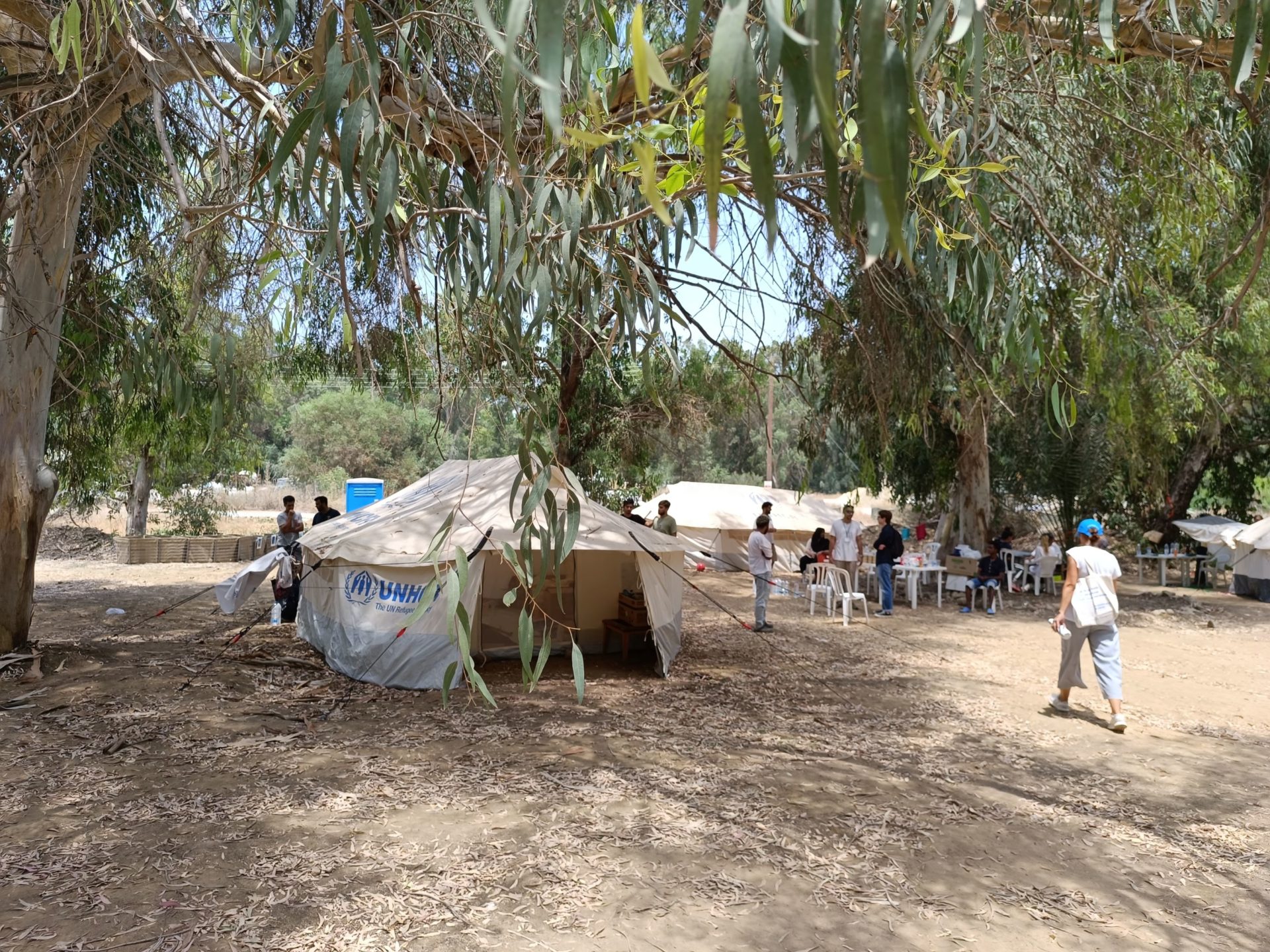
The Guardian today published a report highlighting the conditions faced by 53 asylum seekers stranded in the buffer zone in Cyprus.
Among the stranded are trafficked women, children and survivors of cancer, the Guardian writes.
The asylum seekers, hailing from countries including Cameroon, Syria, Iran, Iraq, Sudan, and Afghanistan, are living in a makeshift camp within the buffer zone, after being denied access to asylum procedures by Cyprus.
In the piece, the Guardian cites a visit by representatives of 12 Western embassies to assess the situation.
“The last time people seeking asylum got marooned in Cyprus, Pope Francis intervened ensuring they were relocated to Italy,” the Guardian writes.
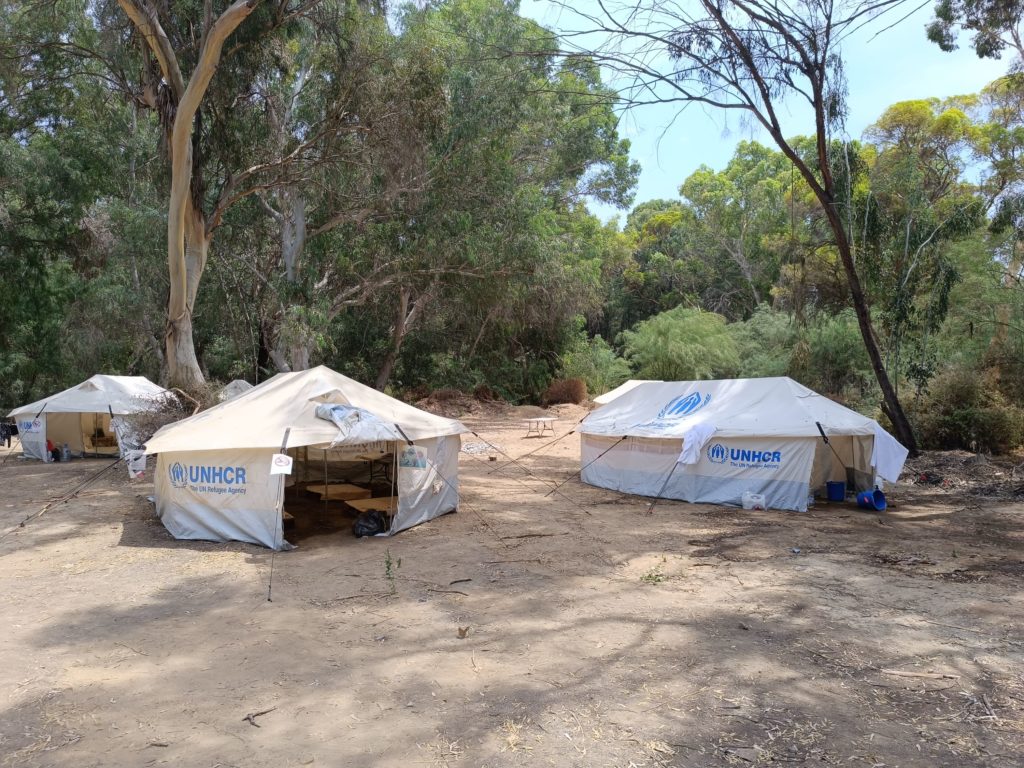
“Eight of the 53, described as Syrian nationals and including two unaccompanied minors, have already disappeared,” the piece notes.
It stresses that Cyprus, which once had the highest per capita number of asylum applications, has adopted increasingly tough migration policies, including “pushbacks,” under the current government.
It adds that “reports of African people being rounded up in vans and deported – with the promise of receiving €1,000 handouts upon arrival in their home countries – have also increased.”
The government’s hardening stance is a response to the appeal of far-right ELAM, whose anti-immigrant rhetoric helped the party elect a member in the European Parliament, the Guardian argues.
“What we are seeing is the president trying to thwart the popularity of the far-right ELAM party by applying its own policies while attempting to satisfy the three parties which support him [in power] that are also anti-immigrant,” political analyst Christophoros Christophorou told the British newspaper.
In June, Deputy Minister of Immigration and International Protection, Nicholas Ioannides said that the government does not want the buffer zone turning into an “immigrant corridor” and stressed that Cyprus will not grant entry to the stranded migrants.
Nicosia has been lobbying the European Union to declare parts of Syria as safe for repatriation.
However, the U.N. human rights office has stated that based on evidence it has gathered, Syrian refugees who fled the ongoing Syrian civil war are facing gross human rights violations such as torture and abduction on their return to Syria, while women are subject to sexual harassment and violence.
Read more:

