


Not too long ago, we were desperate to attract tourists. Expensive marketing campaigns and efforts to convince them how unique our place is and how much they would enjoy their visit were commonplace. This was happening in all countries that invested in tourism to fill their coffers.
Alas, today we have reached a point where tourists are undesirable. If not all, at least many of them. Especially those who travel in masses, eat in masses, and seek “unique experiences” in masses.
The result is that many areas, even entire cities or villages, are turning into tourist societies. Their landscapes, buildings, economies, and environments are shaped to cater to tourists.
The consequences are chain reactions. Housing becomes unaffordable as rents skyrocket. Public transport is overwhelmed, and the streets are unbearably crowded with tourists.
Neighbourhoods, especially those near popular landmarks or destinations, turn into Disneyland-like theme parks, while water supplies run low, and antisocial behaviour is widespread. Locals feel like second-class citizens in their own land.
Tourism academic George Doxey had predicted this phenomenon, presenting the famous “irritation index.” As he wrote in the 1970s, foreseeing the course of the tourism industry, the arrival of visitors initially causes euphoria because it means more revenue.
This gradually gives way to apathy as tourists begin to be taken for granted. As saturation approaches, annoyance sets in, and in the final stage comes the angry reaction against tourists.
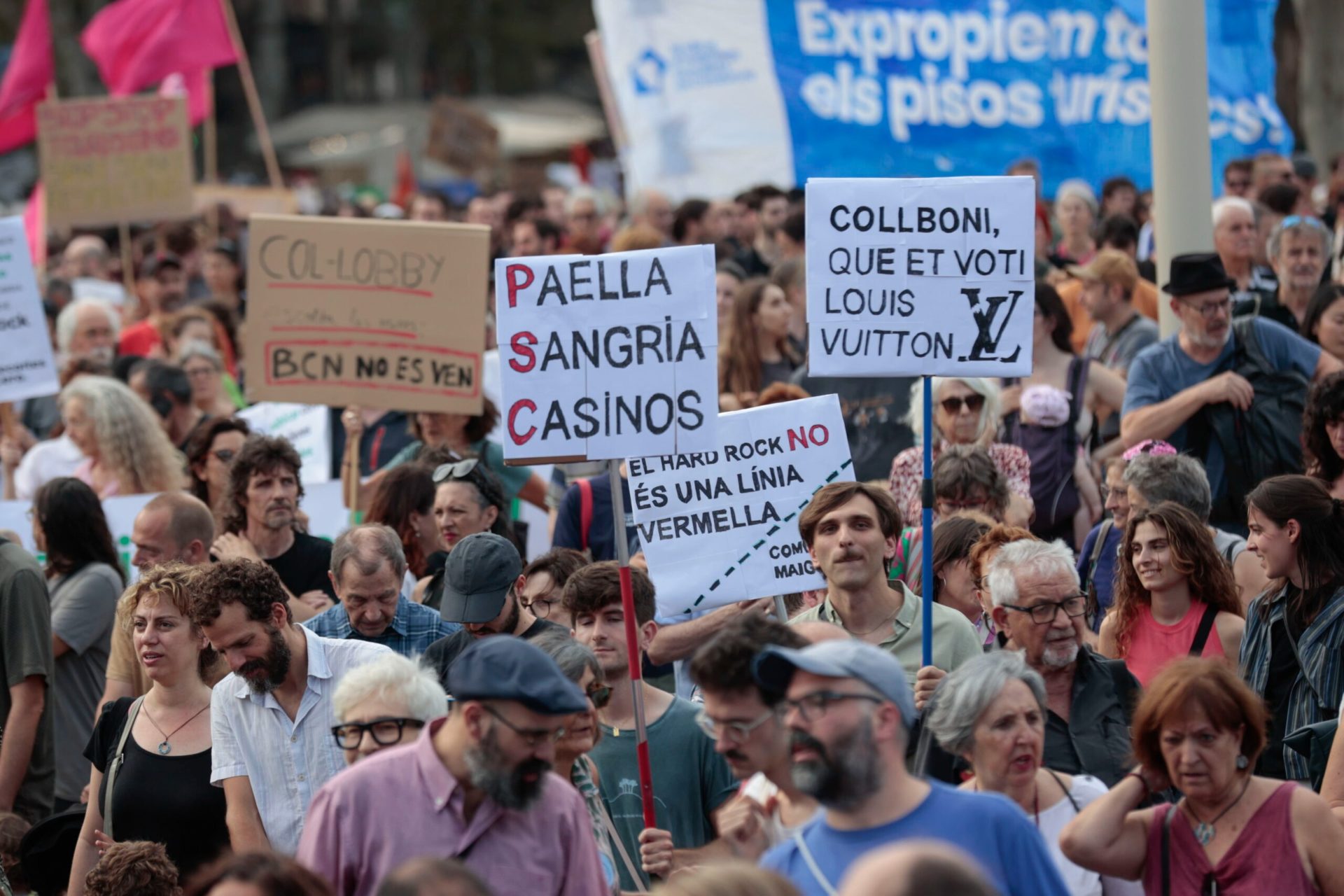
This explains why protests against mass tourism are spreading worldwide, with Europe, particularly Spain, at the forefront. From Barcelona and Mallorca to Venice, Amsterdam, Lisbon, and Santorini, residents experience the painful side effects of the mass influx of tourists and react.
The protests against tourists take various forms. From harmless graffiti on the walls saying “tourists go home” to harassment and from the imposition of taxes to strict controls, the goal is to combat a phenomenon that started as a blessing and is turning into a curse.
Solutions do exist, but they are painful as they involve reducing the number of visitors and, thus, reducing revenue. Rejecting a sector that is the economic lifeblood of many places is risky, as reactions are inevitable. The key is to find the right balance, which is not easy.

