


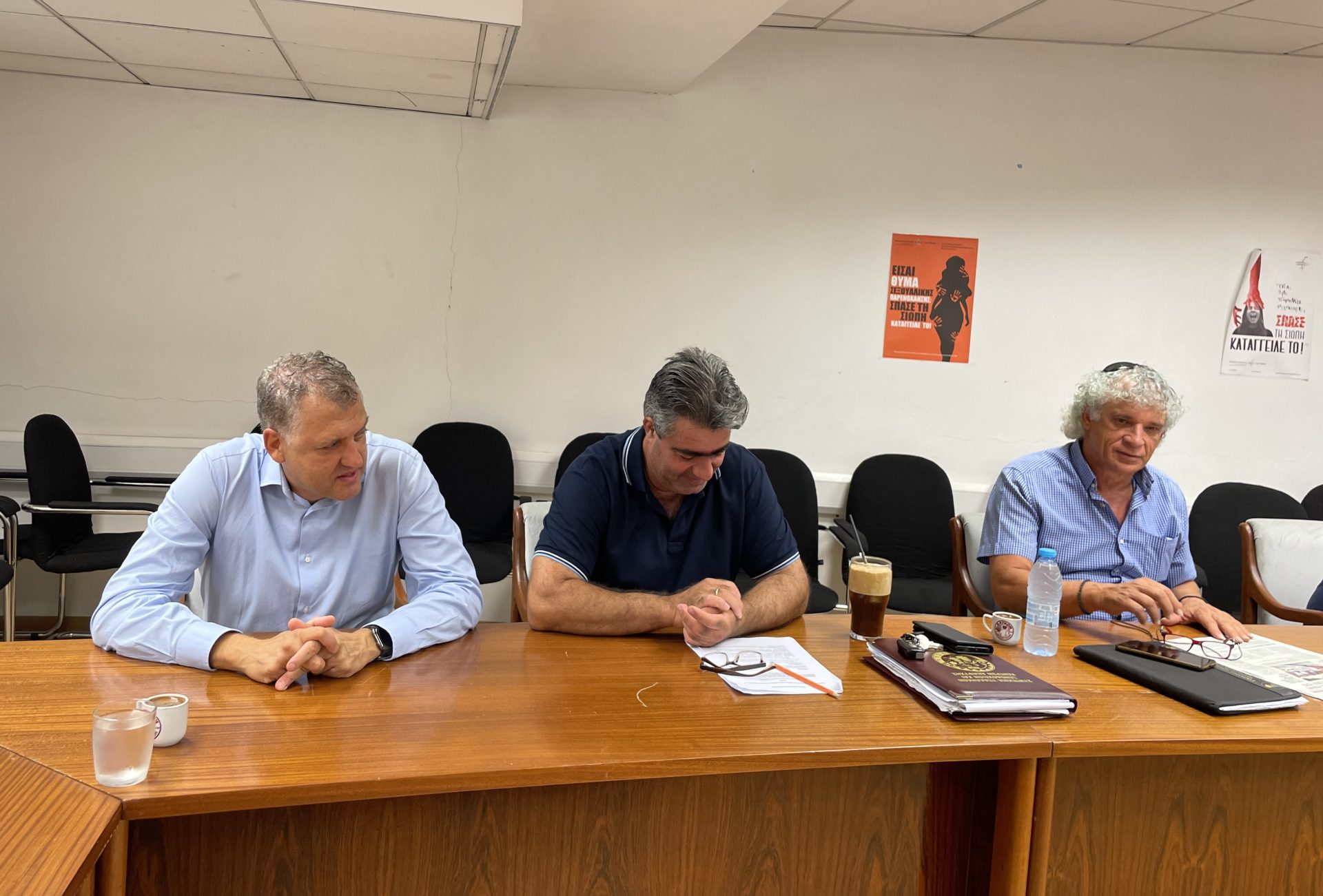
A landmark collective labour agreement covering nearly 3,000 workers in the distribution and transportation sector was signed on Thursday, July 25, marking the first time labour rights have been formally regulated for this workforce.
The two-year agreement, negotiated between SEK, PEO, DEOK trade unions and employer representatives at the Ministry of Labour, establishes key provisions for workers’ rights, including:
- Regulated wages and benefits: Minimum wage standards and additional benefits are established.
- Working hours: A 40-hour workweek spread over six days is set as the standard.
- A cost-of-living allowance (COLA): The current COLA of 11.17% is integrated into salaries, with adjustments from January 1, 2025.
- Equipment provision: Employers are obligated to provide essential safety and work equipment (helmet, jacket, summer shirts, transport box, box placement base) at their expense.
- Regulation of motorised vehicles: Guidelines for the use of vehicles in the course of work are outlined.
Charalambos Avgousti, General Secretary of the Federation of Transport, Petroleum, and Agriculture of Cyprus of SEK (OMEPEGE-SEK), praised the agreement as a positive development that will benefit workers, employers, and the state.
He emphasised that the agreement will help reduce unfair competition and curb undeclared and illegal work practices.
Avgousti also acknowledged the crucial role played by the Department of Labour Relations in facilitating the negotiations and reaching this historic agreement.
Background
This agreement is the result of negotiations by trade unions following multi-day strikes by Wolt delivery drivers in December 2022.
The strikers were protesting against their wages continuing to be slashed amid increasing fuel costs – which they have to cover themselves – and a higher cost of living.
Strikers told in-cyprus at the time that working terms were already unfair, with their incomes amounting to €400-€500 per month. The strikers also noted that they have to buy the equipment they use (jacket, delivery box, helmet) from their employer.
Criticism
The Industrial Workers of the World‘s Cyprus branch (IWW) said that even though the agreement is “very good news”, it is not clear whether workers’ conditions will actually improve.
IWW noted that close observation on the enforcement of the agreement is needed, however, they highlighted the limitations of trade unions to do so “since the paid officials of the trade unions who signed it do not work in the sector.”
Read more:

