


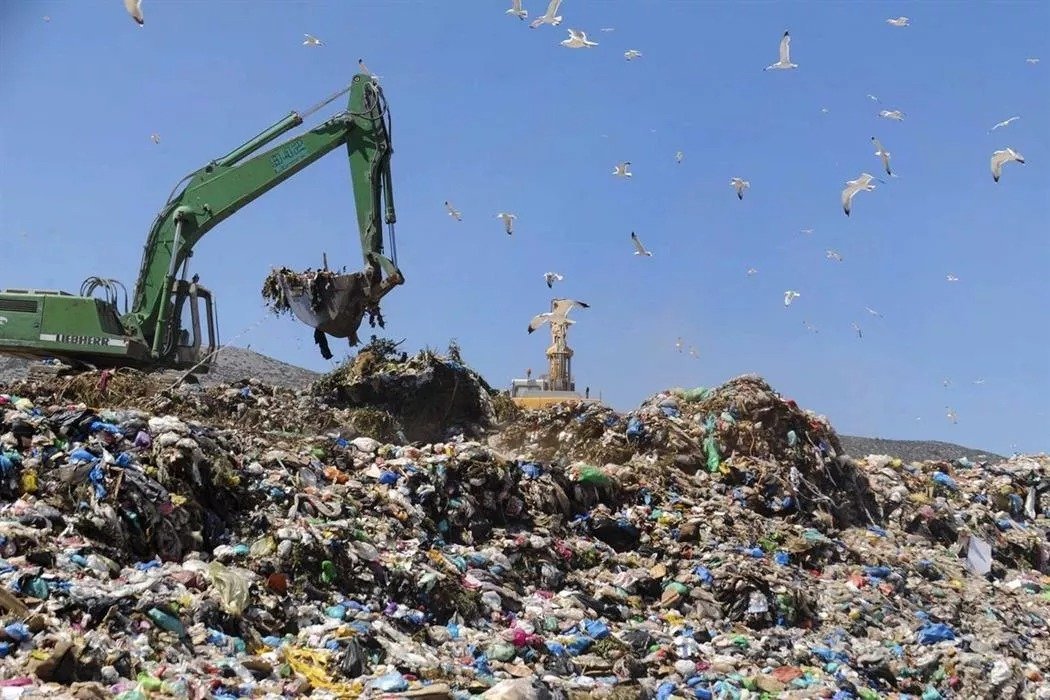
The government has approved new regulations to manage agricultural plastic waste, implementing the principle of extended producer responsibility, the Cabinet announced on Wednesday.
The move aims to tackle the environmental and health impacts of plastic waste generated by Cyprus’s agriculture sector, which relies heavily on plastics and produces an estimated 985 tonnes of plastic waste annually, according to a recent study by Frederick University.
Under the new regulations, producers and importers of agricultural plastic products will be required to establish collective waste management systems. This will provide farmers and agricultural workers with designated collection points for plastic waste, ensuring proper disposal and treatment at licensed facilities.
The Minister of Agriculture emphasised that the regulations focus on the rational management of agricultural plastic waste, aligning with the European Union’s Plastic Strategy. The EU strategy aims for over 50% of plastic waste in Europe to be recycled by 2030.
Previous pilot projects conducted by the Ministry of Agriculture, Rural Development, and Environment highlighted the need for a more comprehensive approach to address the environmental and health impacts of uncontrolled disposal and burning of plastic waste.
The government expects these regulations to yield significant environmental benefits, improve human health and quality of life, encourage the development of innovative recycling products, and create new job opportunities.
This initiative follows successful extended producer responsibility programmes implemented in other countries to increase the recycling of agricultural plastics such as soil-covering films and plastic greenhouses.
Read more:

