


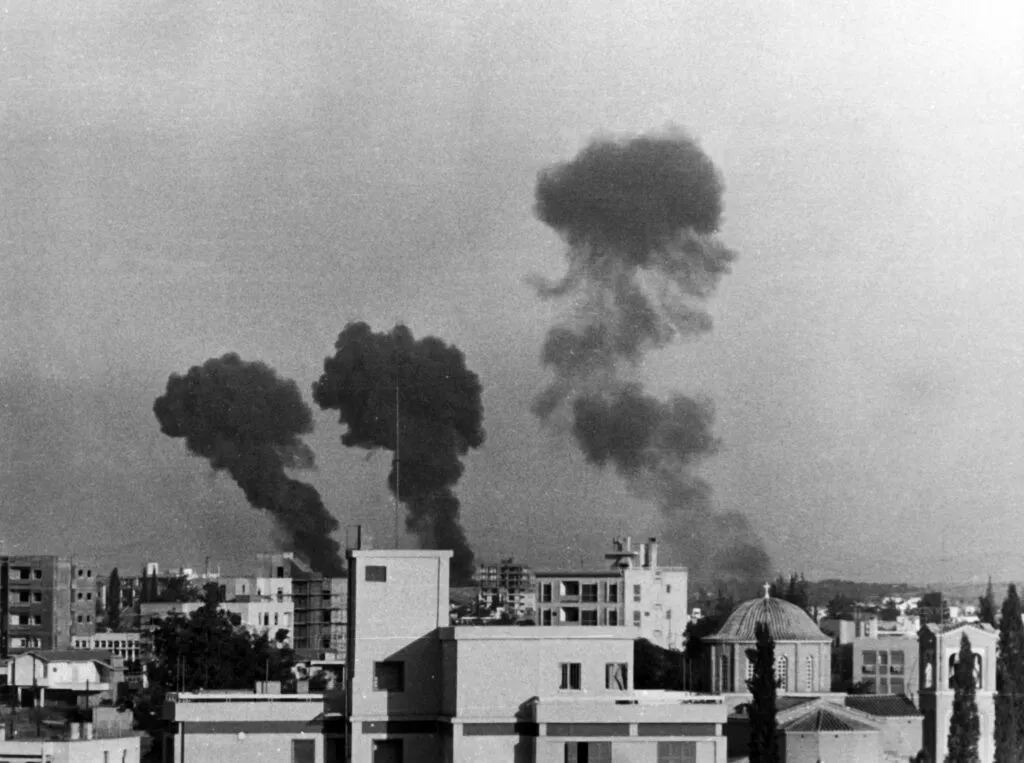
When the sirens of war sounded in the dark month of July and the first bombs from Turkish planes began to pierce the soil of Cyprus, history started to be written differently. The Turkish invasion of 1974 was a powerful blow that stopped time, divided the country in two, and measured the drama and human suffering through the losses. People disappeared and never returned; others fell to the bullets fired from Turkish rifles. Women were raped, and thousands of people ran through the streets in panic, seeking safety.
Approximately 200,000 people were expelled from their homes, as Attila occupied 37% of the territory of the Republic of Cyprus. The demographic map changed abruptly with the displacement of the population. The displaced Greek Cypriots fled their homes in the north, seeking refuge in the free areas of the south, and soon after, the relocated Turkish Cypriots moved to the Turkish-occupied north from the south. Cypriot society was changing, and the state had to manage a new, very difficult situation.
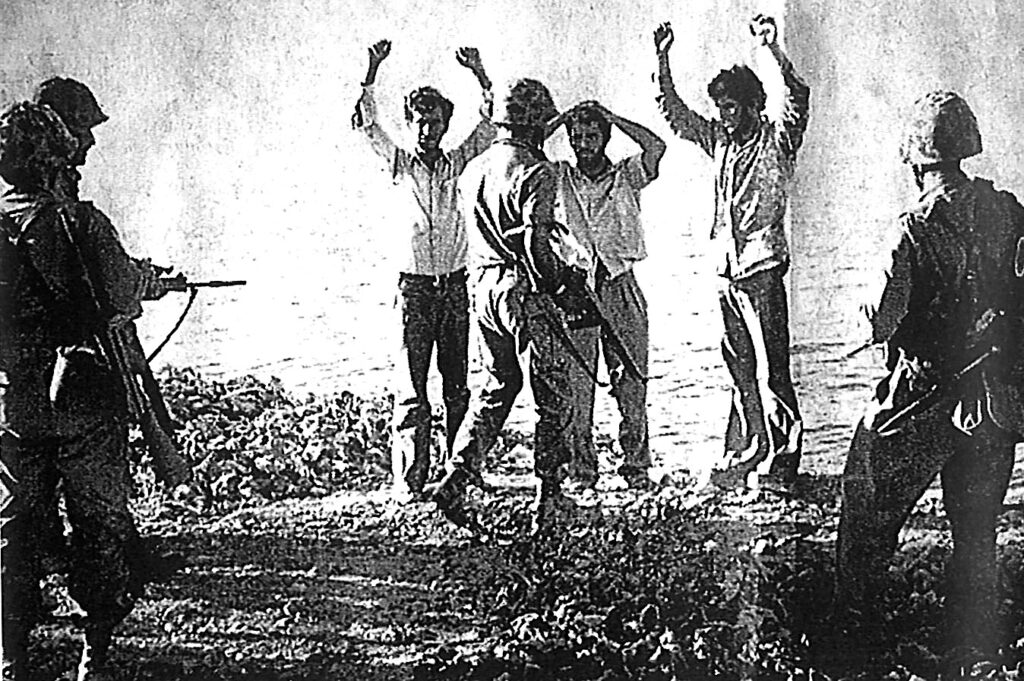
The toll of human losses from the tragic invasion remains dire, with the list of casualties growing over time. Through the exhumation program of the Committee on Missing Persons, some of the missing have been found in mass graves and their remains identified. As a result, they have been removed from the list of missing persons and added to the list of the deceased.
According to the records, the military losses, based on 1974 data published in the second volume of the “History of the Republic of Cyprus 1960-2010” by Phileleftheros in 2011, under the chapter “The Battle of Cyprus: The Military Operations of July-August 1974,” were as follows:
- Dead Greek officers: 18
- Dead Greek soldiers: 70
- Dead Greek Cypriot officers: 40
- Dead Greek Cypriot soldiers: 269
- Missing Greek officers and soldiers: 83
- Missing military personnel and civilians: 1,619
- Captives who remained in Cyprus: 1,164
Additionally, according to Volume B of the “History of the Republic of Cyprus,” which details the Turkish invasion, 587 civilians were either murdered or fell during or as a consequence of the Turkish invasion. This list’s source is the Report on the Cyprus File compiled by the House of Representatives. It should also be noted that 129 individuals have been removed from the original list of 1,619 missing persons and are now considered recognized deceased. These individuals are believed to have fallen, although their bodies have not been found.
The Turkish invasion left many open wounds, perhaps the deepest of which is the issue of the missing persons. In September 1974, after the war ended, the exchange of prisoners began. Thousands of people gathered each time buses with prisoners arrived at the Hotel School, waiting for their loved ones. This process continued until the end of October that year. Some of those awaited by their families never returned.
Thus began the arduous journey of patience and the search to clarify the fate of these individuals. For most, it was clear that they had been captured by the Turkish army. The relatives began their struggle. In the early years, information was abundant, though some were reliable while other pieces were entirely unfounded. Each new development could either rekindle hope or bring renewed despair. Some unscrupulous individuals even exploited the families’ suffering for financial gain. The unfolding events over the years represent another aspect of this ongoing tragedy.
Over time, expectations and hope began to fade. With the start of the exhumation and identification program by the Committee on Missing Persons (CMP), some individuals have been located and identified. This has brought a new type of sorrow for the families of the missing, who are then asked to collect their loved one’s remains in a small box. Often, this box contains only a few bone fragments—enough to confirm death, and in some cases, to testify to their tortured demise.
According to the latest updated data from the CMP for July, of the 1,510 Greek Cypriots listed as missing, 776 have been identified so far.
Demographic Data on the Missing Persons
- 1,000 conscripts – reservists and volunteers
- The youngest volunteer was 17 years old.
- 776 were identified, the rest are still missing.
- 36 missing children
- The youngest was six months old, and the oldest was 18 years old.
- 20 identified
- 118 missing women
- 26 identified
- 248 deceased women
- 38 identified
- 556 deceased men
- 132 identified
Deceased men and women: Those who have been confirmed killed based on testimonies but have not been located.
The Collapse of the Cypriot Economy
The Turkish invasion dealt a severe blow to the Cypriot economy, which had been on an upward trajectory following independence up until 1974. The sole exception was in 1964, due to the intercommunal violence that began during Christmas 1963. The impacts on the Cypriot economy due to the Turkish invasion and occupation are documented in a study conducted by the University of Cyprus in collaboration with the Central Agency for Equal Distribution of Burdens, titled “The Cost of the Turkish Invasion and Proposals for Its Equitable Distribution.”
According to the study’s findings, the GDP fell by 19.9% during the period from 1974 to 1975.
Housing for 200,000 Refugees in Settlements and Elsewhere
The Turkish invasion also created an enormous need for housing for the approximately 200,000 refugees who were displaced from their homes. Initially, these refugees were housed in temporary camps with tents. Subsequently, the government decided to construct residential units to house them, with the understanding that this would be a temporary solution until they could return to their homes once the Cyprus issue was resolved.
According to the Ministry of the Interior, the construction of residential units (apartment buildings and houses) in government settlements for the displaced began in 1975 and continued until the mid-1990s. Additionally, some residential units were built or reconstructed between 2006 and 2011. These units were handed over to the beneficiaries upon completion, based on their needs. The titling of the residential units in these settlements began in 2006.
As per the Ministry of the Interior’s data, there are a total of 66 settlements (13,635 residential units) across Cyprus. The distribution by district is as follows:
- Nicosia District: 22 settlements / 6,952 residential units
- Limassol District: 14 settlements / 2,947 residential units
- Larnaca District: 13 settlements / 3,320 residential units
- Famagusta District: 7 settlements / 132 residential units
- Paphos District: 10 settlements / 284 residential units

