


The Cyprus Problem has been elevated in public discussion, as developments are taking place this month, including the voting on UNFICYP’s continuous presence on the island, and the arrival of the UN Envoy to Cyprus.
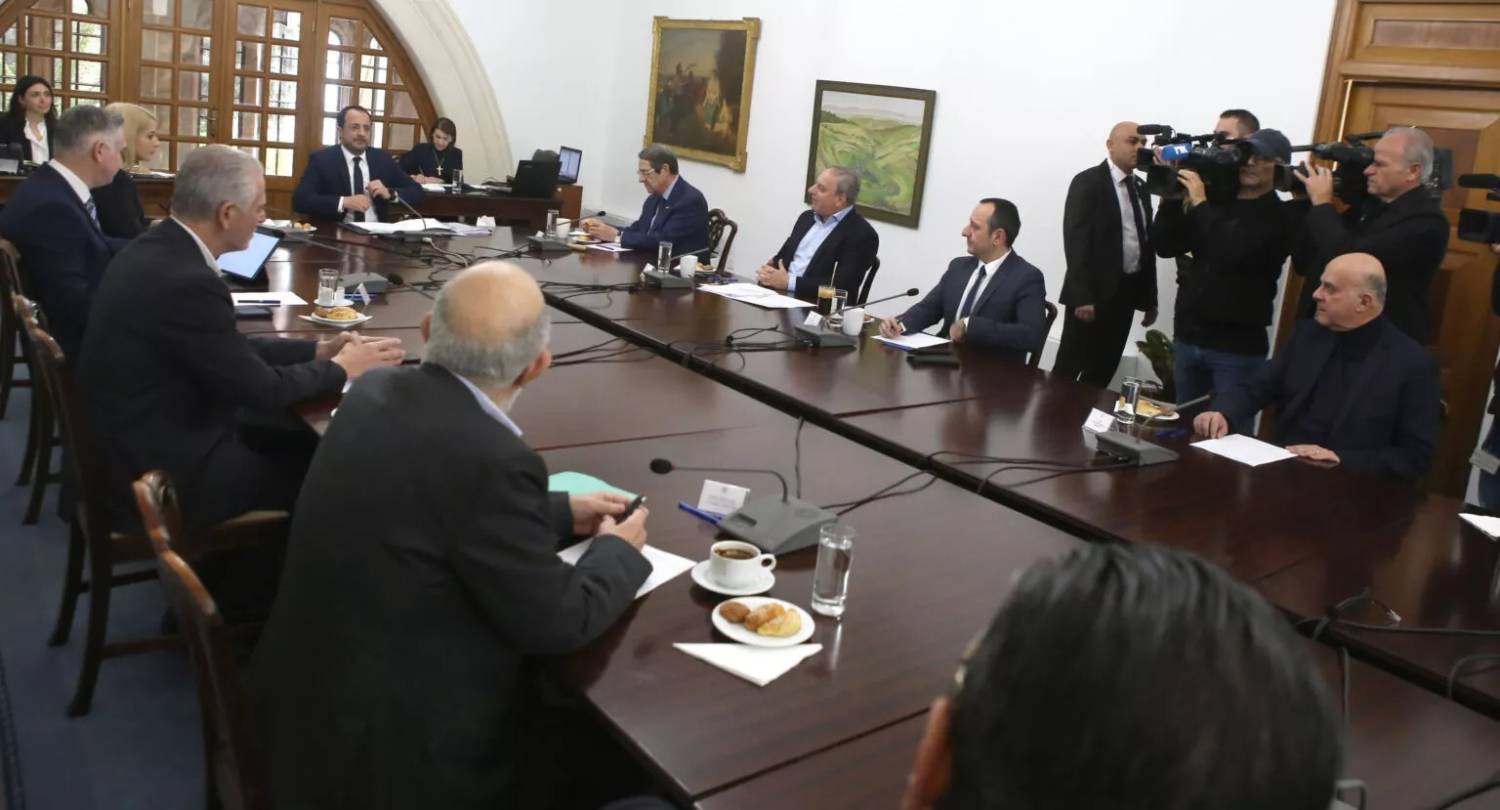
AKEL’s Secretary, Stefanos Stefanou, reiterated suggestions to the President as promised in the recent National Council.
In a letter released yesterday, Stefanou extensively outlines AKEL’s proposals regarding the breakthrough in the Cyprus problem.
AKEL’s proposal revolves around four axes: 1. The stance of the Turkish Cypriot side should be consistent with the BBF solution with political equality as described by the UN,
2. Consistent acceptance of the Guterres Framework and the convergences achieved, including those related to political equality,
3. Adoption of a positive agenda, and 4. Unilateral adoption of CBMs by the RoC towards Turkish Cypriots. AKEL insists that “if these initiatives, respecting our red lines, are undertaken, incentives can be created for the resumption of substantial dialogue.”
The President of the House and leader of DISY, Annita Demetriou, speaking at an event of the Pancyprian Committee of Refugees, emphasized that an effective response to illegal interventions in the enclosed city of Famagusta, the encroachment of the dead zone, and developments in Trikomo lies in the sustainable and functional resolution of the Cyprus problem.
She stated that we must not allow any moment to be lost and, especially now with the arrival of the UN Secretary-General’s envoy, declare our will and readiness to contribute to finding common ground, creating conditions for the resumption of substantive dialogue based on the agreed framework for BBF with political equality, in line with UN resolutions.
DIPA, welcoming what President Christodoulides emphasized in his speech to the Parliamentary Assembly of the Council of Europe, indicated that “our persistence in the agreed framework of the solution, the Bizonal Bicommunal Federation, based on all UN Security Council Resolutions, remains as our main tool to highlight the correctness of our positions and achieve progress.”
After a partial leak of some measures that the President will announce for Turkish Cypriots, the first reactions from the government sphere have begun.
EDEK addressed the possibility of the RoC issuing identities to children of mixed marriages between Turkish settlers and Turkish Cypriots.
EDEK notes that children of mixed marriages “are the product of an illegality that began with the Turkish invasion and was implemented with the continued occupation of part of the territory of the RoC by Turkey, during which the settlement of the occupied territories was imposed.”
The Greens, in their announcement, call for a convening of the National Council to discuss the sale of Greek Cypriot properties in the occupied territories.
According them, there has been a political earthquake in the occupied territories following the arrest of Turkish Cypriot lawyer Akan Kursat, revealing information about the involvement of the entire Turkish Cypriot political system – since 1974 – in the operation to distribute Greek Cypriot properties and their illegal exploitation.
The government and political personnel in the Republic do not seem particularly concerned about this critical issue, they noted.

