


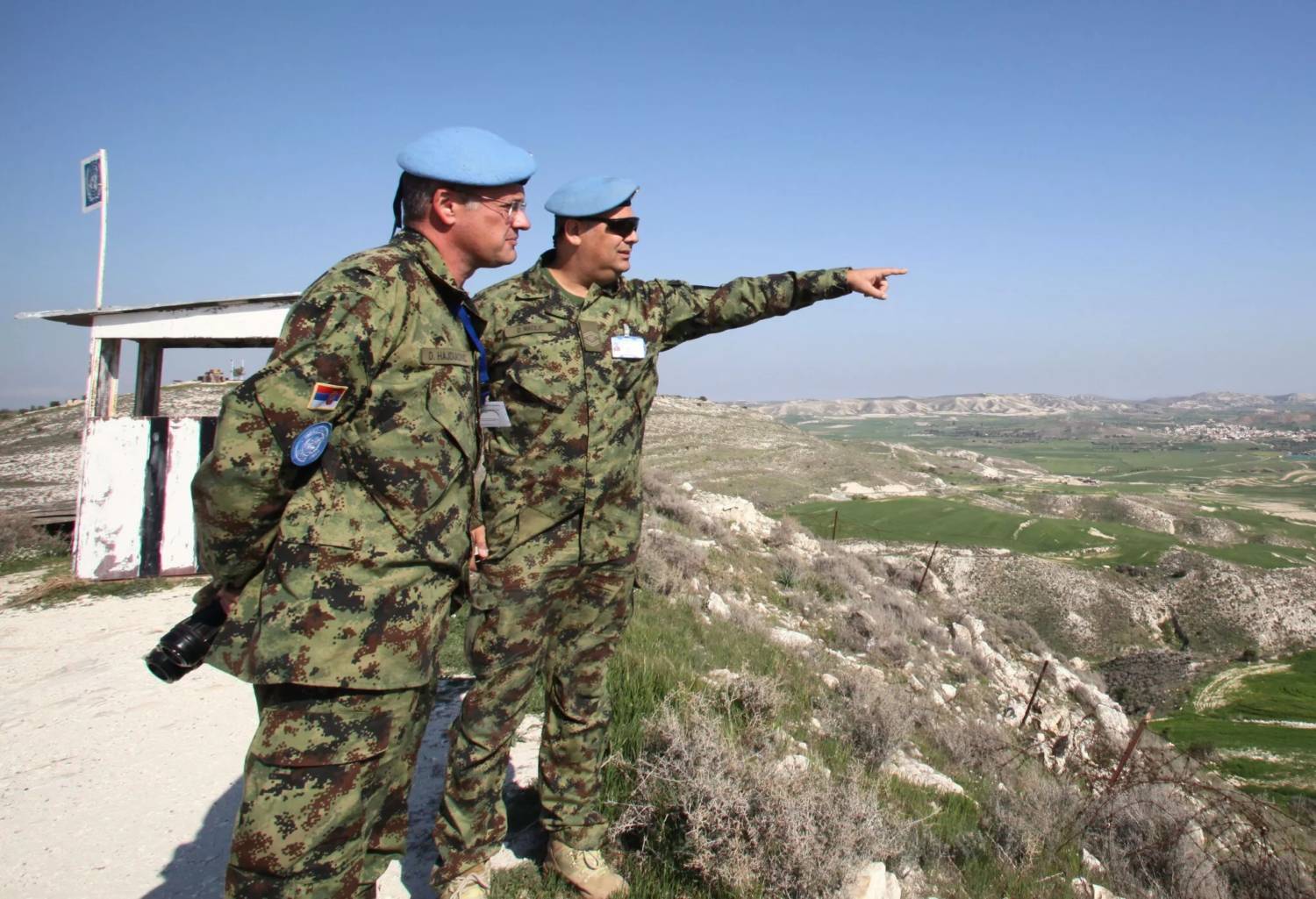
Members of the peacekeeping forces from the Republic of Ireland and Northern Ireland serving in UNFICYP spoke at a reception held at the residence of the Irish Ambassador in Nicosia on Thursday, highlighting the potential lessons Cyprus could learn from the Irish model regarding how two sides with a history of conflicts can collaborate to promote peace.
Ambassador of Ireland to Cyprus, Conor Long, remarked on the progress achieved in Cyprus, drawing parallels with the Irish experience.
He emphasized the transformative change that has occurred over the past 30 years and expressed optimism about the future, underlining that the challenges faced by the younger generations differ significantly from those of the past.
During his six-week stay in Cyprus, Inspector Denis Whelan of the Irish police acknowledged the similarities between the experiences of people in Cyprus and those in Ireland.
He emphasized the need for political will from both sides to create a harmonious life on the island.
“If there is a willingness, there is certainly room for a harmonious life on this island. It will require the will of politicians and people on both sides. Ireland is a shining example that this is possible; what people here have gone through closely resembles what happened in Ireland,” Whelan noted.
Regarding cooperation between soldiers from the Republic of Ireland and Northern Ireland serving in Cyprus, Whelan stated that such collaboration might not have been possible 30 years ago.
He pointed out that most of these soldiers are under 30 years old and have not experienced the turmoil, allowing them to see the situation from a fresh perspective.
“At the end of the day, it doesn’t matter where you come from; most people simply want to live peacefully, raise their families without the risk to life and physical integrity. Everyone needs to sit around the table and discuss because, at the end of the day, we are all humans; not many things separate us,” he stressed.
Expressing hope for an improved situation during his next visit to Cyprus in a few years, Whelan concluded, “If there is willingness, everything is possible.”
Major General Colin Maclenahan, Commander of UNFICYP’s Sector 2, noted that Cyprus could learn much from the Irish model, although significant work remains to be done.
He added that courage was required to believe in a better future, citing the courage demonstrated in Northern Ireland when embracing the Good Friday Agreement.
“Twenty-five years later, there are still challenges to overcome, but we are much better now compared to 25 years ago. Every journey begins with a first step; there is always something to hope for and look forward to, to have faith that there is something that can unite people for a common better future,” Maclenahan said.
He also highlighted the success of the Good Friday Agreement, allowing a generation of children to grow up peacefully without memories of past events.
“This is the future we strive for. There are still difficulties to be overcome, people don’t want another agreement, but peace and stability for their children to live together harmoniously,” he emphasized.
Ambassador Conor Long focused on the identity dimension, stating that there is no question of losing or downgrading the identity of either community from the Good Friday Agreement.
He pointed out that differences still exist between the two communities, but the experience is vastly different from the tumultuous period of the 1970s and 1980s.
“People can look at their children and know that the society in which they will grow up is one with differences but without fear,” Long remarked.
When asked if the Good Friday Agreement could be considered a success in resolving differences peacefully for the benefit of all, Long noted that politics in Northern Ireland is still largely guided by identity issues.
He added that the agreement remains in effect and, despite political challenges, has proven incredibly resilient as a political framework.
“Even now, the discussion revolves around restoring governance with power-sharing. It’s not about seeking a better agreement, but a compromise that recognizes the two identities in Northern Ireland, ensures the protection of rights, establishes power-sharing, and is democratically endorsed by the people of Northern Ireland, who continue to vote for parties that want the Good Friday Agreement to be functional,” he concluded.

