


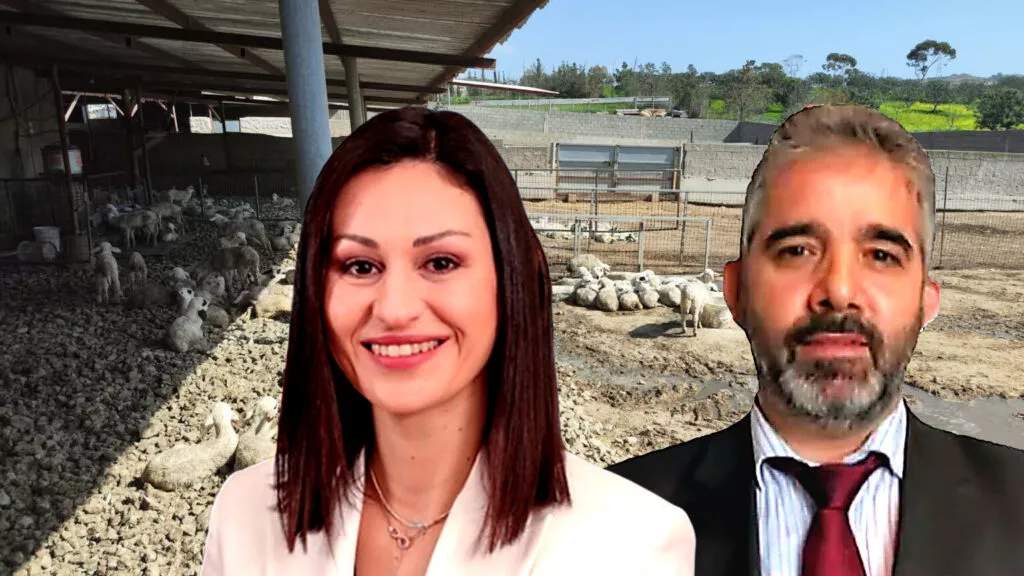
There is a pattern in this state. A three-part script that rolls out in every crisis, every disaster: incompetence, slapdash planning, chronic mismanagement. Now that foot-and-mouth disease is choking one livestock unit after another in Larnaca, the state is once again proving it has learnt precisely nothing.
Crisis management does not begin when the evening news fills with images of devastation. It begins at the first credible sign of danger. By mid-December there were confirmed cases in the occupied areas — the same geographical space, the same island. Unless we have suddenly decided that Cyprus comes in two separate versions.
And yet here we are again, running around in blind panic, trying to salvage what we can. Because the outcome speaks for itself: either no meaningful measures were taken, or those that were amounted to paperwork and press releases — flimsy, cosmetic gestures now filed neatly alongside the evidence of the damage.
Where was the strict monitoring of the Green Line? Where were the checks on the illegal movement of animals and feed? Where were the mandatory vehicle disinfection controls at the crossings? Why was the entire occupied area not promptly declared an infected zone under the precautionary principle? If all this was done, why are we now counting the spread? If it was not, who will be held accountable?
We are told the virus may have been brought in via hay from the occupied areas. If that is true, the situation borders on the absurd. We are talking about cargo. Bulk. Not a packet of cigarettes slipped into a coat pocket. Where did it pass? Who inspected it? Which of these “strict measures” functioned so flawlessly that no one noticed a thing?
When did the authorities receive this intelligence? Why do we still not have a clear picture? Is it truly so difficult to trace the route of such a shipment? Why has no one been arrested? Were the relevant premises searched? Was anything found? If officials knew — as leaks suggest — that this was happening, why was the individual not apprehended long ago? Or are these leaks merely a smokescreen to muddy the waters? The questions pile up. The answers do not.
Yesterday’s spectacle in parliament was even more revealing. Farmers complained that veterinary officers were asking them to provide protective suits. In the middle of a public health emergency, the state service is borrowing equipment from the very people it is meant to regulate? If that allegation is accurate, this is not just weakness. It is a humiliation for a country that likes to call itself European.
The Director of Veterinary Services, Christodoulos Pipis, argued that a country cannot proceed with vaccination without confirmed cases justifying emergency intervention — his explanation for the absence of preventative vaccination.
In other words, he stressed that there were no confirmed cases in the areas under the Republic’s control. But there were confirmed cases in the occupied areas. Have they suddenly ceased to concern us? In a crisis, do we now recognise two states on this island? Did Mr Pippis forget that the occupied areas lie a stone’s throw away?
No excuses, gentlemen — officials. If today you deem vaccination necessary, you should have taken the same view on 15 December when the first cases were diagnosed in the north. If vaccination carries trade consequences, the scales should tip in favour of animal health and protection.
Then came the phrases that will linger. “If the other guy is mad, what do you want me to do?” Mr Pipis reportedly said. He compared the situation to the national health system: “Government doctors don’t go to every patient; patients go to hospitals.” And when pressed by the chair of the Agriculture Committee, he argued that “it is the farmers’ responsibility to take measures, not the Veterinary Services’.”
No, Mr Pippis. It is not the “other guy’s” job. It is yours to prevent, to inspect, to supervise. The state does not function on the goodwill of individual producers. It functions — or should — through preventative mechanisms. Anything less is a complete inversion of roles.
The three-part script returns: incompetence, improvisation, mismanagement. In every crisis the same choreography. First minimisation. Then shock. Then blame-shifting. Finally, self-exonerating statements.
Maria Panayiotou, this is not the first time. After the Limassol wildfires, political conclusions should already have been drawn. We spoke then of operational failings, coordination gaps, systemic weaknesses. Today we face yet another crisis that has slipped the leash.
Christodoulos Pipis, when the virus is spreading, farms are closing, tens of thousands of animals are to be culled and losses run into millions, this is not the moment for café one-liners and glib analogies with the health service.
Let’s be blunt. You made a mess of it — and now you demand explanations from everyone else. Society cannot endure another crisis managed on a “we’ll see how it goes” doctrine. If you cannot deal with danger when it is at the door, then the problem is not foot-and-mouth disease.
The problem is the state itself. It is you.

