


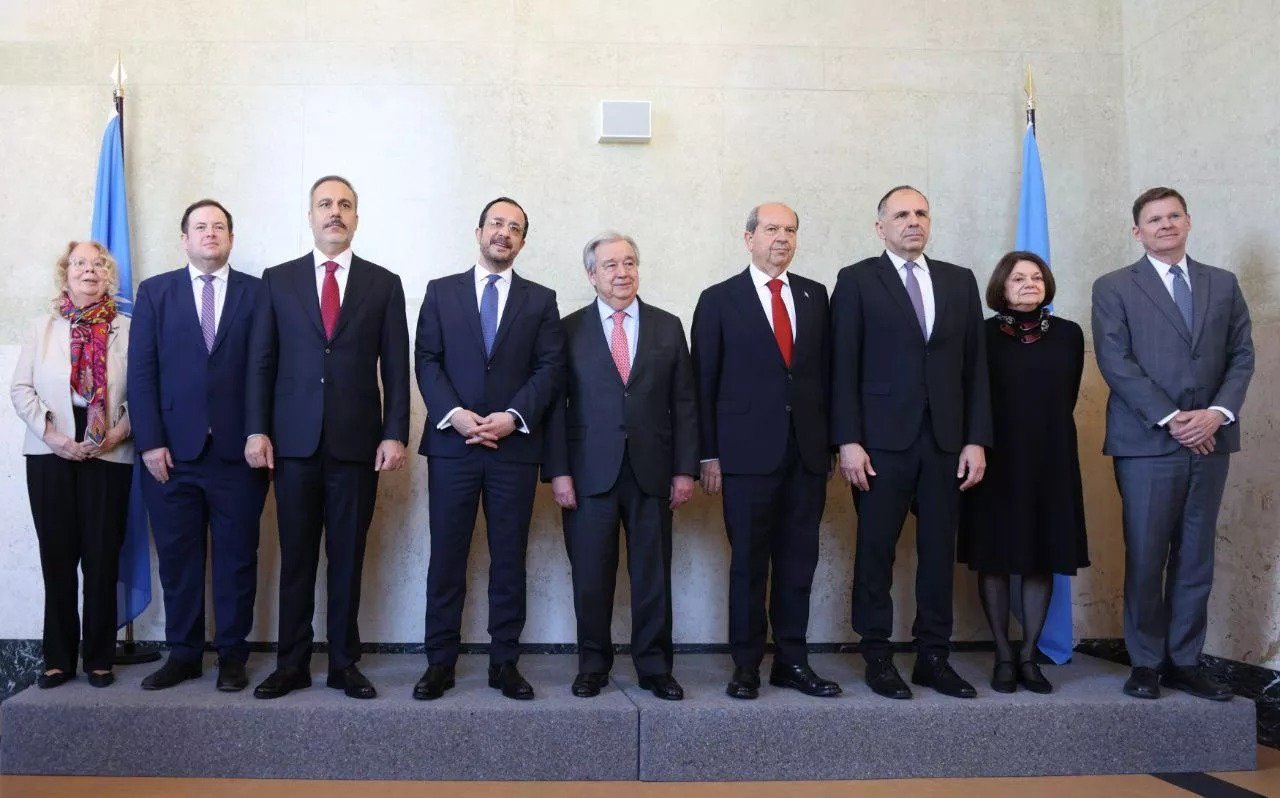
Geneva has kept alive the prospect of restarting substantive talks on the Cyprus issue. This is essentially the positive element of the informal expanded conference. Certainly, it does not constitute substantial progress in efforts to resolve the Cyprus problem.
It’s not even a significant step in that direction. However, we can view the glass as half-full rather than half-empty. After a long period of deadlock and complete inaction on the Cyprus issue, an attempt to create perspective was recorded, revealing a glimmer of hope that through the process following Geneva, the path to substantive negotiations for resolving the Cyprus problem might reopen.
From the recent expanded conference, we can note the following:
- The appointment of an envoy for Cyprus, which was the most difficult point of the equation
- The opening of four crossing points
- The convening of a new multilateral conference on Cyprus next July
The equation also includes various other cooperation measures between the two communities that have been decided, such as the creation of a photovoltaic park in the buffer zone, the maintenance of cemeteries on both sides, and the establishment of a youth committee.
The new envoy for Cyprus, whoever they may be, will certainly have much work to do and a very difficult task ahead. The key issue is willingness, and the implementation of the Confidence Building Measures (CBMs) decided in Geneva is the test of each side’s commitment.
The period until July, when the next conference on Cyprus will take place, is quite long. During these four months, the parties are called upon to demonstrate their willingness to implement the decisions.
Opening four new crossing points, for example, is not an easy matter. It requires considerable preparation time and preliminary work. However, results can be achieved if both sides truly have the will to act.
The same applies to the other CBMs that involve substantial cooperation projects between the two communities. The outcome of this effort will be evaluated along the way and will give impetus to the prospect of resuming negotiations at the July conference.
UN Secretary-General António Guterres evidently sought to avoid addressing the substance of the Cyprus issue and not touch on sensitive matters. He possibly judged that, at this stage, any attempt to discuss the substance would lead to another failure.
After eight years of inaction, it would be utopian to believe that the process of resolving the Cyprus problem could be unlocked overnight.
At this point, António Guterres deemed it more important to find a way to create momentum and send the message that there is a prospect for continuation. From this perspective, the Geneva conference can be assessed positively.
The days ahead will determine whether substantive progress can actually follow. For now, we note that an effort after the failure at Crans-Montana in 2017 appears to be creating conditions for a new process that hasn’t died at birth. The road is long and very difficult, and within the general framework of broader geopolitical developments, it becomes even more challenging.
Our focus remains on finding a solution. The current state of affairs cannot continue, and occupation is a constant condition creating new fait accompli. Reversing these fait accompli will come through a solution that will emerge from negotiations.

