


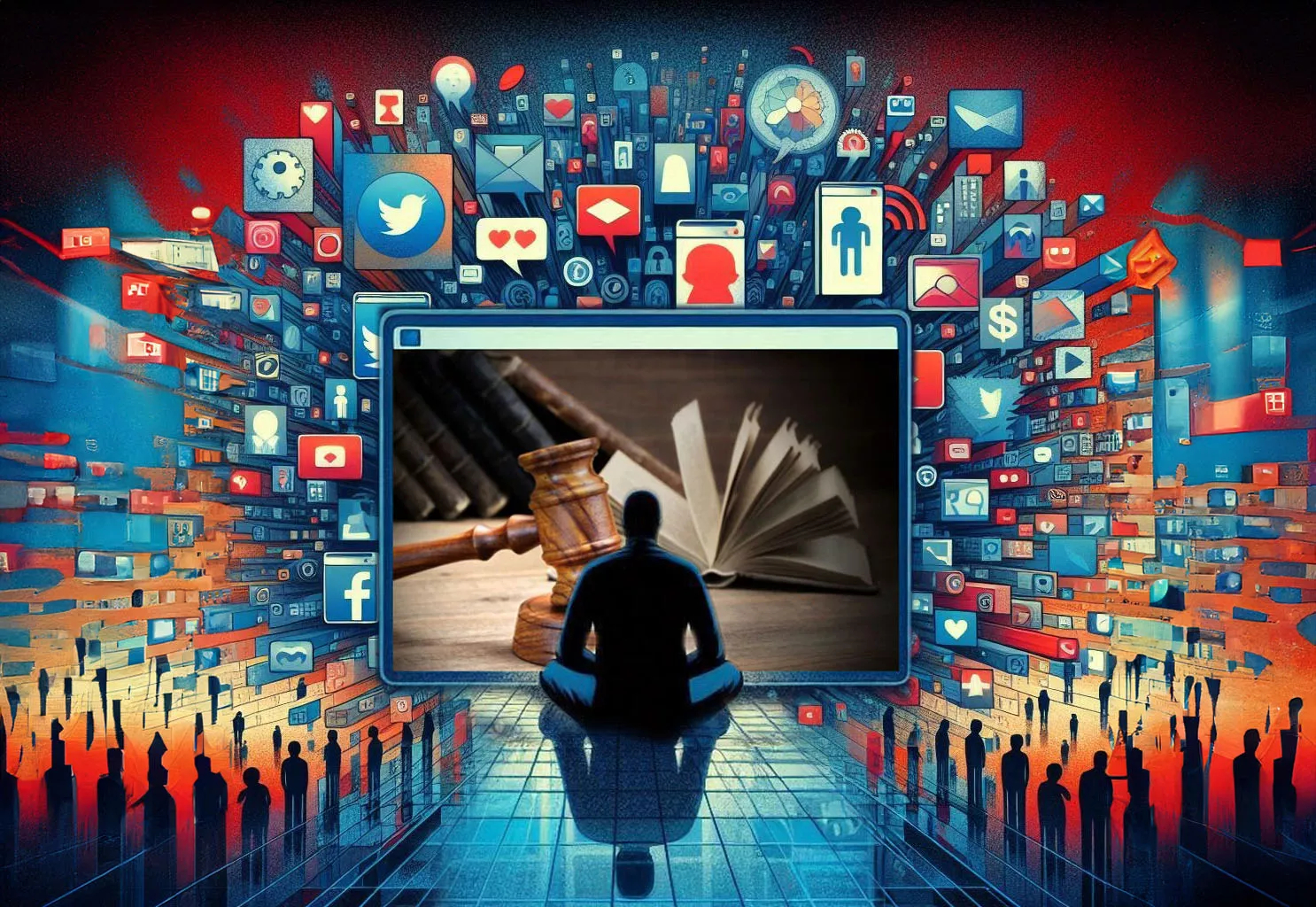
We live in an age of selective memory. Sometimes conveniently short, sometimes conveniently long. And the most troubling part is that we remember what suits us, when it suits us. This phenomenon — which in recent years has become something of a social sport — has grown genuinely dangerous: dangerous to truth, and above all to any meaningful idea of justice.
The fact that certain people suddenly “remember” — years after the fact — scandals, corrupt dealings, grievances, abuses of every kind, and the full inventory of human misconduct, deserves serious examination. I am not, of course, referring to cases that have come to light through proper channels, or to complaints that have been filed and left buried in drawers — judicial or otherwise — for years. I am talking about the glaring cases of people who remember precisely when it suits them, with the obvious aim of destroying individuals and situations out of spite, jealousy, self-interest, or simply because they once felt they didn’t get what they thought they deserved.
And so they take themselves off to the courts of social media with remarkable ease, and the spectacle begins — ending, as it always does, in collective wreckage. Trials and verdicts, handed down by “judges,” “legal experts,” and several thousand enthusiastic “jurors.”
The problem isn’t that people speak out. It’s when they speak, how they speak, and why. When an accusation is not driven by a need to right a wrong but deployed as a weapon of destruction, it ceases to be an act of courage and becomes an act of calculation. And that not only undermines its own purpose — it drowns out the voices that genuinely needed to be heard.
Social media has evolved into an informal, unaccountable court. No presumption of innocence. No evidence. No procedure. One post, one upload with “confidential sources,” one story loaded with innuendo — and the accused has already been convicted. Not by judges, but by a digital mob. Not on the basis of facts, but on emojis and outrage. In practice, an accusation without proof is worthless. In theory, anyone can say whatever they like — and on social media, situations of exactly this kind arise almost daily.
The charges are flung into the public domain and the pile-on begins. Society is destabilised, divided. On one side, the entire system scrambles to find evidence. On the other, the “jurors” have already reached their verdict before a single piece of evidence has been placed before them. All of this, we are told, because trust in every institution has collapsed — and social media has become the ideal substitute: the one institution that requires no evidence, demands no filtering, and shifts the burden of proof onto the accused rather than the accuser.
And here the great question arises. Who benefits? Certainly not the truth. Certainly not society. I’ll leave that to each person’s own judgement.
To be clear, so as not to be misunderstood: there are crimes that took years to be spoken aloud. There are victims who stayed silent out of fear, shame or pressure. Those cases deserve not just respect but protection. But there is a world of difference between justice delayed and selective memory pressed into service for a political, financial or any other agenda.
When everything becomes a “scandal,” the word loses all meaning. When everyone is guilty until proven innocent, the day will come when no one is believed at all. And when a genuinely serious case finally emerges, it will be swallowed up in the noise — in the likes and the instant outrage and the outbursts of the moment.
Justice is not a trend. It is not a 24-hour story. It is not a stage for revenge or point-scoring. We have reached the point where political parties govern and journalists form opinions based on whatever is trending on social media. If we genuinely want a cleaner, fairer society, we need to express views deliberately — without agendas, without acting on impulse. Otherwise, we will keep remembering only when it suits us, and forgetting everything that actually matters.

