


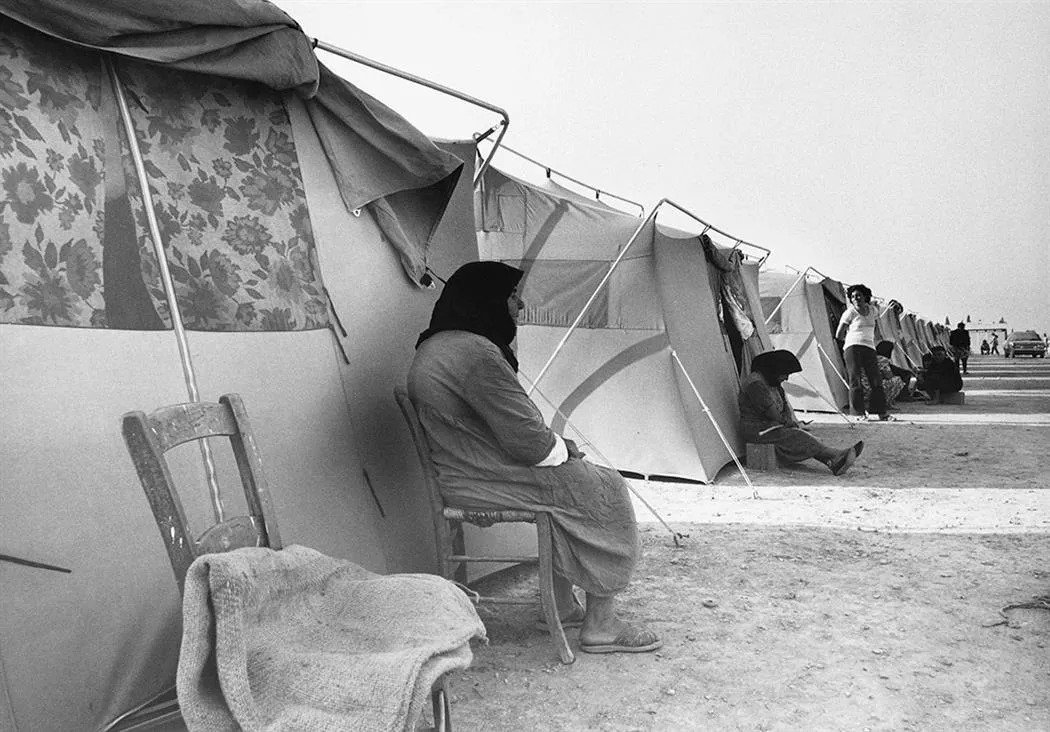
According to data provided to CNA by the Civil Registry Department of the Ministry of Interior, the number of displaced persons today stands at 255,120. In 1974, immediately after the invasion, this number was 160,000.
The president of the Pancyprian Refugee Union mentioned in an interview with CNA that out of the initial number of refugees (those born or who lived in the occupied areas), about half have passed away.
Approximately 80,000 to 90,000 are still living, many of whom were infants or 4-5 years old at the time, with no memories of their ancestral homes. Those who were over 20 years old in 1974 number around 30,000 today.
Despite this, the “refugee issue” has worsened, with 255,000 Greek Cypriots now considered displaced due to hereditary status.
When asked by CNA how the status of a refugee will be defined in the future and how many generations will retain this status, the president of the Pancyprian Refugee Union responded… reassuringly: under the current legal framework, the status of a displaced person or refugee, as the term is commonly used, is essentially inherited from generation to generation, with no limitations or stages at which it will cease.
Thus, from this perspective, we are covered. In the absence of a solution, the refugee issue will persist as long as the current legal framework remains, even if, in a few years, none of those who were expelled from their homes in 1974 are still alive.
However, CNA appears to be skeptical and worried that the genuine refugee population might become extinct, as it asked the president of the Union if there is a fear that the generation of “genuine” refugees will disappear.
The official responded politely and discreetly that “the passage of 50 years since the Turkish invasion inevitably leads to the natural loss of the mass of refugees who were displaced in 1974.”
In other words, our time is running out, even if the Archbishop recently said that Hellenism measures time differently. The issue is what time does with the measurement, not us, dear Georgios.
The problem, as the Union official pointed out, is that the “genuine” refugees are departing, taking with them their experiences, memories, their longing for return, and connection to the ancestral land—feelings and relationships that, unfortunately, weaken in subsequent generations.
And what remains?
What remains are the memories of our deceased’s memories, some well-preserved title deeds that change houses and cabinets every few years, and something else: a genuine question with great surprise, posed by a young displaced descendant during the recent multi-elections when using the Ministry of Interior’s online “what and where to vote” tool: “Dad, it says I have to vote for an occupied community. How should I know, mate?”
Some might say, “It’s the parents’ fault for not ‘passing it on'” and so on. We’ve been drumming the same things into their heads for years.
They have their own lives to live, though. And in the lives of thousands of young people—even the children or grandchildren of displaced persons—the refugee issue might at most be a refugee identity, an inheritance from their parents that allows for some rent subsidy or, in the best cases, help for a house if they manage to save up in other ways.
With adulthood, though, and this includes some hope, many understand that the refugee issue is one thing, and the much larger and more serious Cyprus issue is another.

