


The outcome of the Syllouris-Giovani trial over the golden passports scandal has left a deep stain — and raised serious questions about the institutional competence, or rather incompetence, of the Law Office of the Republic.
And when we say the Law Office, we don’t mean the rank-and-file lawyers doing their jobs conscientiously under what are, by any measure, difficult conditions. We mean the leadership. Specifically, the Attorney General and the Deputy Attorney General.
This was a case that humiliated Cyprus on the world stage and left a permanent mark on the country’s political life. The failure to make the charges stick is not a minor setback — it is a serious institutional failure with lasting consequences for public trust.
Despite the explosive Al Jazeera footage that had already been seen around the world, and despite the expectations that had built up in Cypriot society, the prosecution failed to convince the court. The result was an acquittal — and with it, a wave of public disillusionment that cannot simply be brushed aside.
The debate that followed was not driven by populism or cheap point-scoring. People watched a legal process unfold and saw its weaknesses exposed in real time. The case was poorly prepared. Witness handling was mismanaged. Critical evidence went unused, gutting the prosecution’s case.
Most troubling of all was the reported claim that a key witness refused to testify after receiving threats. In a case of this magnitude, protecting witnesses and securing their testimony is not optional — it is the bare minimum. When that fails, the problem goes well beyond a courtroom defeat.
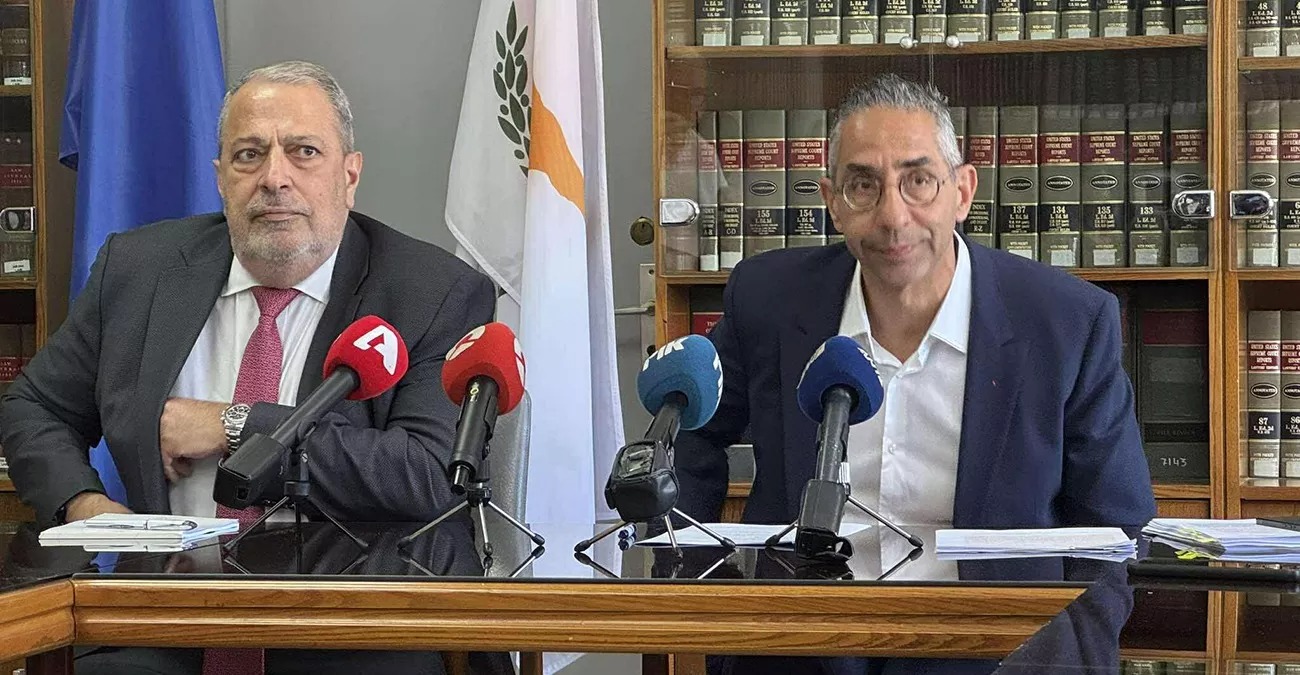
Into this already damning atmosphere, the Law Office’s two most senior figures — Giorgos Savvides and Savvas Angelides — chose not to step forward, own their failures, and explain what went wrong. Instead, they hid behind their subordinates.
The spectacle of a leadership using its own staff as a human shield — pushing the weight of public criticism downwards rather than absorbing it themselves — is not accountability.
In any serious institution, responsibility flows upward. The person at the top answers for what happens on their watch. Delegating that task to Polina Efthyvoulou — who proceeded to wag her finger at journalists while delivering a performance of theatrical indignation — created an overwhelming impression of leaders desperate to distance themselves from the wreckage.
The public is not baying for blood. It is not demanding convictions at any price. What it wants is transparency, accountability, and competence.
It expects full preparation, rigorous professionalism, and seriousness of purpose in cases that strike at the heart of public life. When a case this emblematic — with this much international exposure — collapses at first instance, the damage extends far beyond the verdict. Judges, after all, can only rule on what is put before them.
What has been irreparably damaged is something harder to rebuild: trust in the institution that holds the exclusive power to prosecute. Restoring that trust requires an honest reckoning with what went wrong, straight answers about the failures, and concrete steps to ensure it doesn’t happen again.
Without that, the suspicion will harden — that in cases where political and financial interests are at stake, the system simply cannot deliver. And with it, the most dispiriting conclusion of all will quietly calcify into accepted wisdom that: this is Cyprus.

