


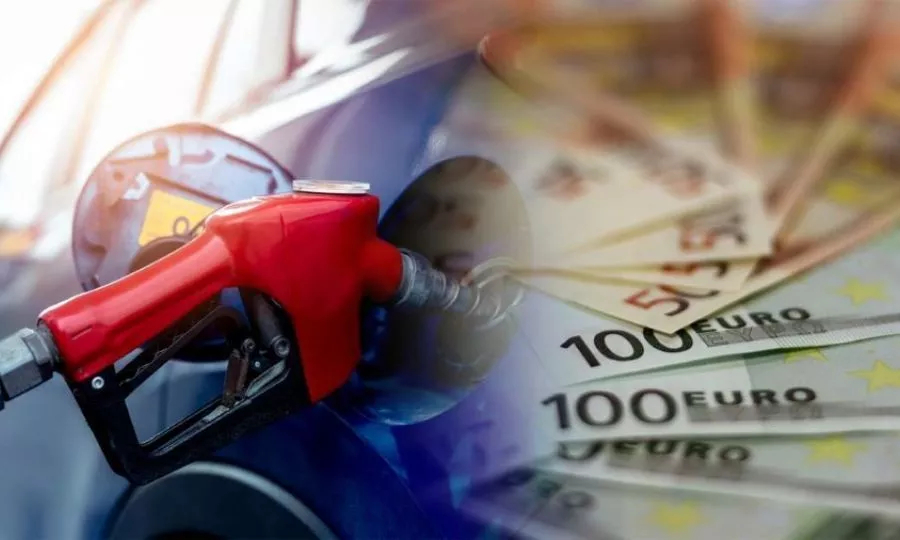
The 8.33-cent reduction in the excise tax was lost along the way, as gradual price hikes offset any benefit
The government announced a package of support measures for citizens and businesses hit by the geopolitical turmoil in the Middle East and its impact on energy prices.
One of those measures was a cut to excise duty on motor fuels of 8.33 cents per litre for the April–June 2026 period, aimed at reducing transport costs, holding back inflation, and giving citizens at least a small bit of relief. But in the ten days between the announcement and the measure taking effect, reality at the forecourts made sure to disappoint.
Within that window, prices started climbing steadily and silently. First a sharp rise of six to seven cents per litre, then small doses of two and three cents every two or three days. A familiar tactic — almost predictable. And it naturally raises questions: how often do fuel companies actually take deliveries? Does their cost really change every two days? Do tanks empty so quickly that repeated increases within a fortnight are justified?
The issue of prices rising fast and falling slowly is back. To speak in numbers: a typical household consuming 120 litres of fuel a month would theoretically save around €10 a month from the 8.33-cent cut — about €30 over three months. What happened in practice? If prices rose by a cumulative six to nine cents before the measure even came into force, the benefit is wiped out. And if small price rises continue afterwards, the “relief” becomes a firework with no real substance behind it.
The problem is not only economic. It is a matter of credibility and trust. When consumers see that every government intervention is preceded or accompanied by price rises that cancel it out, they reasonably ask: who actually benefits in the end? The citizen, or the market middlemen? Is there any real oversight to prevent this kind of profiteering, or are prices simply being recorded with no meaningful intervention?
And let us not forget: fuel is not a luxury. It is a basic commodity. It affects transport costs, food prices, services, everyday life for everyone. A five-cent rise per litre translates into hundreds or even thousands of euros in extra costs for businesses, professional drivers, farmers, and by extension households. And when that cost is added to an already strained environment — high rents, rising interest rates, reduced purchasing power — the pressure becomes suffocating.
The argument that “the war is to blame” cannot serve as a permanent alibi. Yes, international prices are affected by geopolitical tensions. But there is a difference between the international price of crude and the speed and timing with which increases reach the pump. And that is precisely where meaningful oversight is needed: transparency around procurement costs, profit margins, and the price fluctuations that should theoretically exist in both directions.
In the end, the question is not whether 8.33 cents is a little or a lot. It is whether it means anything at all when it is absorbed before the consumer even sees it. It is whether the government genuinely wants to protect society or simply to show it is “doing something.” And above all: how much longer will we accept a market that always works against the many and in favour of the few, with no real accountability?
At the end of the day, what matters is not announcements. It is what stays in the citizen’s pocket. And that, unfortunately, remains empty.
And after last Wednesday’s ceasefire and the roughly 15% drop in oil prices — let’s see how long it takes for that reduction to reach the pump.

