


I understand that in times of celebration or when a majority opinion in favour of a decision emerges and is embraced on social media, it can be challenging to accept a dissenting viewpoint.
The government’s decision to proceed with two more “strict” measures to combat violence in stadiums was met with applause, embraced with emphatic headlines, while the bill sent by the same government a week earlier went almost unnoticed. Some of the government’s intentions to tackle stadium violence seem to have been overlooked as well.
Several days have passed since the announcement last Friday, allowing us to view the issue from a distance and with sobriety. Hooliganism and conflicts both inside and outside stadiums are largely due to the revengeful tendencies harboured by rival fan groups. This desire for revenge stems from the refusal to accept opposing viewpoints or the attitude of “not getting my way.” It’s disappointing to observe that the government’s reaction, in response to the decisions of the Cyprus Football Association (CFA), mirrors the mentality of “organised fans.” The government demonstrated that: a) it did not accept the CFA’s decisions, and b) because it did not get what it wanted, it quickly announced that it was urgently sending a bill to Parliament with specific measures.
The revised bill the government decided to send includes: 1. The Council of Ministers having the authority to decide on holding matches without spectators for public order and safety reasons, and 2. Prohibiting the operation of any fan clubs without the responsibility and supervision of a sports club. Regarding the latter, I join my applause with others because it moves in the right direction. This column has previously mentioned, in the context of hooliganism, this measure as one that could help reduce violence in football.
The first and more controversial point aims to give the Council of Ministers (i.e., the President of the Republic) the power to close stadiums for public order and safety reasons. But when do public order and safety reasons arise? Who decides that such reasons exist?
Invoking public order and safety reasons can lead to much debate. It’s a dangerous power that cannot be granted to a government or president unilaterally. Allow me to refer to the recent reactions concerning surveillance, which were also justified under “public order and safety reasons.”
There are numerous other measures that can be effectively implemented to address violence in stadiums. There’s no need to grant excessive powers to a collective body or individual. It would be a grave mistake to approve a bill that grants such powers, whether to the President or the Council of Ministers.
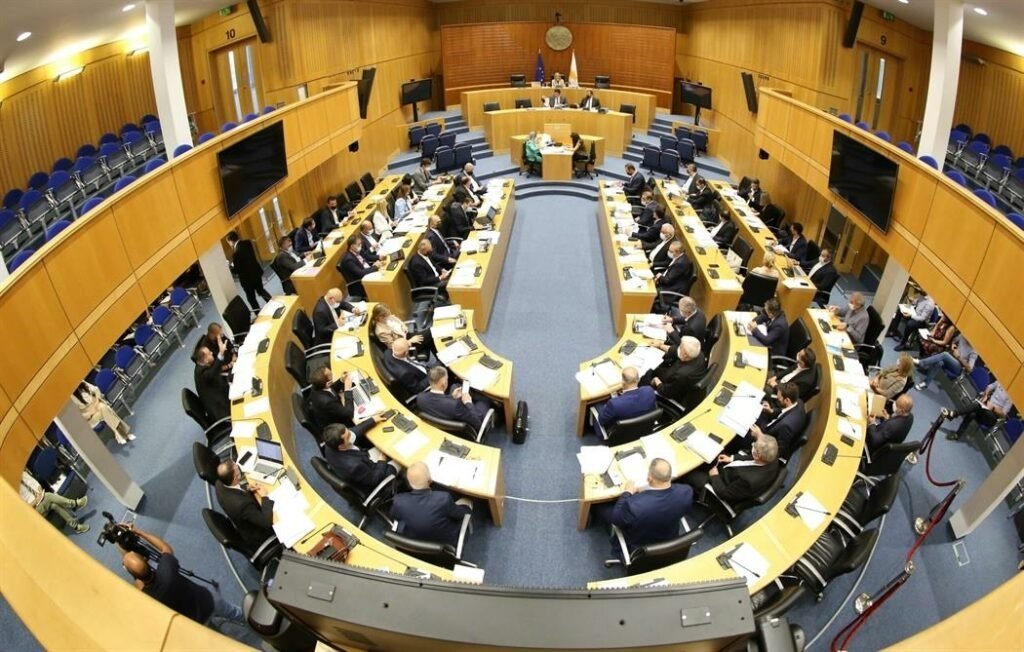
Therefore, Parliament must be particularly cautious when deciding on this matter. It should not be swayed by the atmosphere created through social media. Instead, it should act collectively and possibly unanimously to prevent a government from acquiring such strong powers, which even Parliament itself may not easily overturn later.
The Progressive Party of Working People (AKEL), with whose approach to this issue I fully agree, has pointed out that it is “illogical and undemocratic to punish all the fans in the country.”
Violence in sports venues cannot be addressed with repressive policies. It is important for other parties to align with AKEL and stand against “dangerous laws.”

